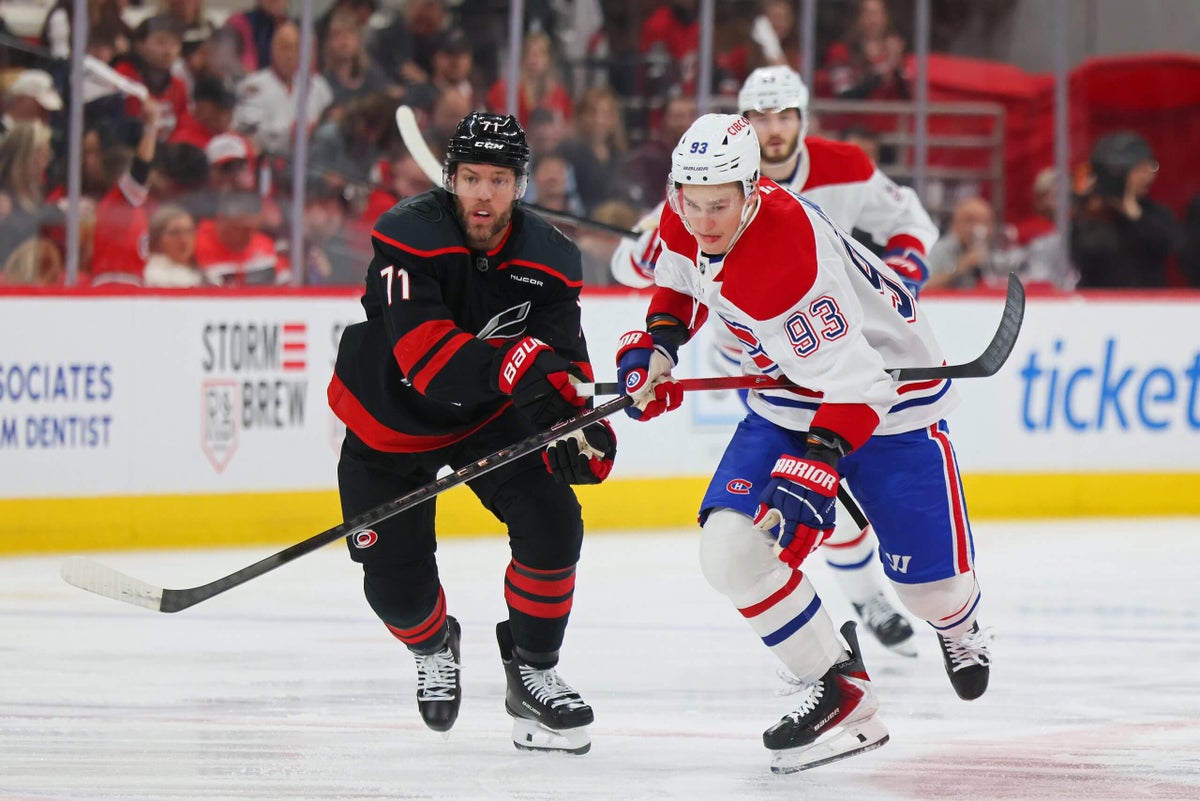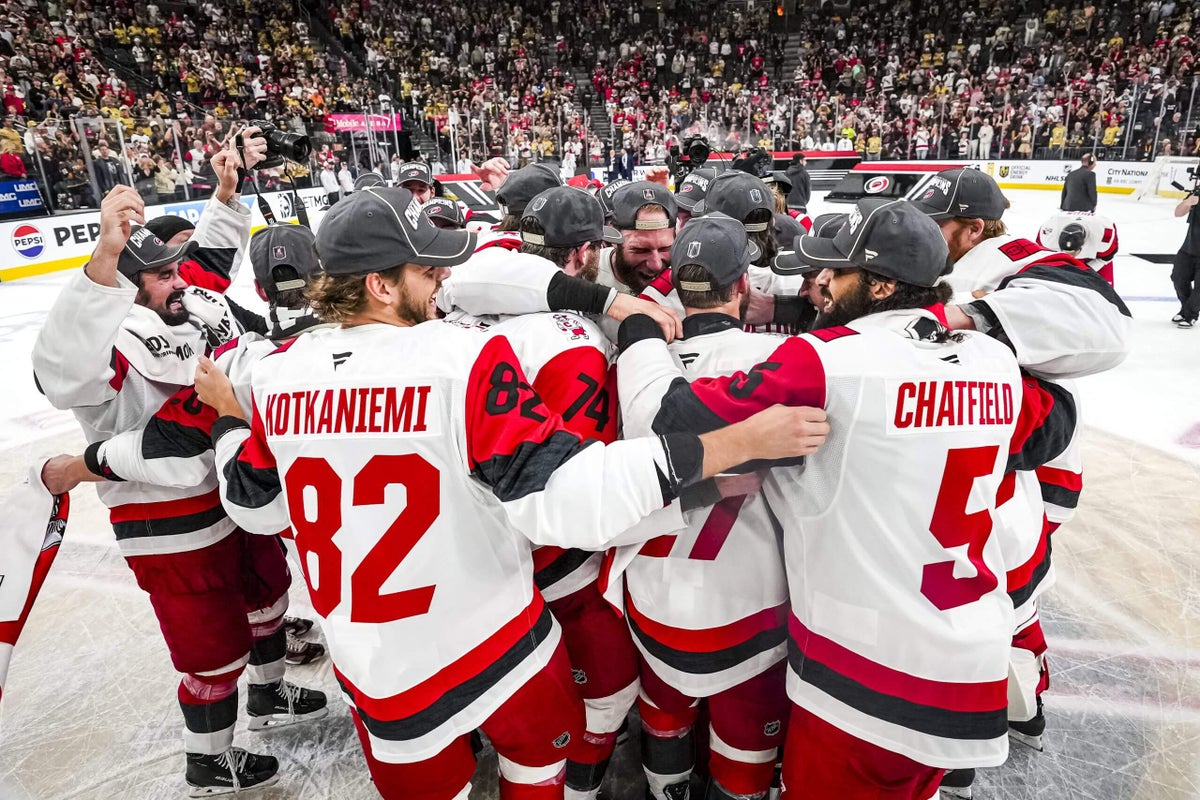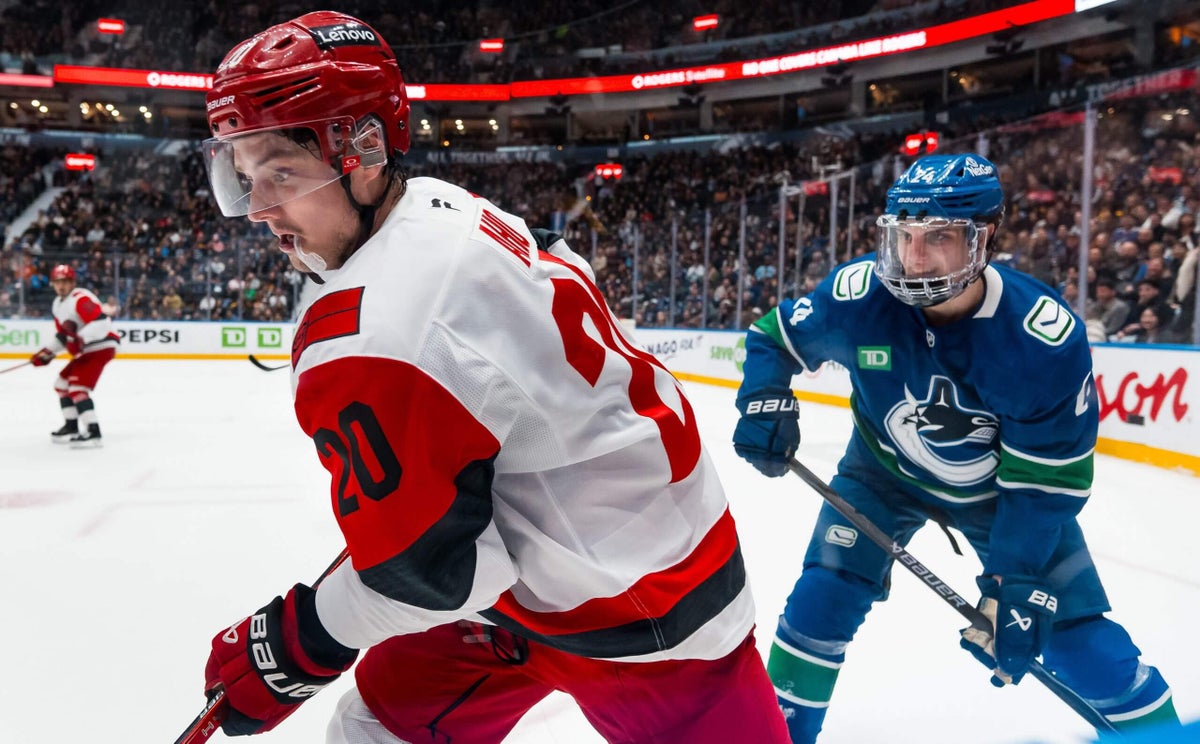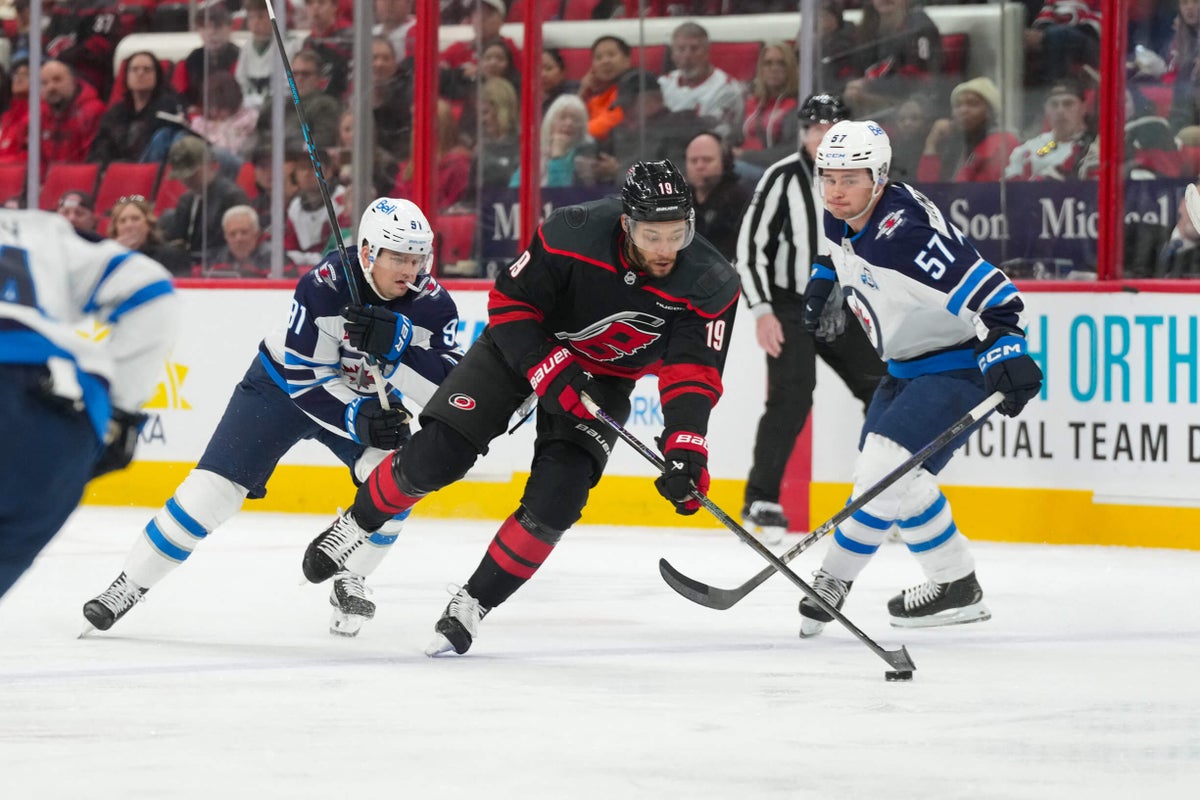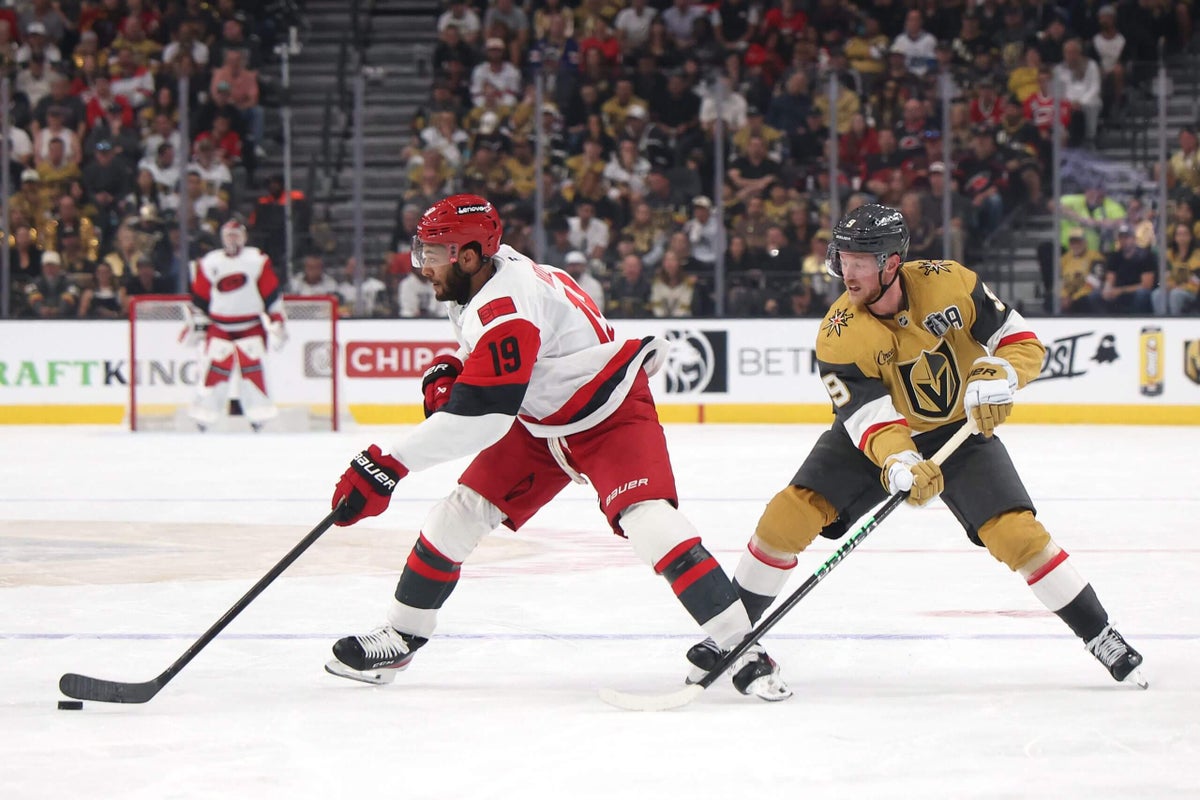
Teams that miss the playoffs, or get eliminated early, have extra time to strategize for next season — and a chance to narrow in on and study the best contenders in the league.But there’s a difference between trying to replicate another team’s success and learning from it. No one can become a carbon copy of a past champion, no matter how hard many try.Just look at how some teams jump at the chance to buy a contender’s loose change or cap casualties instead of looking for their own version of that player. Blake Coleman and Barclay Goodrow are prime examples of it: The Tampa Bay Lightning let both walk as free agents, the New York Rangers and Calgary Flames overpaid for both, and Tampa looked for the next version of that type of utility player. That’s bound to happen again this summer, when the Vegas Golden Knights are forced to make tough salary cap decisions.The lessons don’t have to be that literal. And they don’t only come from the finalists or eventual Stanley Cup champ, either. There are big concepts and ideas worth applying from all four conference finalists that can help the other 28 teams understand what it takes to contend.It’s hard to win in this leagueThe Colorado Avalanche, in theory, did everything right.When the Avs looked too top-heavy in 2023-24, management went on a spending spree last season to bolster the supporting cast around Cale Makar and Nathan MacKinnon. When it seemed like there was maybe too much roster turnover ahead of the postseason and too little time to build chemistry, the team went into 2025-26 with an incredibly deep roster.And yet it wasn’t enough.Colorado had an ideal path — first through the weakest playoff team in the West in the Los Angeles Kings, and by the time they faced another contender, the Minnesota Wild were already pretty beaten up. The Avalanche were set up for success heading into Round 3 … until they ran into the Golden Knights. It’s a reminder that regular-season success only carries so far. Even when a team does everything right to be on the best possible track in this system, it still may not be enough.It’s not just that the Avs lost in the Western Conference final, it’s how they lost. In a momentum-crushing sweep, Makar couldn’t be replaced by committee, the power play was neutralized again and depth scoring couldn’t make up for a quiet top six.Some teams just need to get to the playoffs to really cook. Look how much the Edmonton Oilers struggled in 2024 and 2025, before crushing the Western Conference and reaching the Stanley Cup Final in back-to-back years. Look at how the Florida Panthers leveled up when it mattered most last spring. And to an extent, look at how Vegas built up steam in the playoffs after an up-and-down regular season.Star power matters. Depth matters. Chemistry matters. Adversity matters. Injuries matter. So do a ton of other factors, and striking that balance in the playoffs is a different animal than the regular season.It’s a lesson in just how hard it is to build a contender with longevity in this league, one that doesn’t just compete all year but can win multiple championships.Even more telling could be what comes next. It could be a defining moment in this window, because the weight of contending comes for every team eventually.The blueprint for a quick but measured rebuildThe Montreal Canadiens finished last in the standings in 2021-22 with a 22-49-11 record and 55 points. Just four years later, they reached the Eastern Conference final.Montreal was the first team to pull that off since the 2011 Lightning. It’s a rare turnaround in today’s NHL; only five teams have followed a similar path in the last 38 years, as James Mirtle wrote last month.What worked in Montreal’s favor was that their previous general manager, Marc Bergevin, found foundational players like Cole Caufield and Nick Suzuki and extended the latter to an eight-year deal a month before getting fired in November 2021. Jakub Dobeš was drafted under Bergevin, too.The key is what team president Jeff Gorton and new GM Kent Hughes did to move the needle around them. Montreal drafted rising core players like Juraj Slafkovský and Ivan Demidov in the top five, along with Lane Hutson late in Round 2. More importantly, the team built a strong system to foster their development and help them reach their star ceilings.Management bet on reclamation projects like Alex Newhook, Kirby Dach and Alexandre Texier. The team knew when to (sparingly) add veterans, including Mike Matheson and Phillip Danault, and when to leverage draft picks and prospects for players in the right age range for this process, like Noah Dobson and Zack Bolduc.It’s bigger than just player acquisitions — it’s the top-down organizational buy-in to the process that has trickled into all levels of decision-making, including the decision to hire Martin St. Louis despite his lack of coaching experience and trusting him to help this team turn the corner after some tough stretches. It’s the fact that the team maintained this measured approach after last year’s surprise playoff berth. And it’s all built towards the start of what should be a long window of contention.It creates a blueprint that shows how to execute a rebuild quickly and efficiently, when some teams fall into a long, grueling process. Any team starting the process could learn how to fully buy in. The San Jose Sharks and Philadelphia Flyers, who are ready to take the next steps, could learn something. So could the Toronto Maple Leafs, who may be trying to follow the St. Louis model in considering an elite former player and hockey mind like Joe Pavelski as their head coach.Write your own narrativesNo matter how much Mitch Marner thrived in the regular season, he was never thought of as a playoff player. In nine years and 70 playoff games in Toronto, he put up 63 points, and left his team wanting more — more scoring, more clutch moments and overall more “dawg in him.”In just 19 games with the Golden Knights this spring, he has 28 points and a 2.11 Game Score, and may be on his way to winning the Conn Smythe Trophy.Vegas didn’t buy into all of the narratives that have swirled around Marner throughout his career. They went all-in on his skill and trusted him to write his own. And it’s not the first time the Golden Knights have operated this way.Go back a few months to when John Tortorella was hired and questions arose around whether he would crush a player like Marner’s creativity, or back to when Jack Eichel was acquired despite not having a postseason track record. Eichel quickly showed what a winner he could be in Vegas, all the way to the Stanley Cup (and the Conn Smythe conversation), in just his first NHL playoff experience.The Golden Knights have been willing to give players clean slates throughout their existence. It’s a mentality that goes back to the expansion draft, when management gave players like William Karlsson a chance to break out. And that’s important in a league that sometimes gets too into the habit of groupthink.It’s become a defining characteristic of their team history that has clearly paid off, and not just with a Stanley Cup in 2023. Vegas has become a destination for players because of management’s willingness to give players a chance to prove themselves — impressive for a team that’s gained a reputation for being absolutely ruthless in their commitment to winning. That is another important lesson from the Golden Knights over the years, along with their willingness to make a coaching change at a unique point in the season, and how to build a contender without the draft.But when the Golden Knights make big cuts again this summer to fit under the salary cap and find a new batch of misfits, this will be a core strategy that helps this team extend its window.Know your identity and how to build on itThe Carolina Hurricanes’ system is bigger than just the X’s and O’s of the game. It’s outright become their identity over the years.It’s easy to think of it, on the most basic level, as an aggressive forecheck that’s supported by stingy defense. And for years, it was that above all else. But it’s actually become broader than that, as GM Eric Tulsky explained on “The Athletic Hockey Show” earlier this postseason.“Our core philosophy isn’t really about dump and chase or forecheck, it’s really about putting the other team under pressure,” Tulsky said.Swarming off the forecheck is one way to do it, but so is beating opponents in transition. With additions like Sean Walker, Taylor Hall and Logan Stankoven in 2024-25, along with K’Andre Miller and Nikolaj Ehlers last summer, this team now has the players to execute that.“The more talent we have and the more ability we have to beat them through the neutral zone and put the pressure on them in the D-zone and off the rush, the more we’re going to do that,” Tulsky said. “Adding that kind of skill and creativity to keep layering that on our game has always been a part of the plan.”It’s been a multi-step process for the Hurricanes over the years. Carolina had to 1) identify its own strengths, 2) pinpoint ways to expand on them, 3) scout (and acquire) players to fill those voids, and then 4) get the best out of them. This year, the team’s front office and coaching staff have unquestionably done that.As easy as it may seem to add rush threats, not every player necessarily fits into the Canes’ system seamlessly. A contender can’t over-rely on one-dimensional players, either. Someone like Stankoven can play the Canes’ way and add more versatility. Miller can help facilitate the breakout and defend well.Emphasizing more transition play may have helped the Canes’ wear and tear, too, which has been a problem in postseasons past. Instead of always battling along the boards, on some shifts, the team just never loses the puck. Ehlers’ dynamic play has done that alongside Jordan Staal, turning a pure forechecking line into a multi-dimensional threat and potentially helping manage energy levels along the way.So the lesson isn’t necessarily to copy the Hurricanes’ tactics. It’s to learn from how a team turned X’s and O’s into an identity, mastered it and then figured out how to integrate more styles to expand the system.
What should NHL teams try to copy from the final four Stanley Cup contenders?
It's a copycat league, and NHL teams are always eager to follow the winners. These big-picture wins are worth embracing.
1,741 words~8 min read