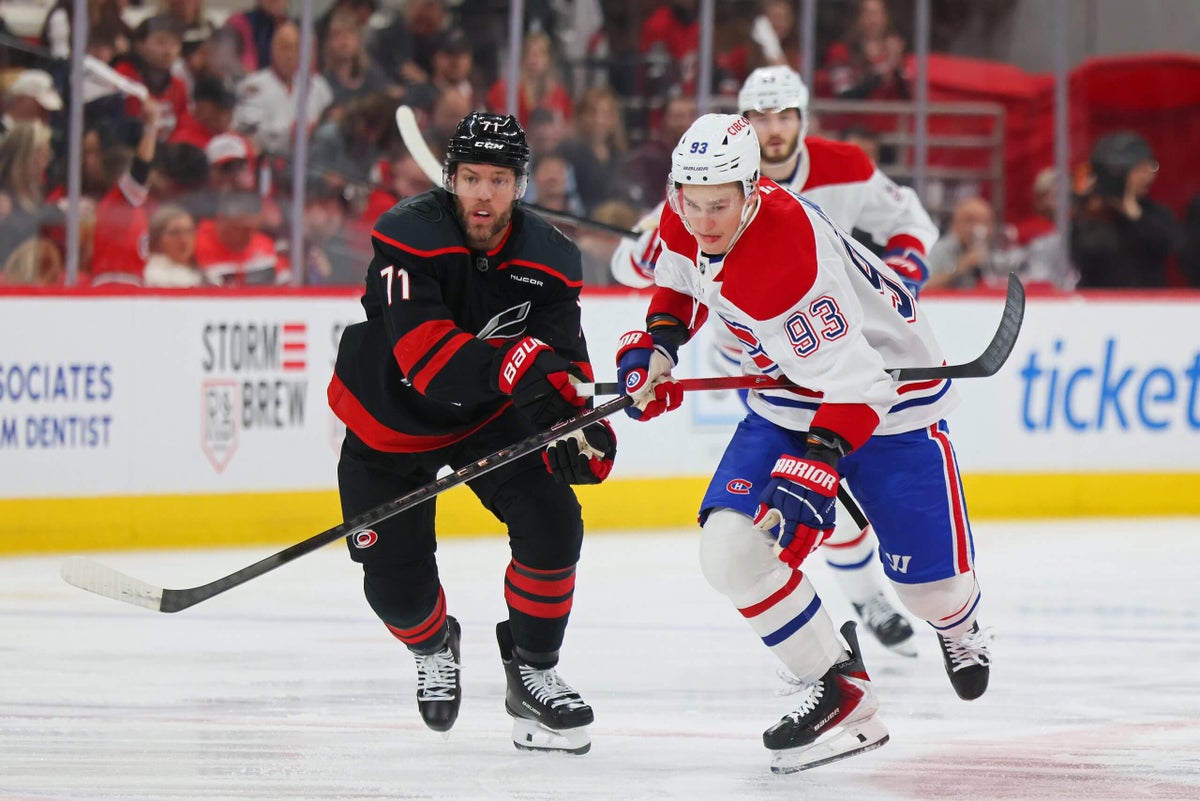
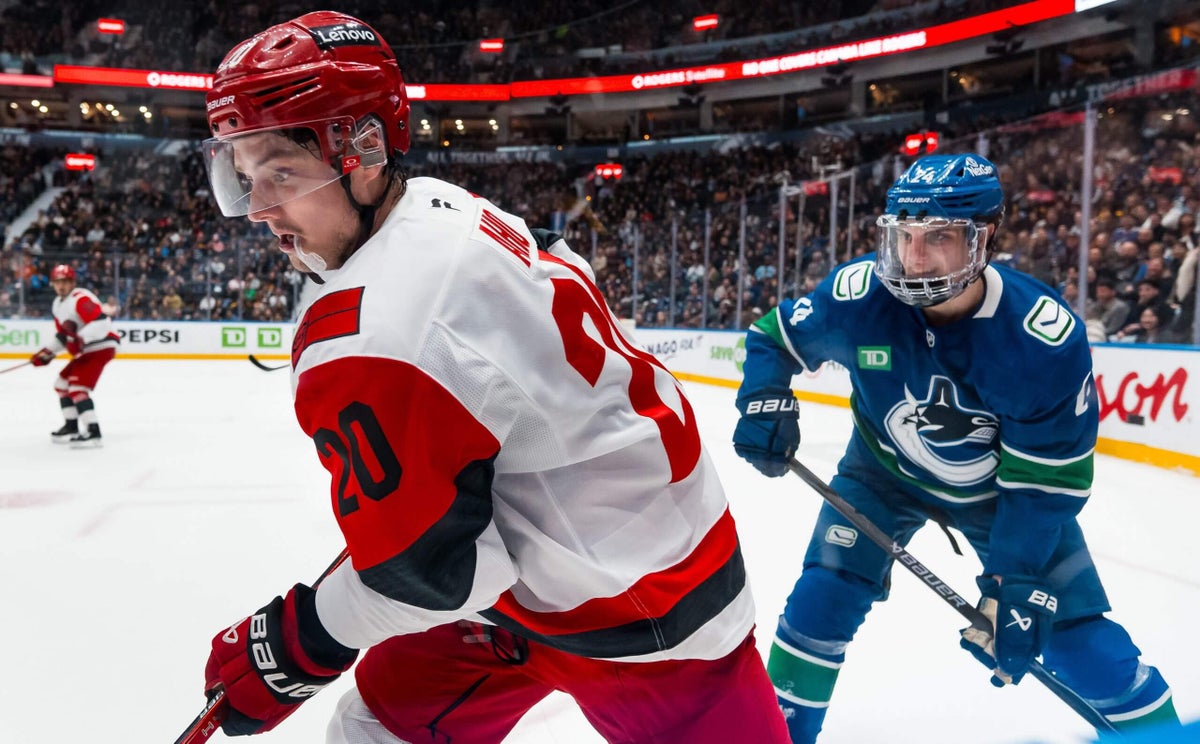
The Montreal Canadiens’ rebuild has emerged as a model for the rest of the NHL; the Vegas Golden Knights and their tournament coach, John Tortorella, are just one game away from the Stanley Cup Final; the Colorado Avalanche have run out of gas; and the Carolina Hurricanes may never get another opportunity as good as this one to actually get over the hump.From a storyline and raw competitiveness perspective, this hasn’t been a classic Stanley Cup playoff overall. Of course, that shouldn’t take anything away from the quality of the hockey and the speed, talent and toughness on display. Watching the playoffs has still been completely mesmerizing.The league, meanwhile, capitalizing perhaps on a newfound cultural footprint in the United States stemming from the Olympics, appears to be having a moment. Ratings are at a record high, and the playoffs are garnering a level of attention from American media that we’ve only occasionally witnessed across the past 30 years. Now imagine if the hockey gets really, really good at some point.Realistically, we know that it’s going to be a while before the Vancouver Canucks are playing in these sorts of meaningful games again. Based on the construction of the teams competing in the conference finals, however, and on some of the trends we’re seeing impact the playoffs, there are some key lessons that Vancouver can still take away and dwell on.Let’s get into three Stanley Cup playoff trends the Canucks can learn from at the start of this rebuilding effort.Don’t overvalue size at the draft tableOutcomes in the 2026 Stanley Cup playoffs have been shaped by a variety of undersized players who fell down the order in the draft year as a result of their listed height, and as a result became tremendous values for the teams wise enough to select them.Sabres winger Zach Benson, who was clearly Buffalo’s best forward in the postseason, had the statistical profile to be a top-five pick but slipped to the Sabres at 13th in 2023. A pair of gnat-sized Canadiens stars in Cole Caufield and Lane Hutson slipped to the middle of the first round and the late second round in their draft years, respectively. The Hurricanes, probably the league’s most efficient and effective drafting team, have repeatedly hit on shorter players like Jackson Blake and Sebastian Aho, but it’s worth name-checking Logan Stankoven in this space too, even if he was a Dallas Stars draft pick, since his budding-superstar-level junior production saw him slip to the middle of the second round.Of course, size matters in hockey. Its importance, however, can be overstated and overemphasized by amateur scouting staffs. In rightly obsessing over the projectability of prospects, it seems like organizations too often struggle to price in the probability that a special but undersized player dominating at a lower level may just be good enough to continue to dominate as they move up the ranks and mature physically.It’s true, too, that size only matters insofar as it’s another tool players can leverage to be disruptive on the forecheck, create havoc at the net-front or come out of 50/50 engagements along the wall at a higher degree of frequency. The thing with a player like Caufield, however, is that the way he specifically succeeds is by attacking opposing defences from down low.In fact, he’s an especially lethal shooting threat when attacking out from below the goal line. That’s a classic power-forward skill set, and elite NHL defencemen — regardless of height — can’t seem to prevent him from getting into those spaces on the ice consistently.Benson likewise nearly turned the Sabres’ second-round series around against Montreal when he was elevated first to Buffalo’s top power-play unit — at the net-front specifically, where he was effective as a screener — and then onto the top line in Game 6. If you’re dogged enough to gain position at the net front, be immovable in that spot and create enough confusion to regularly take the goaltender’s eyes, either directly as a screener or indirectly as a result of the panic you cause defencemen, then your listed height is completely irrelevant.Traits matter too in team construction and amateur talent evaluation, of course, but because so many NHL teams over-weigh the listed height of draft-eligible prospects, there’s tremendous value to be mined from simply disregarding it. These playoffs have been a useful reminder for the Canucks on this front.Remember, though: You don’t build through the draftAt the dawn of a Canucks rebuild, there are a lot of fans who want to see this team take a slow-cooker approach to team building, with an emphasis on building through the draft.The dirty little secret about the NHL, however, is that great teams fundamentally aren’t built on draft day. At least not directly.The core players on some of the four conference finalists were originally drafted by their team — Nathan MacKinnon and Cale Makar in Colorado, Montreal’s entire core save for Nick Suzuki, Sebastian Aho and Jaccob Slavin in Carolina — but the vast majority of these teams were built on the trade market or in free agency. And they were generally built with an extraordinary level of aggression.The Golden Knights, obviously, are the most prominent example of this mode of team construction. Jack Eichel, Mitch Marner, Mark Stone, Noah Hanifin, Rasmus Andersson and Ivan Barbashev were all acquired by the Golden Knights through a series of savvy, expensive trades over the years. Even Shea Theodore, technically, was acquired via trade, with the Golden Knights agreeing to select Clayton Stoner’s onerous contract from the Ducks in the expansion draft as the cost of acquisition.In a lot of ways, Vegas breaks most of the team-building frameworks through which we view NHL teams, but there’s something cyclical about their approach to team building and the draft’s role in how they operate that’s instructive. Coming out of their successful, predatory expansion process, for example, the Golden Knights accumulated six additional draft picks — including two additional first-round picks — making 13 total picks in their inaugural appearance at the draft.Among those picks were Erik Brännström, who became the biggest prospect asset in the trade for Stone, and Suzuki, who was the key prospect asset in the trade for Max Pacioretty. When Vegas again selected in the first round a few years later, it selected Peyton Krebs, who became a key part of the trade that brought Eichel over from Buffalo.Vegas began by accumulating a huge surplus of draft capital, but the core of the current team was assembled by using those extra picks to select prospects that were trending in a favourable direction and were monetized aggressively for the purpose of acquiring star-level talent.We’ve seen the Canadiens undergo a similar process, even as they’ve maintained more of their own drafted talent in constructing their team. As the Canadiens tore down the 2021 Stanley Cup finalist team, they accumulated an unwieldy mass of picks. And while they’ve drafted exceptionally well and very frequently with that pick surplus — the Canadiens picked 30 times in three drafts between 2022 and 2024, including five times in the first round — they’ve also been willing to aggressively trade picks for young talent (Alex Newhook and Kirby Dach) or monetize their prospects for more established NHL players (Logan Mailloux for Zachary Bolduc).The Hurricanes are another fascinating case study, in part because their drafting success is more durably volume-based and in part because they’ve been more scrupulous about building out their organizational depth through the draft. This is Carolina’s fourth appearance in the Eastern Conference final across the past eight years, but in the intervening seven drafts during that run, the Hurricanes have still made an astounding 67 draft selections.Still, when you consider what free-agent signing Nikolaj Ehlers and big trade acquisitions like K’Andre Miller and Stankoven have done to lift the ceiling of this Hurricanes roster, the extent to which the Hurricanes build value through the draft while building the actual team through other avenues is apparent.The Avalanche are our final example, and it’s certainly true that they built an elite core by picking frequently at the top of the draft order — including five times in the top 10 during a seven year stretch from 2011-17, during which they selected Gabriel Landeskog, MacKinnon, Makar and Mikko Rantanen — which makes them the more straightforward rebuilding template of the NHL’s four conference finalists. The Avalanche, however, also fit the Golden Knights model of aggressively monetizing their draft prospects, with recent first-rounders like Calum Ritchie (Brock Nelson) and Justin Barron (Artturi Lehkonen) going out the door very quickly for the purposes of bolstering the roster with surer, higher-floor veteran players.There’s a key distinction that the Canucks must be mindful of as they commence this rebuild. Amassing draft capital is a critical first step in any rebuild, but the draft is a tool to build value for a contemporary NHL team. The actual act of team-building mostly happens elsewhere and requires teams to ruthlessly evaluate their own prospects and young players, then move decisively to monetize them for higher-end, more established players when the opportunity presents itself.Don’t pay for goaltending, pay to control playUnfortunately for the Canucks, the horse has largely left the barn on this one. It’s still worth noting how remarkably little the four conference finalists are spending on their starting goaltenders this year and what that might mean for wider trends and how the Canucks might want to consider moving forward with their expensive Thatcher Demko/Kevin Lankinen tandem.GoaltenderTeamCap HitCarter HartVegas$2,000,000Jakub Dobeš
What the Canucks can learn from the NHL playoffs so far: 3 rebuilding lessons
If the Canucks want to build back right, they could do far worse than taking their cue from the four conference finalists.
1,925 words~9 min read