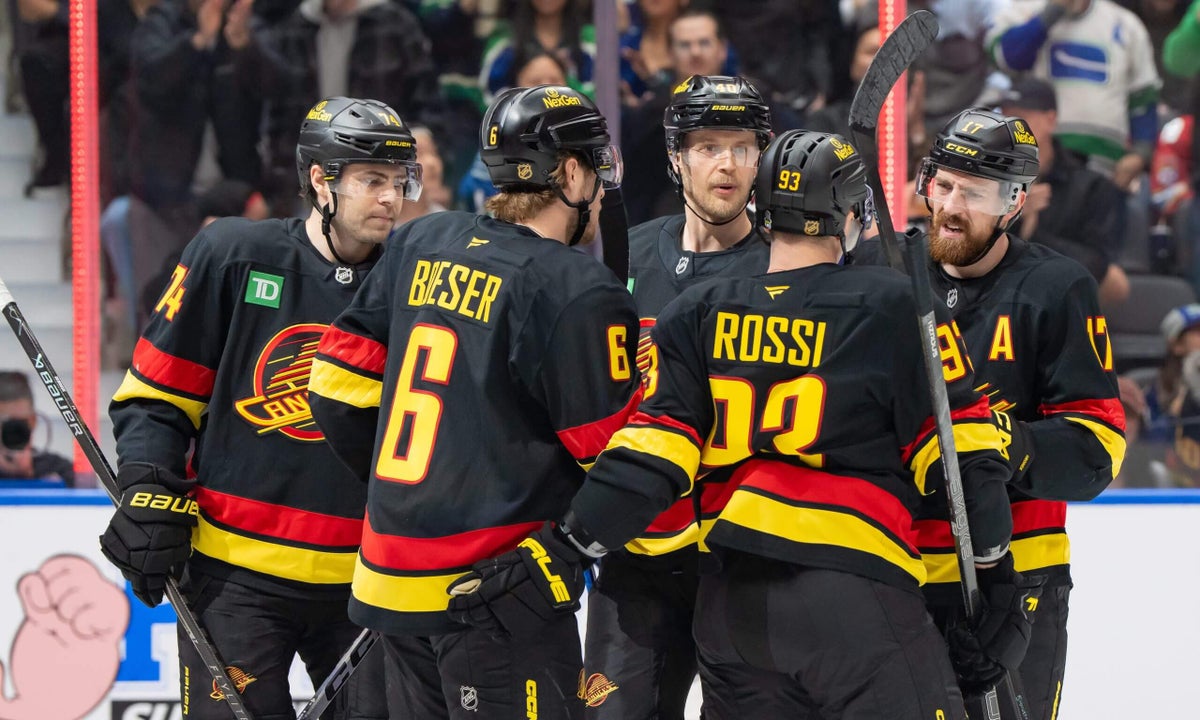
This is the first offseason of a new rebuilding era for the Vancouver Canucks.Given the precarious nature of where Vancouver sits, how short-handed this team is from a talent perspective and how long the road back to contention is likely to be, even if everything goes right — even if everything goes perfectly — only serves to underline the importance of the next four weeks for first-year Canucks general manager Ryan Johnson and first-year co-presidents Henrik and Daniel Sedin.Rebuilding is a difficult assignment in the NHL, but it’s an even more difficult task in the current leaguewide environment. The salary cap is rising quickly, negating some of the levers that teams like the Montreal Canadiens pulled in rebuilding over the past five years. The current collective bargaining agreement will expire after this summer, with significant implications for what various contracts will look like in the years to come. Vancouver, meanwhile, needs to continue to shed long-term contractual commitments to aging players with various forms of no-move or no-trade protection, and the club will have to nail the 2026 NHL Draft — at which it has 10 total draft picks, including four picks in the top 50.Let’s model out how new Canucks leadership would navigate this summer if they were to put together a genuinely perfect offseason.1. Shed at least two of the seven Canucks players in their late 20s or older signed to long-term contracts with some variety of no-trade or no-move protection through trade, and creatively maximize the value of the returnThe most important thing for the Canucks to recognize as their starting point this offseason isn’t that they’re in a rebuild, it’s that they effectively have nothing that a good team or a future contender really requires.You certainly should hope for and work toward developing the likes of Zeev Buium, Braeden Cootes and Tom Willander into future core players, but their profiles aren’t those of the elite players that drive Stanley Cup victories for franchises historically. Even if all three of them hit their absolute apex ceiling outcomes as NHL players — say Buium can develop into a defender as dynamic as prime Morgan Rielly, Cootes evolves into a Mathew Barzal-like impact forward and maybe Willander transform into some right-handed hybrid version of a Gustav Forsling — you’d still be a franchise-level superstar (or two) short of contending.Vancouver’s first mission under the stewardship of the Sedins and Johnson must be to effectively construct a new, elite core to power the next great Canucks team.It’s widely recognized that this process is going to take years to pull off. It’s also going to require additional kicks at the can at the draft table and a massive surplus of draft capital. None of this is especially controversial or in dispute.Where the logic of this sort of patient rebuilding process can get a bit trickier for fans, and even NHL management types, to really account for and internalize, is when it comes to the necessity of storing value in places where it’s relatively unlikely to depreciate as a team undergoes the sort of youth movement that the Canucks will attempt to begin to pull off this summer.This is where the rubber meets the road for the Canucks this summer. It’s going to take Johnson and the Sedins years — likely the balance of this decade — to construct a championship-calibre core. In the meantime, the veteran players the Canucks acquired and signed to long-term contracts for the purposes of supporting the Elias Pettersson, J.T. Miller and Quinn Hughes-led core, are likely to age out of being useful.Let’s use Filip Hronek as our example, given that he’s the best player among this group of veterans we’re discussing. Hronek was acquired as a top-four defender and has become a legit star-level first-pair defender during his three-and-a-half-year tenure with the Canucks. He’ll also turn 30 in November.Hronek is signed to an appealing long-term contract carrying an efficient $7.25 million cap hit for another six seasons, through his age-35 campaign in 2031-32. The likelihood that Hronek remains a high-end top-of-the-lineup defenceman when Vancouver’s next generation of star talent is ready to win is prohibitively low. He’ll also continue to play his physical, abrasive style of defensive hockey while logging a ton of minutes for an overmatched side that’s unlikely to control play with much regularity over the short-term, taking on significant injury risk.In my view, this level of depreciation risk should be intolerable for the Canucks to bear, especially given Hronek’s status as the organization’s last remaining premium trade asset.This logic is felt most sharply in Hronek’s case, but it holds generally for Marcus Pettersson, Thatcher Demko, Jake DeBrusk, Brock Boeser, Elias Pettersson and Kevin Lankinen. There are nuances to when the value of each of these players may spike somewhat due to their contract structure, and some of them are obvious holds — the two goaltenders, in particular — this summer. And, of course, all of these players have some variety of no-trade or no-move clause, which will make it extraordinarily difficult for Vancouver to hold open auctions for their services, of the variety that are necessary to maximize a player’s value on the trade market.With all of this in mind, in a perfect offseason, new Canucks management would find a way to jettison at least two of this group of players over the course of the next few months. And they’d do so in a fashion that returns maximum value, with Vancouver avoiding retention (given the lengths of the contracts, and the importance of preserving retention slots for future trade deadline selling purposes).That may mean the club will have to be willing to eat an inefficient contract, perhaps one with term, in order to properly juice the potential asset haul netted in the deal. It may mean that the Canucks speculate on a younger, struggling veteran player with an opportunity to rebuild their value. The returns should absolutely prioritize netting futures and veteran players with distressed value, as opposed to the club speculating — in classic, and unwelcome Canucks fashion — on reclamation-type prospects and age-gap trade targets.
What the Vancouver Canucks’ perfect rebuilding offseason could look like in 2026
In the first offseason of a new rebuilding era, let's model out how the Canucks should navigate this summer.
2,838 words~13 min read