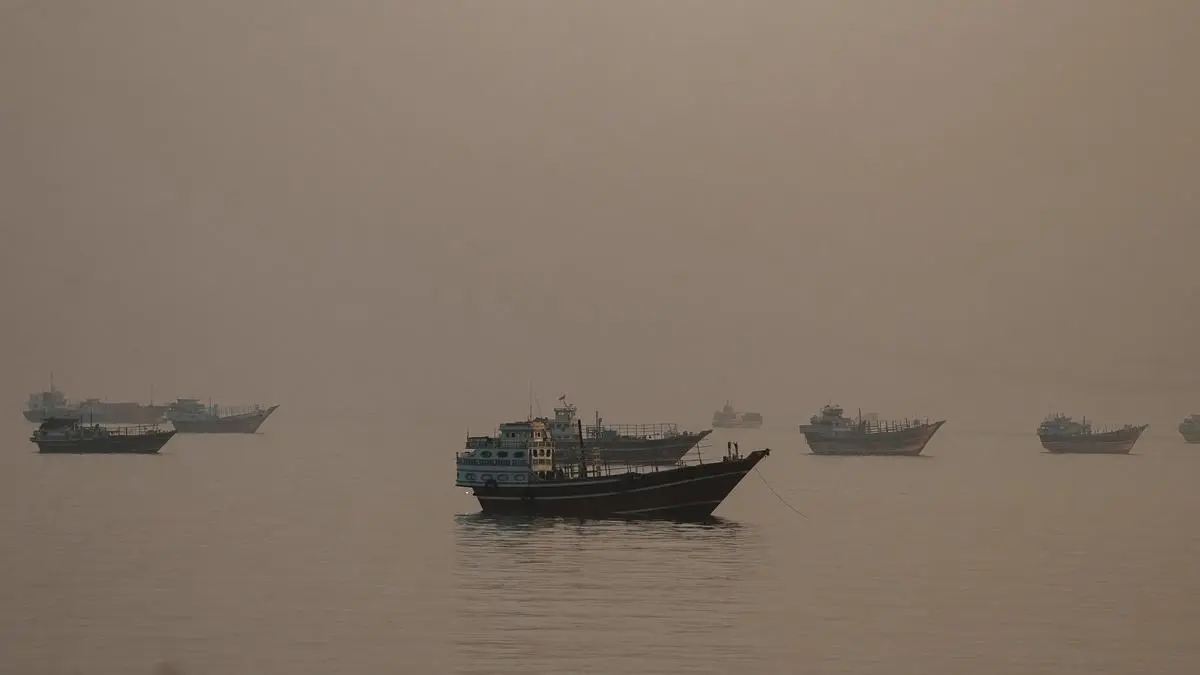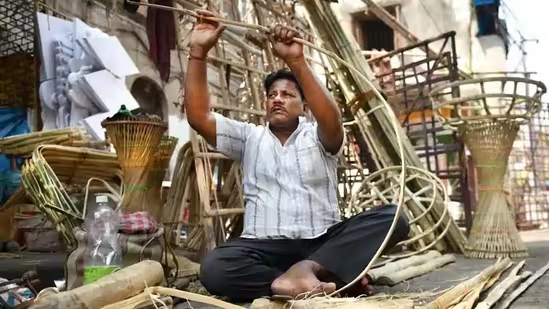
The West Asia crisis has become an economic stress test for India, exposing how quickly a geopolitical shock can travel through oil markets, shipping routes, exchange rates, input prices and working-capital cycles. For large companies, disruptions may be partly absorbed through inventories, hedging and stronger balance sheets. For MSMEs, however, the impact is more immediate and uneven as they sit at the vulnerable end of supply chains, depending on timely fuel and raw-material availability, predictable freight costs, prompt customer payments and affordable short-term credit.MSME (File Photo)MSMEs contribute nearly 31.1% of GDP, 35.4% of manufacturing output and 48.58% of exports, with more than 7.47 crore enterprises employing over 32.82 crore people, making them the country’s second-largest employer after agriculture. As of March 2026, over 7.9 crore MSMEs and informal micro enterprises have been registered through Udyam platforms. So, when the gas supplies tighten, shipping insurance rises, export consignments are delayed or the rupee weakens, the burden spills over to small foundries, food processors, chemical units, packaging firms, textile exporters, restaurants and component suppliers. The policy question, therefore, is how quickly India can protect their liquidity, production continuity and export competitiveness before a temporary external shock becomes a wider macroeconomic challenge.As the crisis continues to unfold, experts are still estimating the monetary loss suffered by MSMEs. Early evidence points to a sharp build-up of stress including projected NPA level rise in MSMEs to 3.4–3.6% by FY27 as smaller borrowers have less capacity to absorb higher input costs, supply disruption and longer working-capital cycles.There has been a sharp increase in the sector’s already high delayed payment overhang of ₹8.1 lakh crore. International trade flows are expected to be disrupted as West Asia accounts for nearly 14% of India’s exports and 20% of imports.Sectorally, the pressure is expected to be higher in ceramics, diamond polishing, polyester textiles, specialty chemicals, flexible packaging, auto components, airlines and crude-linked industries, while export-facing sectors such as gems and jewellery, basmati rice, vehicles, textiles, leather, food products and engineering goods face risks from freight, insurance and demand disruptions.Among the states, Gujarat, Maharashtra, Rajasthan and Tamil Nadu could be impacted through export manufacturing, ports, petrochemicals, gems and textiles; Punjab, Haryana and Uttar Pradesh through engineering, leather, textiles and food processing; and Kerala through remittance-linked consumption and Gulf employment exposure.There is a slew of measures launched by the government to protect MSMEs from the West Asia shock. The immediate focus has been on keeping MSME liquidity, exports and public-procurement contracts from freezing up. The Emergency Credit Line Guarantee Scheme (ECLGS 5.0) introduced as a targeted response to the crisis, offers additional credit support to eligible MSMEs, with 100% guarantee cover, nil guarantee fee, a longer seven-year loan tenure and the option to convert up to 50% of interest into a funded interest term loan to ease near-term cash-flow pressure.For exporters, The Resilience & Logistics Intervention for Export Facilitation (RELIEF) scheme offsets the impact of higher freight, insurance and war-risk costs, prevents order cancellation and safeguard jobs in export-linked sectors. Alongside this, the ministry of finance has permitted government entities to treat the West Asia disruption as a force-majeure event in public procurement contracts, allowing affected suppliers and contractors timeline relief where supply-chain disruption has directly impaired execution.The Reserve Bank of India (RBI) has extended export-credit relief until June 30, 2026, allowing pre-shipment and post-shipment export credit for up to 450 days, while exporters have been allowed up to 15 months, instead of the usual nine months, to realise and repatriate export proceeds. This gives exporters more time to manage delayed shipments, slower buyer payments and disrupted trade routes without immediately slipping into repayment stress.Central Public Sector Enterprises (CPSEs) have been directed to expedite MSME dues to push for faster liquidity release. In addition, for government and public-sector payments, the use of Trade Receivables Discounting System (TReDS) has been aimed at converting receivables into bankable, discounted cash flows reducing risks of delayed customer payments. Other measures include procedural relaxations for stranded cargo movement, improved coordination at ports, and waived storage and dwell-time charges for affected cargo and ECGC credit insurance cover for eligible consignments with 100% risk coverage over and above their existing cover.At the provincial level, states like Haryana have announced business-support measures including enhanced freight subsidies and extended MSME incentives, while ports such as Mormugao have reported steps to coordinate with exporters, streamline cargo handling and protect supply-chain continuity.Across Asia, governments in Malaysia, Philippines and Thailand have rolled out credit guarantees, emergency loans and repayment relief to shield their MSMEs from the economic fallout of the West Asian crisis. India’s response has also been timely with ECLGS 5.0, extended export-credit window, force-majeure relief in public procurement, fuel and gas allocation measures as well as efforts to accelerate MSME payments through CPSEs and TReDS, all of which are surely important immediate buffers.However, industry bodies like Confederation of Indian Industry (CII) have sought a more comprehensive and coordinated fiscal, financial and trade response, including temporary enhancement of working-capital limits, faster GST refunds, lower banking charges, a defined moratorium or restructuring window for genuinely affected MSMEs and exporters, and extension of PSU delivery timelines without liquidated damages.The West Asia crisis offers India a policy window to look beyond immediate relief and deliberate on the longer-term structural architecture needed to shield MSMEs from recurring global shocks, including faster GST refunds, quicker settlement of duty drawback and claims, wider receivables discounting through TReDS, stricter payment discipline, targeted credit guarantees, export insurance, energy diversification and stronger cluster-level infrastructure.(The views expressed are personal)This article is authored by Abhinav Jindal, senior faculty, Power Management Institute and Swetha Rai, vice president, Kotak Mahindra Bank.
Can India’s MSME support measures withstand West Asia crisis?
This article is authored by Abhinav Jindal, senior faculty, Power Management Institute and Swetha Rai, vice president, Kotak Mahindra Bank.
935 words~4 min read