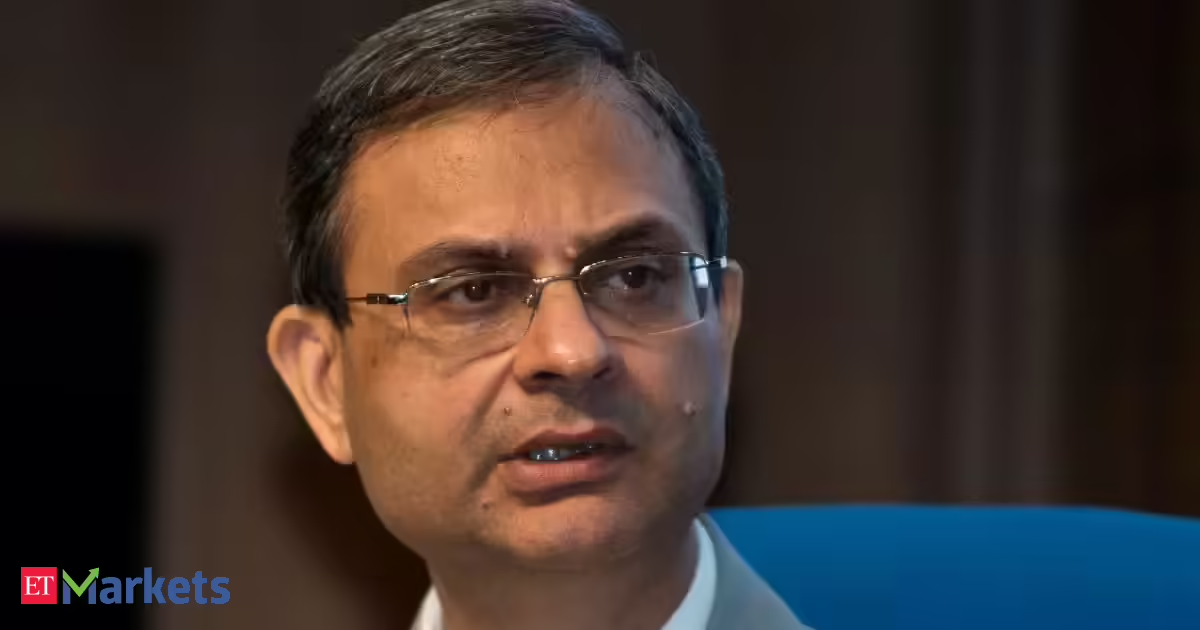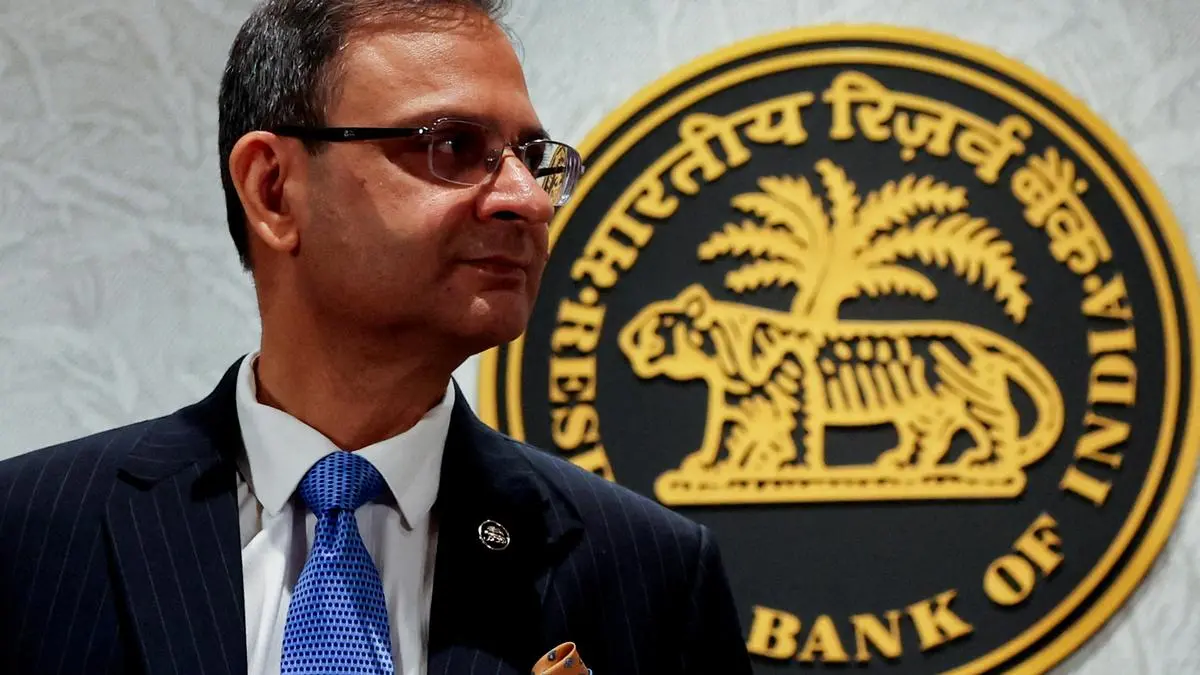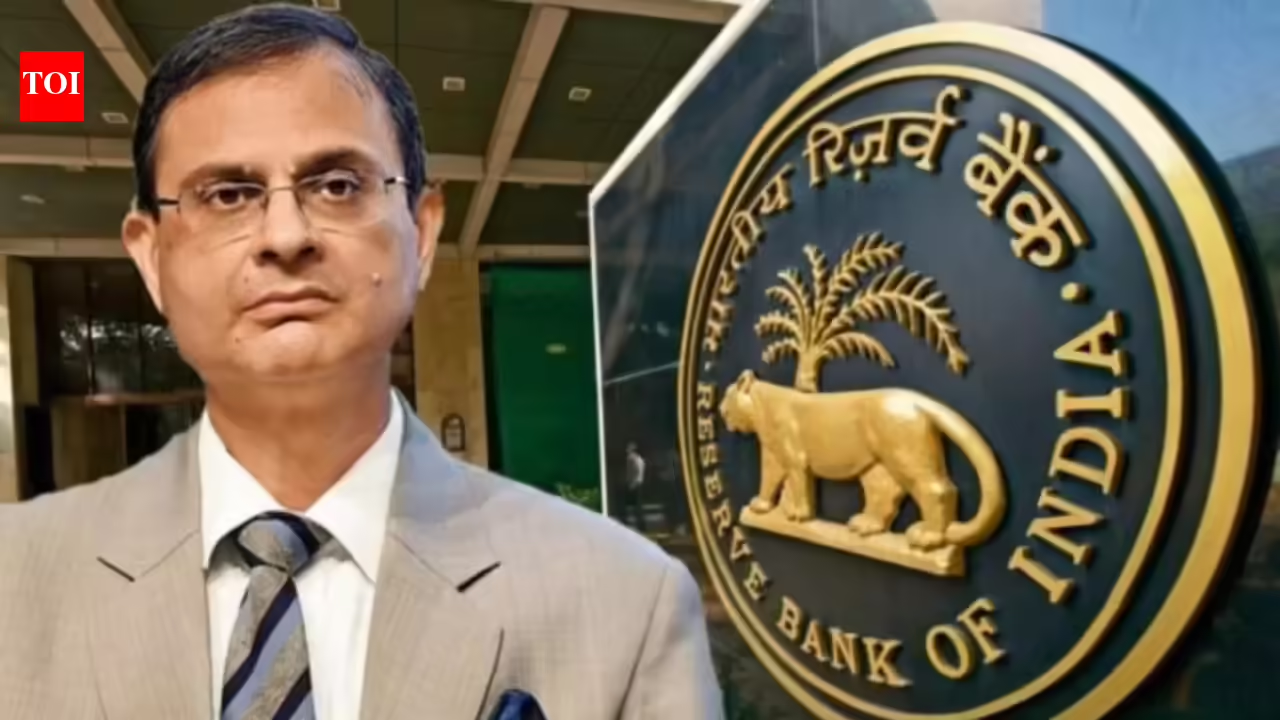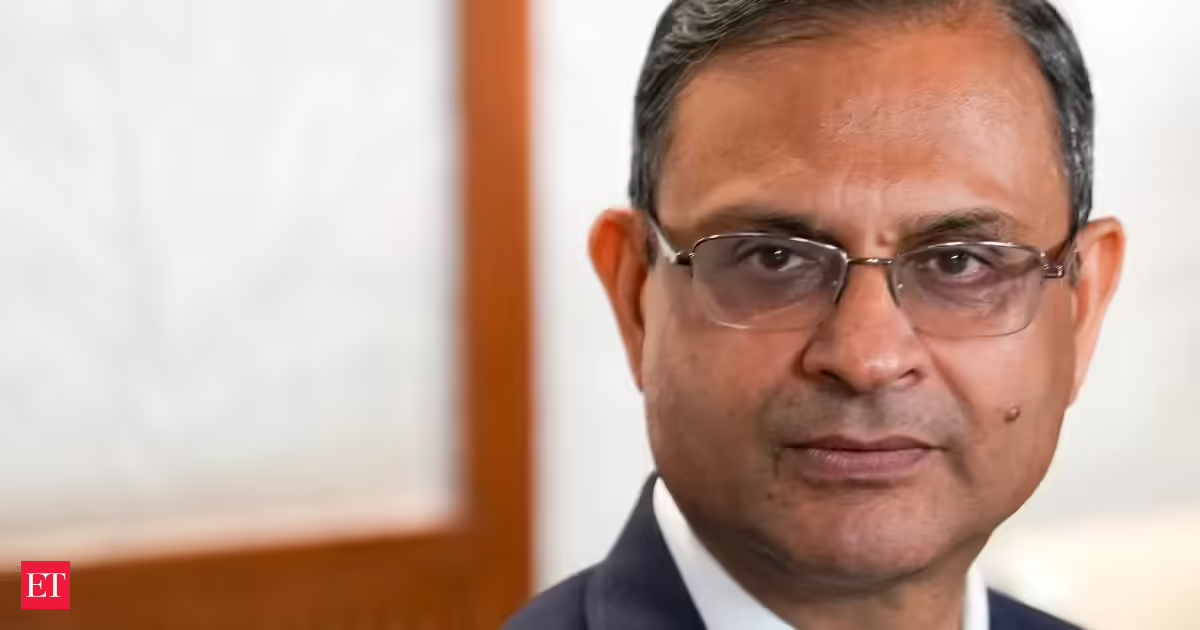
Sanjay Malhotra-led Reserve Bank of India on Friday said the escalating conflict in West Asia has emerged as a fresh source of uncertainty for the global economy, threatening trade routes, disrupting supply chains and fuelling volatility across financial markets. Yet, according to central bank chief, India remains well-equipped to navigate these external shocks with limited disruption.Speaking after the Monetary Policy Committee meeting, Malhotra acknowledged that the global economic environment has deteriorated since the committee last met. The prolonged geopolitical tensions in West Asia, he said, have intensified concerns around energy security and international trade, creating headwinds for growth across economies."The global economic outlook remains clouded by the continuing geopolitical impasse in West Asia," Malhotra noted, warning that sharply rising energy prices and disruptions to global supply chains continue to weigh on economic activity worldwide.The RBI chief highlighted that disruptions to key maritime trade routes and logistics networks have increased uncertainty in global markets, prompting businesses and investors to adopt a more cautious stance.Elevated crude oil prices, combined with supply-side constraints, are creating spillover effects across economies by raising costs for businesses and threatening inflation stability.For India, which imports a significant portion of its crude oil requirements, sustained increases in energy prices pose risks to inflation, trade balances and economic growth.However, Malhotra stressed that the country has built sufficient buffers to withstand external turbulence."We remain confident of withstanding these shocks with minimum pain," he said, adding that periods of global stress also provide an opportunity to strengthen the economy's resilience against future disruptions.Against this backdrop, the MPC unanimously voted to keep the policy repo rate unchanged at 5.25%, signalling a cautious approach as policymakers balance growth concerns with inflation risks.Malhotra said monetary policy has become more watchful in response to growing uncertainties in the external environment and the difficult trade-offs confronting central banks globally.He also pointed to signs of prolonged supply chain disruptions and noted that major advanced economies are likely to maintain tighter policy settings as they grapple with inflationary pressures stemming from higher energy costs.India vs the warPM Modi's government has moved on multiple fronts to shield its economy from the fallout of the ongoing West Asia conflict, focusing on energy security, foreign exchange stability, fiscal resilience and supply-chain diversification.The most significant measure has been the diversification of crude oil sourcing. Central assessments indicate that nearly 60% of India’s crude imports now arrive through routes that reduce dependence on the Strait of Hormuz, limiting vulnerability to disruptions in one of the world’s most critical energy chokepoints. New Delhi has also encouraged refiners to broaden their crude basket and process a wider range of oil grades from alternative suppliers, helping maintain fuel output despite disruptions in Gulf supplies.On the energy front, authorities have closely monitored crude, LPG and LNG supplies. LNG imports in May exceeded pre-war levels, while crude and LPG flows recovered after disruptions earlier in the conflict, reflecting successful efforts to secure alternative supplies and logistics arrangements.Meanwhile, to protect macroeconomic stability, the government and its central bank have relied on India’s foreign-exchange reserves and active currency management. Strong external buffers, moderate inflation and a relatively low current-account deficit entering the crisis have provided policymakers with room to manage volatility. The RBI has also intervened to curb excessive pressure on the rupee.New Delhi has additionally explored measures to conserve foreign exchange. India has also been active on restricting non-essential imports such as gold and electronics, tightening gold-import rules, and encouraging measures that reduce fuel consumption. The Centre has further examined steps to attract foreign capital, including proposals to lower taxes on foreign bond investors.Finance Minister Nirmala Sitharaman has argued that a decade of prudent fiscal management has left India with sufficient space to maintain capital expenditure despite global uncertainty. Combined with efforts to strengthen long-term energy security and reduce dependence on imported crude, these measures form the backbone of India’s strategy to cushion the economy from the West Asia war.
RBI MPC Meeting 2026: West Asia war shock is a concern, but India can ride it out 'with minimum pain', says Sanjay Malhotra
2026 RBI MPC Meeting: The Reserve Bank of India acknowledges global economic challenges from the West Asia conflict. Rising energy prices and supply chain issues create headwinds. However, India has built strong buffers. Diversified oil sourcing and robust foreign exchange reserves protect the economy. The central bank remains confident in managing external turbulence with minimal disruption.
651 words~3 min read