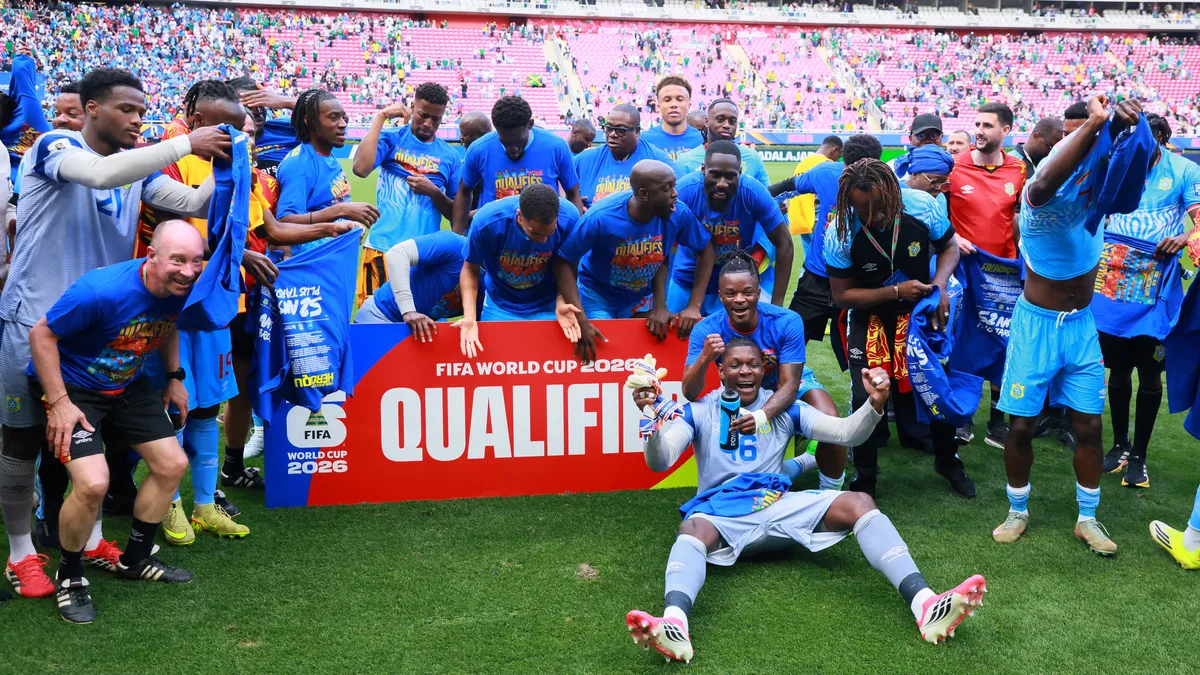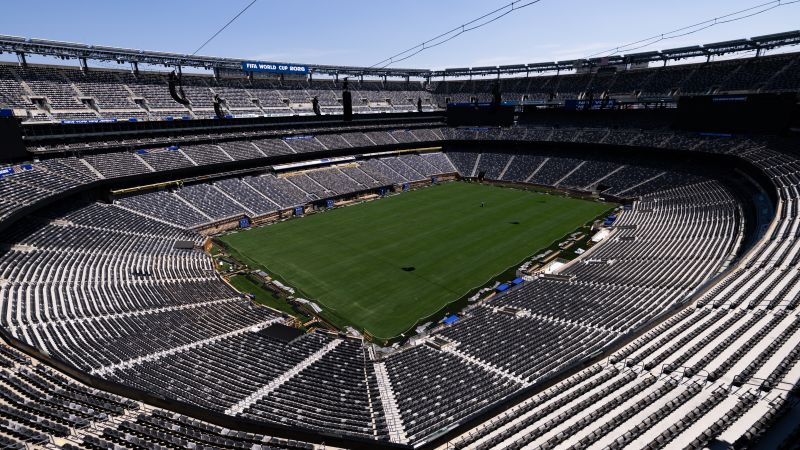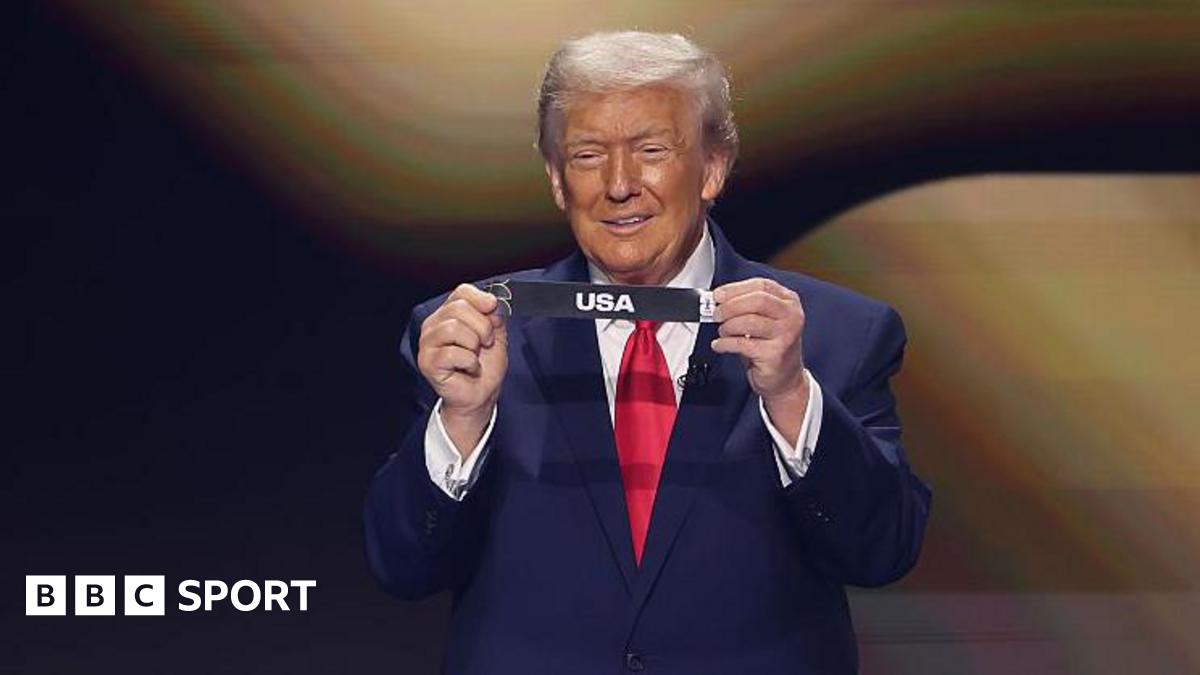
The 2026 FIFA World Cup is the largest mass gathering event in U.S. history. More than five million tickets have been sold across three countries and 16 cities over 39 days, dwarfing the 3.4 million total attendance at the 2022 World Cup. President Trump championed the hosting bid, created a White House task force for the World Cup that he chairs and accepted FIFA’s inaugural “Peace Prize” at the draw in December. Yet the federal government allocated $625 million for World Cup law enforcement and security, and zero for public health.As an infectious disease physician and epidemiologist, I didn't come to soccer on my own. My late husband, Grant Wahl, covered multiple World Cups for Sports Illustrated starting in 1998. He died at the 2022 tournament in Qatar. The 2026 World Cup in North America was the one he had been building toward his whole career. Now that it’s here, there are certain gaps in the tournament’s preparation worth addressing.Grant Wahl (right) covered multiple World Cups for Sports Illustrated prior to his death in 2022. | Doug Zimmerman/ISI Photos/Getty ImagesEvery prior mass gathering of this scale has required centralized public health coordination. The 2006 World Cup in Germany was hit by a norovirus outbreak. Two measles cases at the 2010 Vancouver Olympics infected 82 people across British Columbia. In 2024, extreme heat killed over 1,300 Hajj pilgrims and a meningococcal outbreak hit Umrah pilgrims. Norovirus hit the athletes’ village at the Milan Cortina Winter Olympics just four months ago.Dr. Ziad Memish, who managed health security for the Hajj for years, said the key is a single chain of command and real-time data flowing to a central command center every five minutes. “When you have too many independent partners working independently, that’s not going to fly,” Memish said. “There needs to be one entity which is accountable.” The 2026 tournament, spread across three countries, will have no such command. “I’m surprised to hear that there’s nothing like that in the US,” Memish said, “because it is critical.”No Funding, No Risk Assessment, No BriefingsFEMA confirmed that its $625 million FIFA World Cup Grant Program funds “security activities such as training, staff background checks, cybersecurity and increased police and emergency response.” Activities related to public health, biosecurity or food safety, a FEMA spokesperson said, “are not typically funded through these grants.”Health directors in the host cities of Dallas, Kansas City, Boston and Seattle confirmed the same: no additional federal public health funding.The CDC has not conducted a World Cup-specific national risk assessment, telling local health departments to “identify priority risks for their jurisdiction” and deferring broader coordination questions to the White House task force. Canada’s Public Health Agency initiated its own importation risk assessment and is preparing a rapid risk assessment for Ebola.The White House task force did not respond to repeated questions and interview requests. A congressional aide, who requested anonymity, said the task force has delivered zero biological threat briefings to the Senate Committee on Homeland Security and Governmental Affairs and the Department of Homeland Security (DHS). The aide said the committee is “concerned by the lack of detail the White House has provided.”Brian Katzowitz, a U.S. Soccer spokesperson, said that “public health protocols and preparedness falls to the local host cities.” Asked whether local health departments are part of the coordination structure, Katzowitz said that was his “assumption,” but that he did not know. U.S. Soccer has been in touch with the White House task force, he said, but “I don't believe from a public health standpoint.” FIFA did not respond to requests for comment.From Wastewater to the ERIn mid-May, measles was detected in Kansas City, Mo., wastewater, according to Dr. William Goedel, an epidemiologist at Brown University’s Pandemic Center. Kansas City will host six World Cup matches and the area is home to four national team base camps. Measles in wastewater typically appears five to seven days before patients show up in emergency departments.“If you have to ask the question, is the United States prepared for a deadly biological emergency, the continued transmission of measles gives you a very clear answer,” said Dr. Jennifer Nuzzo, director of Brown University’s Pandemic Center. “And that answer is no.”Kansas City will host six World Cup games, including two in the knockout stage. | Denny Medley-Imagn ImagesTexas, which will host matches in both Dallas and Houston, is the only World Cup host state that scores “low” on national preparedness rankings published by Trust for America’s Health. Texas also lacks accreditation from both the Public Health Accreditation Board and the Emergency Management Accreditation Program.“Local health departments are being asked to prepare for a massive, extended international event without a dedicated federal public health funding stream to support that work,” said Dr. J. Nadine Gracia, CEO of Trust for America’s Health. Said National Special Pathogen System executive director Dr. Laura Evans: “I don’t think hospitals have gotten additional resources specifically for preparing for the World Cup.”In January 2025, the National Special Pathogen System modeled a MERS outbreak during the World Cup in a tabletop exercise, identifying gaps in cross-city coordination, rapid case identification and surge capacity. Dr. Krutika Kuppalli, an infectious disease physician in Dallas, independently built a MERS case for area hospitals. Standard rapid diagnostic panels do not test for MERS. Detection requires the Laboratory Response Network, a system of government labs designed for public health emergencies, and most clinicians would not think to order it. “Travel history needs to be a vital sign,” said Kuppalli.In the New York area, which will host the World Cup final at MetLife Stadium, Dr. Vikramjit Mukherjee, chief of critical care and the special pathogens program at Bellevue Hospital, said MERS “could easily become a super spreader event in a busy ED [emergency department] or a busy stadium.” Bellevue has the only biocontainment unit in New York City: two beds for viral hemorrhagic fevers, 10 for respiratory diseases. Nationally, there are only 26 such beds across 13 regional treatment centers.MetLife Stadium in New Jersey will host the World Cup final. | Yannick Peterhans/NorthJersey.com / USA TODAY NETWORK via Imagn ImagesDr. Syra Madad, chief biopreparedness officer at NYC Health + Hospitals, said the system is absorbing World Cup preparations into its existing budget. “This is just something that we’re doing as our bread and butter,” Madad said.BioWatch, the federal bioterrorism air detection system, was still not fully operational in Dallas as of early June, according to Dr. Philip Huang, director of Dallas County health and human services. FEMA said BioWatch “has been working with host cities since 2024,” but did not confirm whether detection systems were running.Host cities expect fans in unsanctioned encampments with no running water or sanitation—conditions that triggered a hepatitis A outbreak in San Diego in 2017. Dr. Marvia Jones, director of the Kansas City health department, said fans are already planning to camp on open land and other nontraditional lodging because hotels are full or unaffordable. Her top concern is the near impossibility of finding and quarantining people in those encampments if an outbreak hits. “Public health is back to being in a position of having to be vigilant and having to cover all the bases and being sort of an afterthought in terms of resources,” said Jones.The WorkaroundsWith no federal public health coordination, universities and the U.S. military stepped in.Georgetown University built the Health Security Operations Center (HSOC), which pulls data from more than 30 partners and produces daily situation reports for DHS, the White House and the Department of Health and Human Services. “We don’t have any authority or wheels-up capability,” said HSOC director Dr. Rebecca Katz.The Armed Forces Health Surveillance Division produced country-by-country importation risk maps for each U.S. host city, analysis that the CDC never conducted or requested. Defense Health Agency officials said the military’s surveillance does not coordinate with the CDC dashboard, Georgetown or Brown. None has enforcement authority or the power to compel a jurisdiction to act.Host cities have formed their own networks. A wastewater surveillance working group connects cities across all three countries, but participation is voluntary and there is no centralized command coordinating the data. “We’re not anticipating sharing with other host cities” beyond routine public health channels, said Dr. Michelle Murti, Toronto's medical officer of health.The FDA is participating in a “FIFA interagency workgroup” on food safety with Canada, Mexico and FIFA—the only federal interagency coordination on a non-security issue that any agency disclosed.A CDC spokesperson disclosed a World Cup situational awareness dashboard pulling wastewater, syndromic and genomic data that was not mentioned in the agency's initial April response. The agency would not say how it connects to the White House task force.The World Cup Starts June 11, Yet Gaps Remain Concurrent outbreaks of Ebola in the Democratic Republic of the Congo (DRC) and hantavirus in South America are already straining global response capacity. The White House has issued a Title 42 order barring entry to anyone who has been in the DRC, Uganda or South Sudan within the past 21 days. However, the DRC canceled its pre-tournament camp in Kinshasa as a precaution since the entire DRC World Cup squad already plays outside of the country. Canada has enhanced airport screening for travelers from Ebola-affected areas.The Democratic Republic of the Congo team trained in Belgium and Spain this week instead of returning home due to an Ebola outbreak. | Nicolas Tucat/AFP/Getty Images)“[The U.S.] left WHO, but they have not left PAHO [Pan American Health Organization] yet,” said Kuppalli. But the effects are already visible: CDC representatives no longer participate in WHO calls, and all U.S. secondees have been recalled. “When you’ve lost all the institutional knowledge,” Kuppalli said, “how do you even respond to something?”When the Ebola outbreak was declared in early May, the CDC’s Health Alert Network notification took five days to reach clinicians. Africa CDC responded the same day. The lag is already measurable.“Three weeks before the tournament start is not when to do it,” Kuppalli said of World Cup preparations. “This should have been going on for years now.”More World Cup from Sports IllustratedAdd us as a preferred source on GoogleFollow
Why the U.S. Is Unprepared for a Potential Public Health Outbreak at the World Cup
The federal government spent $625 million on World Cup security—and none of it went to public health. Just days away from the tournament, major concerns remain.
1,679 words~8 min read