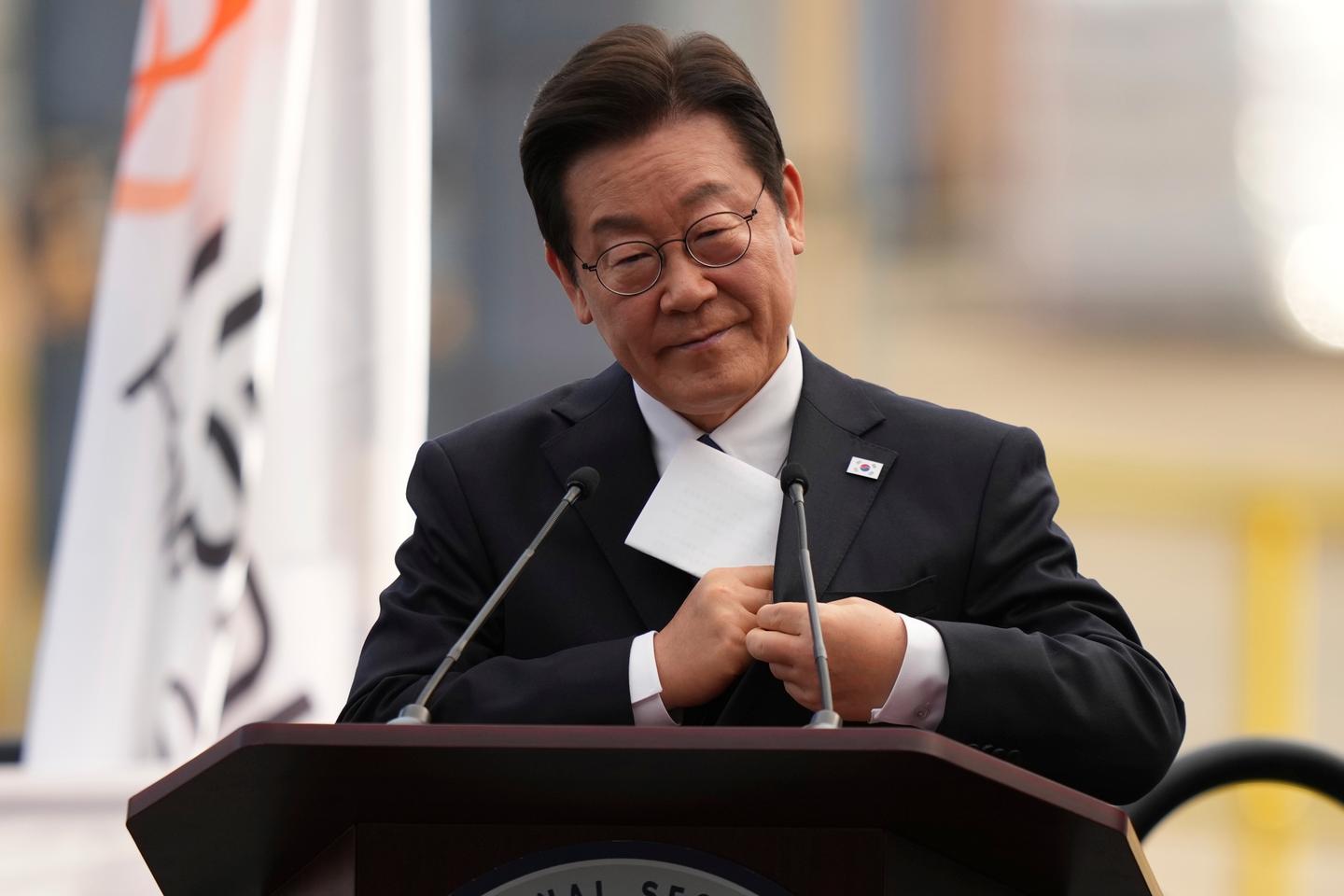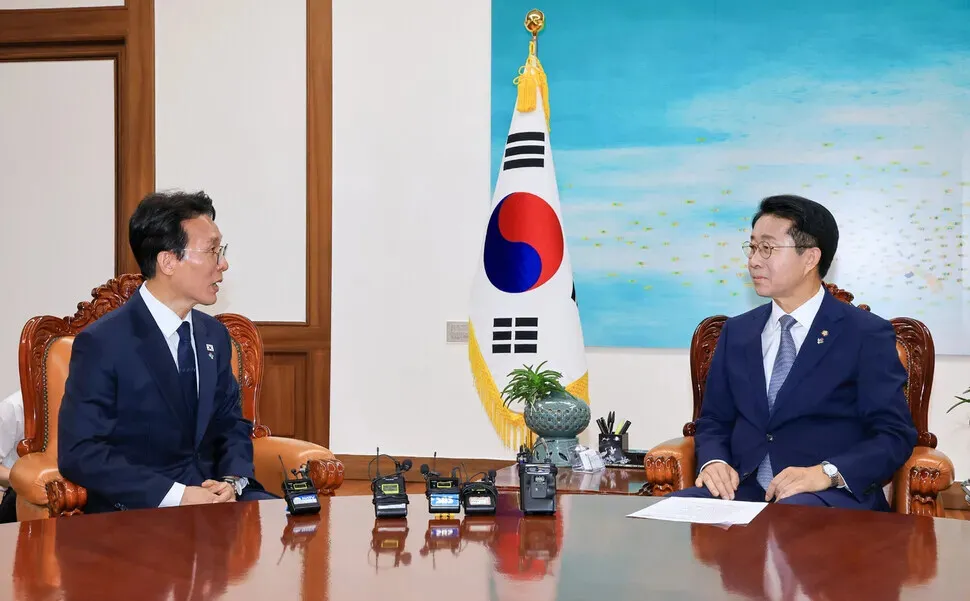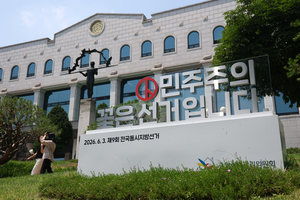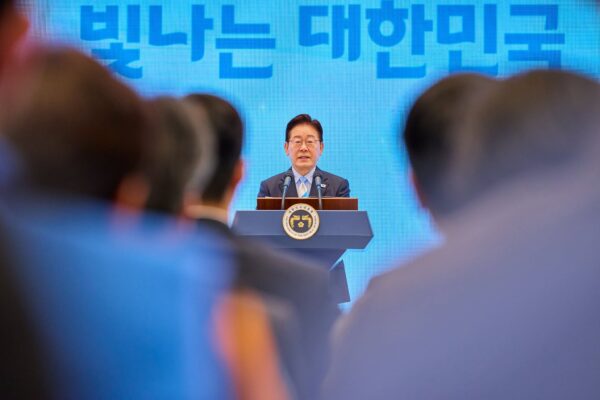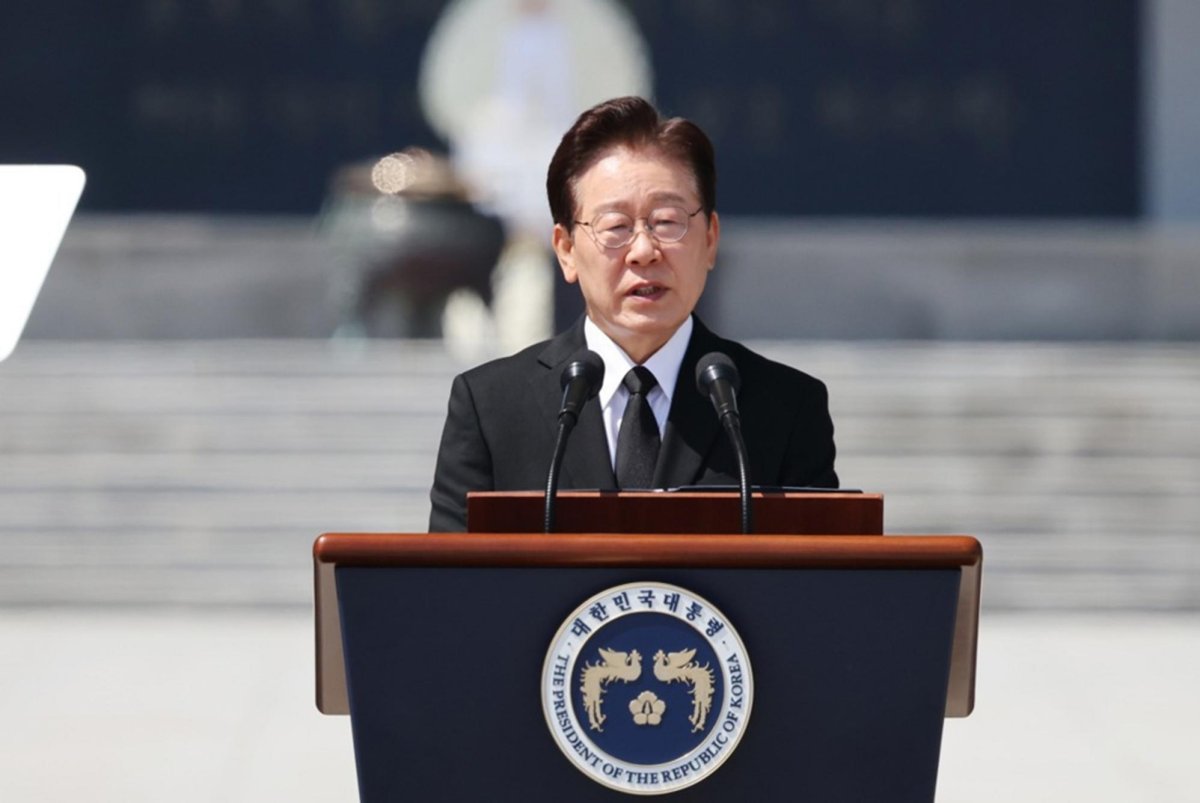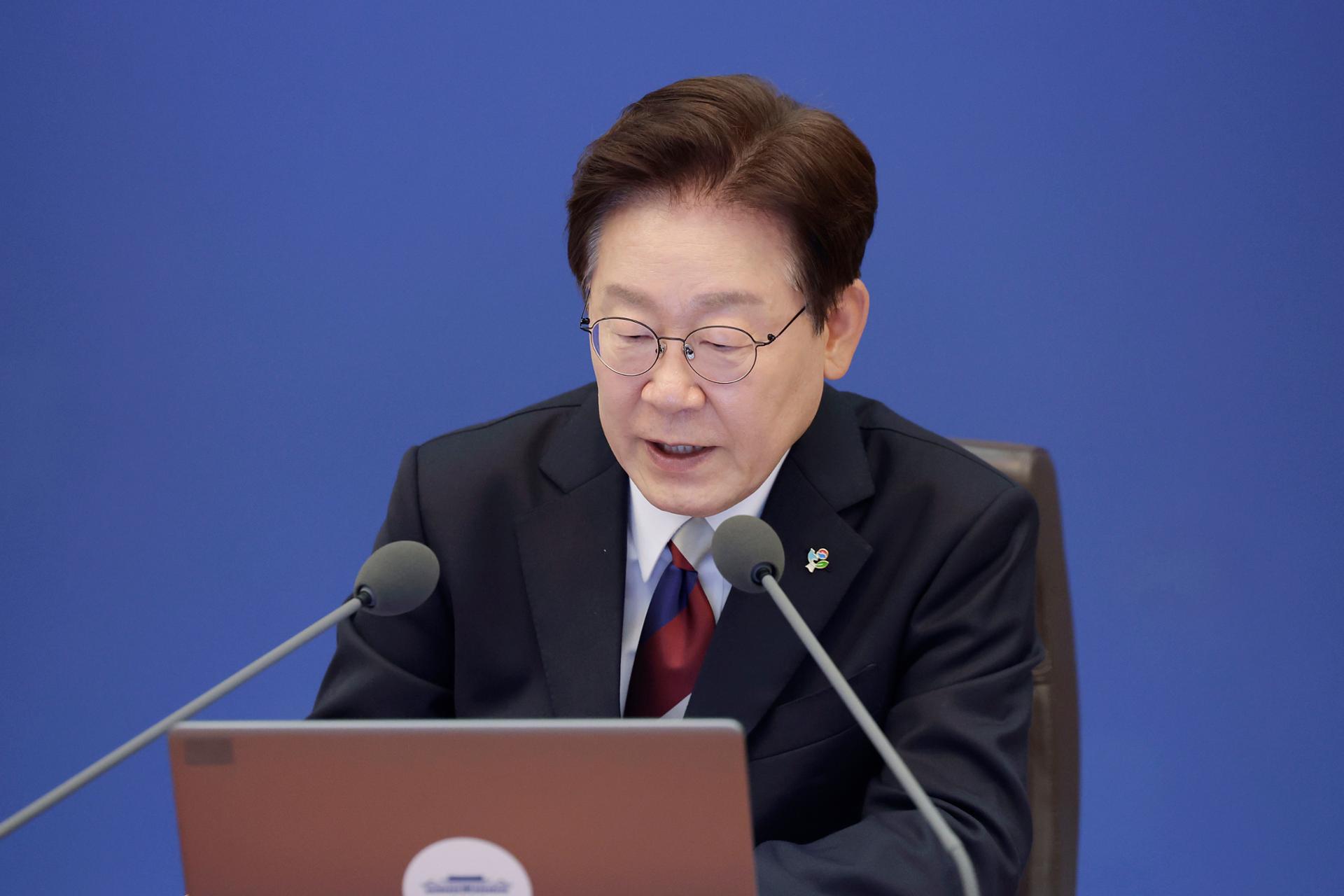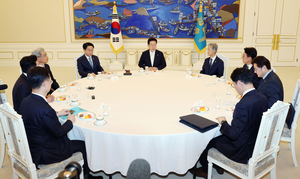
President Lee Jae Myung (center) holds a meeting with the leaders of the legislative, judiciary and administrative branches at the presidential office in Seoul on Monday. Attending the meeting are Supreme Court Chief Justice Cho Hee-dae, Prime Minister Kim Min-seok, Constitutional Court chief Kim Sang-hwan and National Assembly Speaker Cho Jeong-sik. (Pool photo via Yonhap) South Korea’s top constitutional leaders have agreed to pursue a sweeping overhaul of the country’s election management system and hold officials accountable for the ballot shortages that marred the June 3 local elections, according to Cheong Wa Dae.The outcome came after President Lee Jae Myung held a meeting with newly-elected National Assembly Speaker Cho Jeong-sik, Chief Justice Jo Hee-de, President of the Constitutional Court Kim Sang-hwan and outgoing Prime Minister Kim Min-seok at Cheong Wa Dae on Monday.The meeting was held to discuss how to uncover the truth behind the unprecedented ballot shortages that disrupted the June 3 local elections and prevent a recurrence.Lee Kyu-youn, senior presidential secretary for public communication, said the participants shared the view that the ballot shortages “constituted a serious infringement of citizens’ voting rights.”The senior secretary added that the participants agreed that a “thorough fact-finding process and swift measures to prevent a recurrence are necessary.”“They agreed that those responsible should face strict administrative and legal accountability, depending on the findings of the investigation or parliamentary inquiry,” he said. “They also agreed to prepare sweeping election management reforms sufficient to restore public trust.”The meeting came after the National Election Commission admitted Friday that ballot shortages occurred at 50 polling stations across the country, including 22 where voters were forced to wait because ballot papers did not arrive on time. The NEC’s head Roh Tae-ak resigned the same day.President Lee said he had called the Monday meeting because the ballot-shortage controversy had exposed a dilemma at the heart of South Korea's constitutional system. He said the NEC is an independent body largely shielded from external oversight, yet the scale of the disruption made it impossible for the government to simply look the other way.“It is difficult even to officially verify what happened,” Lee said. “But that does not mean we can simply leave the matter unattended.” President Lee Jae Myung speaks during a meeting with the leaders of the legislative, judiciary and administrative branches at the presidential office in Seoul on Monday. Lee underscored the need for consultations among the country's top constitutional leaders, arguing that the ballot shortages represented a grave failure to protect citizens' voting rights.“Regardless of how many voters were affected or whether the incident had any impact on the election outcome, the failure to properly guarantee the right to vote and ensure the full exercise of popular sovereignty is an extremely serious matter for which there can be no excuse,” Lee said.Lee said the immediate priority was to establish the facts surrounding the incident, followed by ensuring accountability and discussing measures to prevent a recurrence.“We may not arrive at a clear solution today, but we first need to clarify exactly what happened. Second, there must be accountability in a manner that the public finds appropriate,” Lee said. “Finally, we should discuss what alternatives and preventive measures can be put in place,” he added.During the meeting, Cho Jeong-sik said the matter should be investigated swiftly and thoroughly as instructed by Lee.In a post on X on Sunday, Lee ordered the creation of a joint investigative task force involving prosecutors and police to investigate the matter. Later that day, the Supreme Prosecutors’ Office said it would swiftly form a joint investigation headquarters to probe the matter.“The National Assembly will also move to establish the facts and pursue clear institutional improvements,” Cho said. “As both the ruling and opposition parties submitted requests for a parliamentary inquiry today, we will proceed without delay with a National Assembly-level inquiry to uncover the truth.”The meeting came hours after Lee highlighted the need to come up with “fundamental measures” to prevent similar failures from recurring during a news conference marking his one-year anniversary in office.
Top constitutional leaders agree on sweeping changes to election management
South Korea’s top constitutional leaders have agreed to pursue a sweeping overhaul of the country’s election management system and hold officials accountable fo
671 words~3 min read