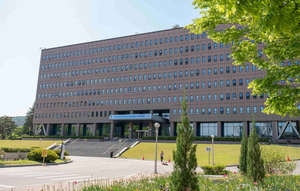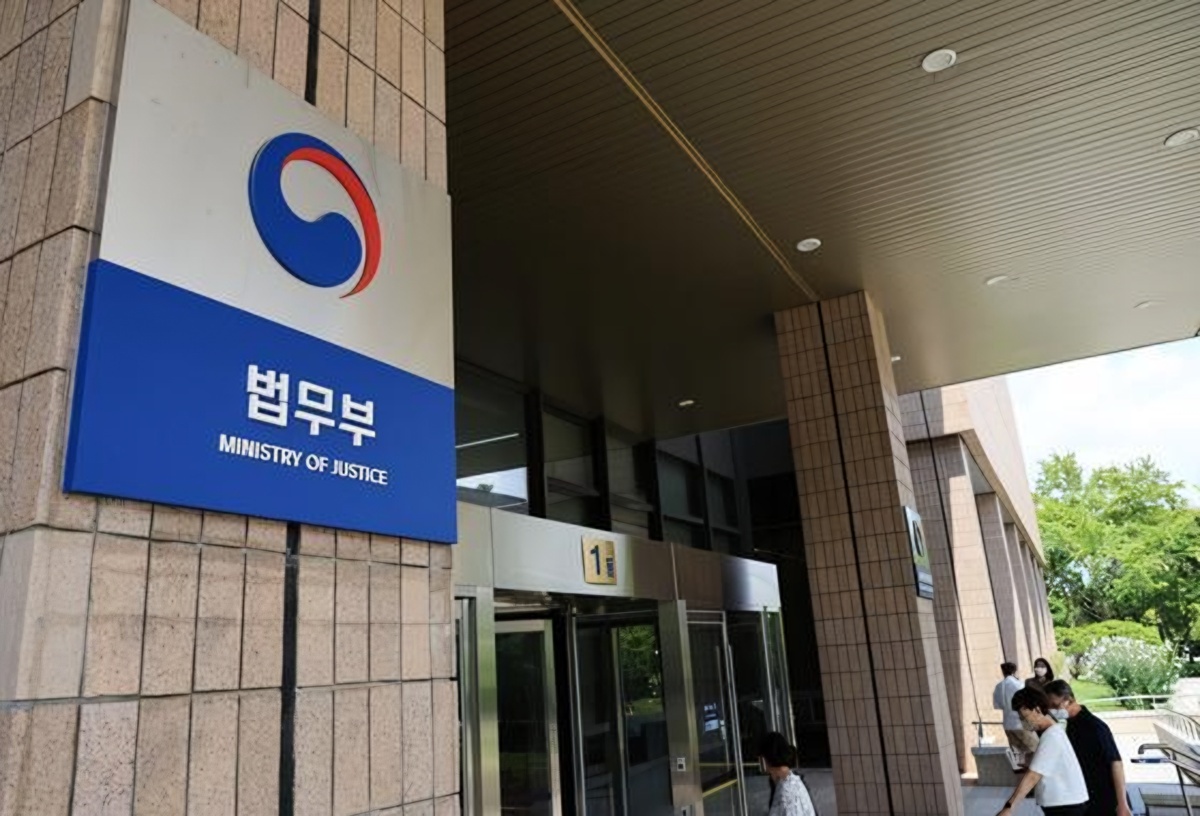
Ministry of Justice headquarters at Government Complex Gwacheon / Yonhap
Facing an acute demographic crisis that threatens both its high-tech factories and rural farms, Korea has embarked on a sweeping, structural overhaul of its immigration system, aggressively pivoting toward permanent residency tracks for foreign workers.
The Ministry of Justice released a comprehensive ledger of policy reforms enacted over the past year, framing immigration not merely as border control, but as a core economic strategy. The initiatives reveal a dual goal: a fierce global hunt for elite scientific minds and an immediate need for manual labor to sustain the country’s emptying provinces.
To anchor top-tier tech talent, Korea has dramatically lowered its historically rigid immigration barriers. The government expanded its “Top-Tier Visa” — which offers fast-tracked residency benefits — to include foreign university professors and researchers in science and technology. Previously, the program was restricted to corporate employees in eight strategic sectors, including semiconductors, artificial intelligence and electric vehicle batteries.
The reach for global talent extends deeper into academia. A newly introduced “K-STAR” visa track has expanded a fast-track permanent residency pathway to foreign science graduates across 32 domestic universities. For mid-level technical roles, a new visa category called “K-CORE” will funnel up to 800 foreign graduates of Korean community colleges annually into small and medium-sized manufacturers crippled by severe labor shortages.