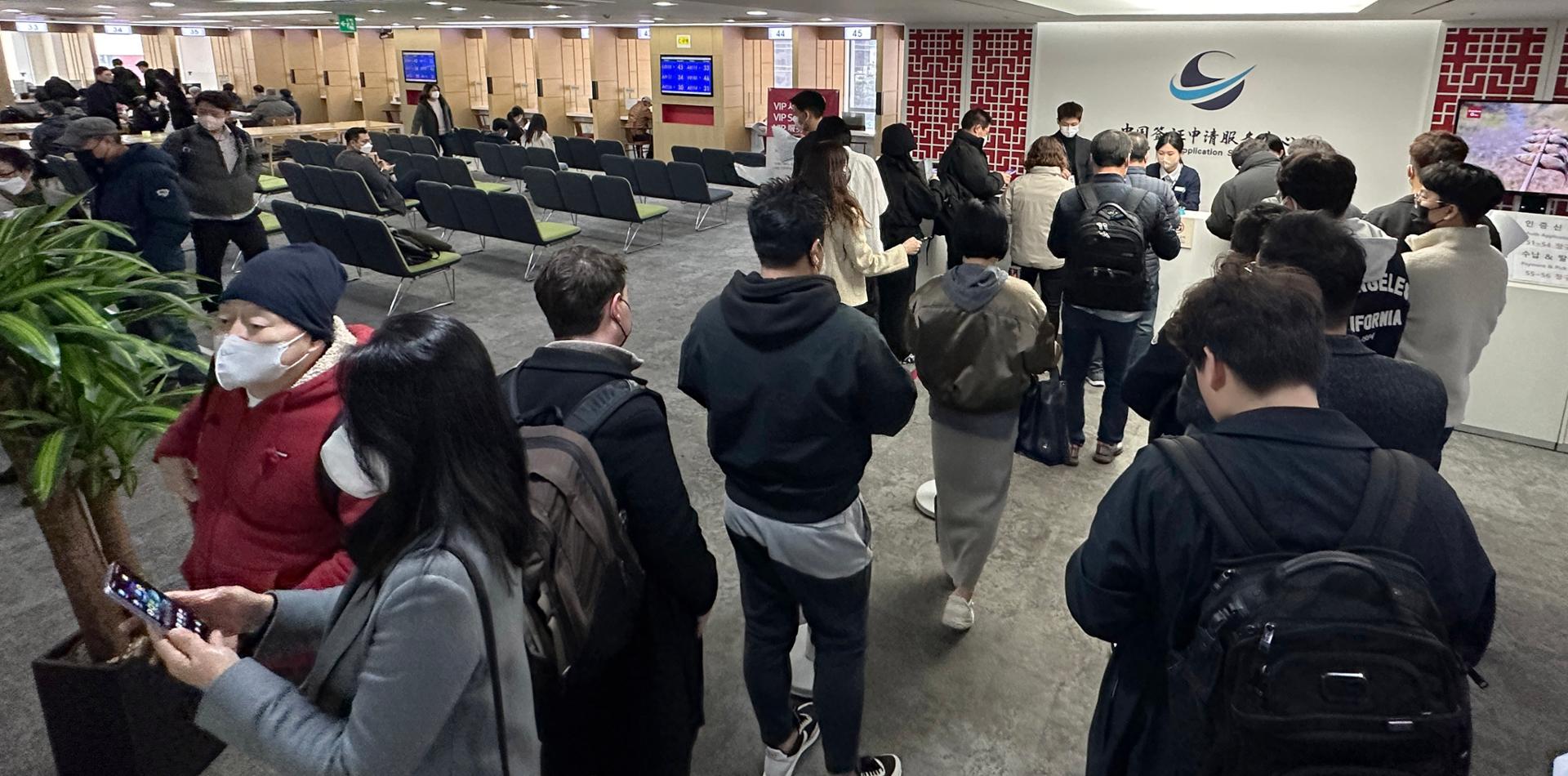
People wait to apply for visas at the Visa Application Service Center in Jung District, Seoul, March 15, 2023. Korea Times file
A sweeping consolidation of Korea’s immigration policies has triggered an unprecedented surge in residency status changes among the country’s vast global diaspora, prompting the government to aggressively expand its domestic integration infrastructure.
The Ministry of Justice said Wednesday that 36,561 ethnic Koreans living in the country had secured F-4 overseas Korean visas between Feb. 12 and May 12. The rush follows a highly anticipated policy shift earlier this year that streamlined and unified disparate residency qualifications. During that same brief window, a total of 47,632 individuals applied to transition to the F-4 status, with thousands of cases still under review.
The rapid influx has exposed long-standing gaps in the state’s resettlement pipeline, prompting immigration officials to pivot from passive oversight to active civic assimilation. To cope with the demand, the ministry announced it will provide direct government funding to diaspora support centers for the first time since the initiative’s inception in 2008. Previously, these local entities operated on precarious financial ground, relying heavily on private donations.