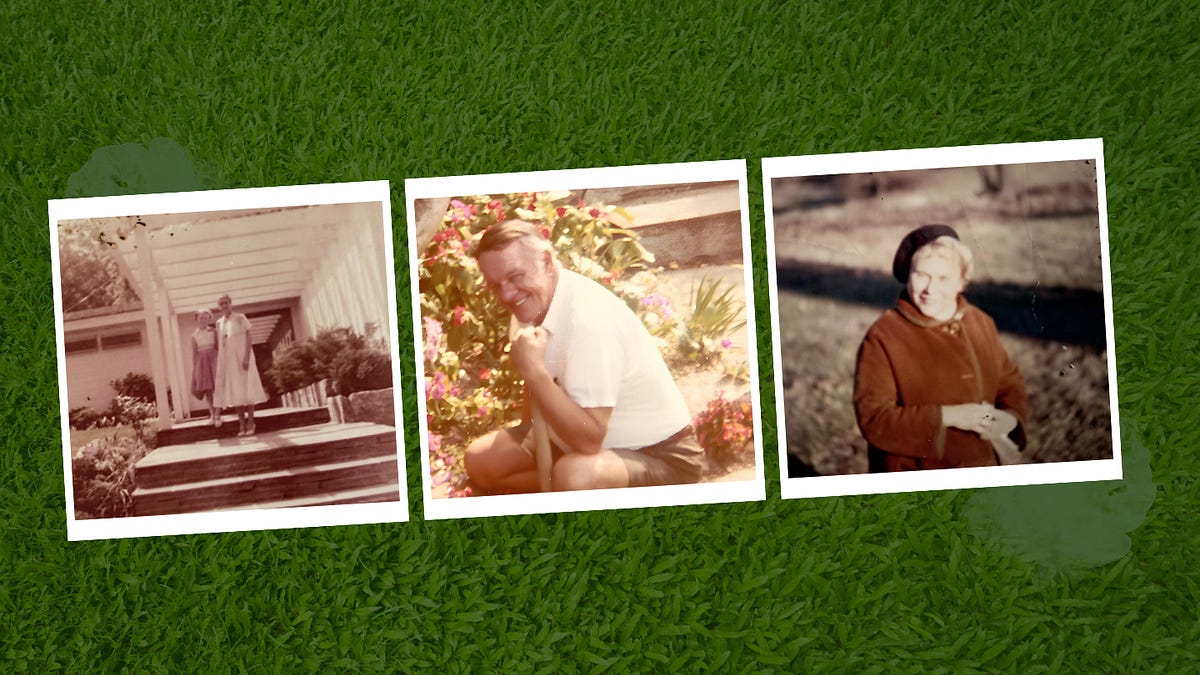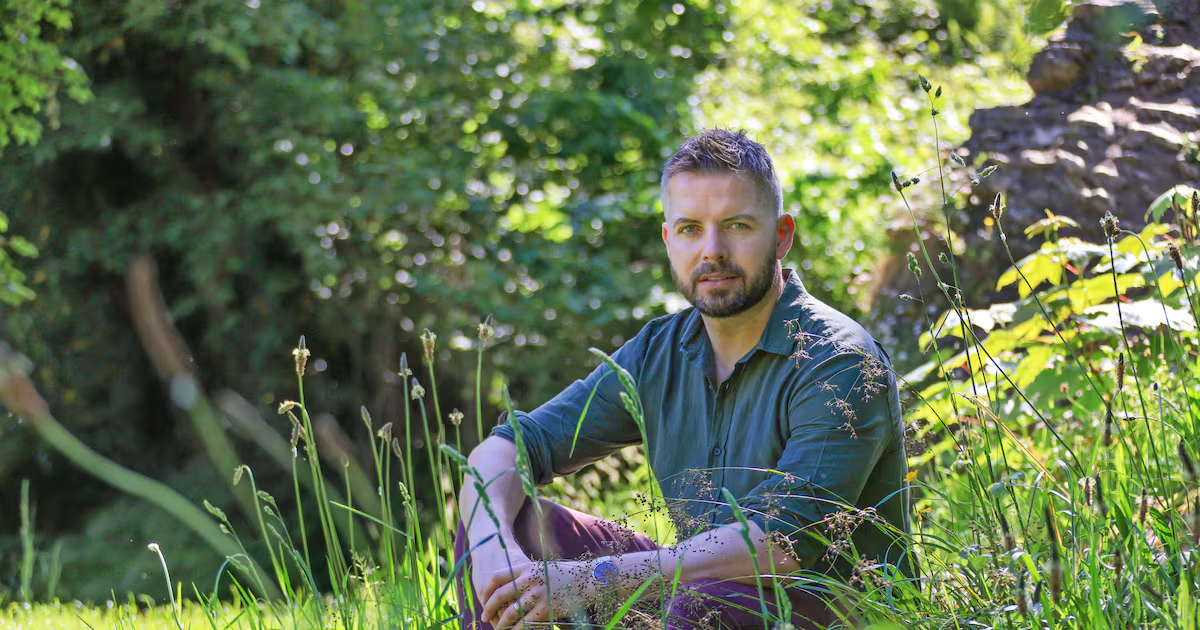
In 2020 I visited Ashgrove, a small townland just outside Ballyhooly village in North Cork, where Ashgrove Cottage, Granddad and Nana O’Connell’s former home, had once been. On that site stood a pleasant bungalow with a tidy lawn around it, home to a young family who were welcoming when my husband and I introduced ourselves on the roadside. Gone was the central cracked pathway splitting two old-fashioned raised gardens, trimmed with box hedging. Vanished were the old conifers, the blackcurrant and gooseberry bushes, and the ancient apple trees that surrounded the cottage. Instead, behind the new bungalow, one could see the sloping pastures of Greenfield farm that travelled down to the wide river, the whole panoramic view of the Blackwater Valley, punctuated by the Castle Tavern, an inn beside Ballyhooly Bridge. Ashgrove Cottage, that place now gone, is the image that comes to mind when I think of the word “home”, or how I think “home” should feel. It is the reason I remain a country boy at heart, despite my teenage daydreams of living in New York, and ultimately spending my 20s and most of my 30s living in various city centres. When I bought my apartment in Dublin in 2018, I assumed I would live in Kilmainham for the rest of my life. Perhaps the only evidence of a pull to country life was the one wish I had for my prospective home: that there would be a view of trees from my windows. There was such a view, the avenue of beech, sycamore and oak that lines South Circular Road. In winter, when their leaves were absent, from the apartment windows I could see a stretch of Phoenix Park and the obelisk that forms the Wellington Monument. Jamie O'Connell's grandparents, Tom and Nora O'Connell, pictured at the door of their home, Ashgrove Cottage Returned to nature, I was home, as if back at my grandparents’ cottage, safe among the blackcurrant bushes, the echoes of my sisters’ laughter and the ancient apple treesIn the late 2010s, I worked as a sales representative for Gill Books and spent half my week outside Dublin, often in rural Kerry. Through this I met my husband, a Kerry man, and I spent increasing amounts of time in Kenmare. Then one weekend, when I was visiting, the weekend before St Patrick’s Day 2020, the Covid pandemic hit, Leo Varadkar made his speech, and I found myself living in Kenmare for the three months of lockdown with a cabin-size suitcase of clothes and my work laptop. Perhaps if I had known this situation would happen, I might’ve dreaded the thought of being away from my apartment and city-centre life: being with friends, arranging nights out and enjoying meals in restaurants with one too many cocktails. Yet, something else happened. During those lockdown months, I rediscovered within myself a love of hedgerows, of spotting forget-me-nots, celandines and wild garlic, picking blackberries, walking under the sinuous arms of oak trees, and watching swallows dive and dance in the early evening. Returned to nature, I was home, as if back at my grandparents’ cottage, safe among the blackcurrant bushes, the echoes of my sisters’ laughter and the ancient apple trees. It has been six years now, living on the outskirts of Kenmare, taking daily walks around the town: Tubbrid, Kenmare Pier, and the loop around the wishing well in Dromore. Slightly further afield are the MacGillycuddy’s Reeks and Carrauntoohil. I love it. I also like being in a small local community, with neighbours who’ll mind the dog, who’ll mind any parcels dropped by the postman, and who you’ll chat to as you queue for coffee. I didn’t know my neighbours in my Dublin apartment block – something that is much more an indictment of me than them. [ Secret spots for wild swimming in Co KerryOpens in new window ]What is most difficult now is that I am four hours from my Dublin friends, those who, on a Thursday, I’d love to crack open a bottle of wine with and put the world to rights. There are those I miss sitting with on South William Street, having a coffee, gossiping and people-watching. I still think fondly of my Dublin home, as it was hard won as a single first-time property buyer without parental backing, and proud that it somehow came together. These things also mean “home” to me. I look at my life in Dublin, now six years ago, and I love it for what it was, but it has been put away. The truth is, for me, nature and home are inextricably interwoven. They merged during those happy summer afternoons playing in the garden of Ashgrove, and later, while adventuring in the surrounding Blackwater Valley, a world of smooth green fields, glowing fluorescent in the summer sun, forests of sycamore and oak, all framed by rich hedgerows of blackberries, wild plums and crab apples. For as many weekends as they could, Nana with her headscarf and Claddagh brooch, Granddad with his cap and sore knee, came to us and took us to that dreamlike space, to Ashgrove Cottage with its wild garden. It was happiness, without us children ever recognising it as such, a happiness that I have rediscovered since living in Kenmare.It is why I feel at peace in my adopted hometown of Kenmare, where, until recently, I walked my elderly dog most days in Reenagross, the small reserve of oaks that slopes down from Kenmare town to the estuary, where greenshanks pick for worms in low tide. It is always in nature, meadows of uncut grass or forests with dappled light, where I feel at home in the way I once did as a child. Ashgrove Cottage may be gone, but the joy I experienced there still exists in me, and it’s a feeling I revisit while immersed in the nature around my countryside home. Jamie O’Connell is the author of Diving for Pearls
‘I remain a country boy at heart despite spending my twenties and thirties in the city’
Living in Kenmare I have rediscovered the joy and peace I felt at my grandparents’ country cottage
990 words~5 min read