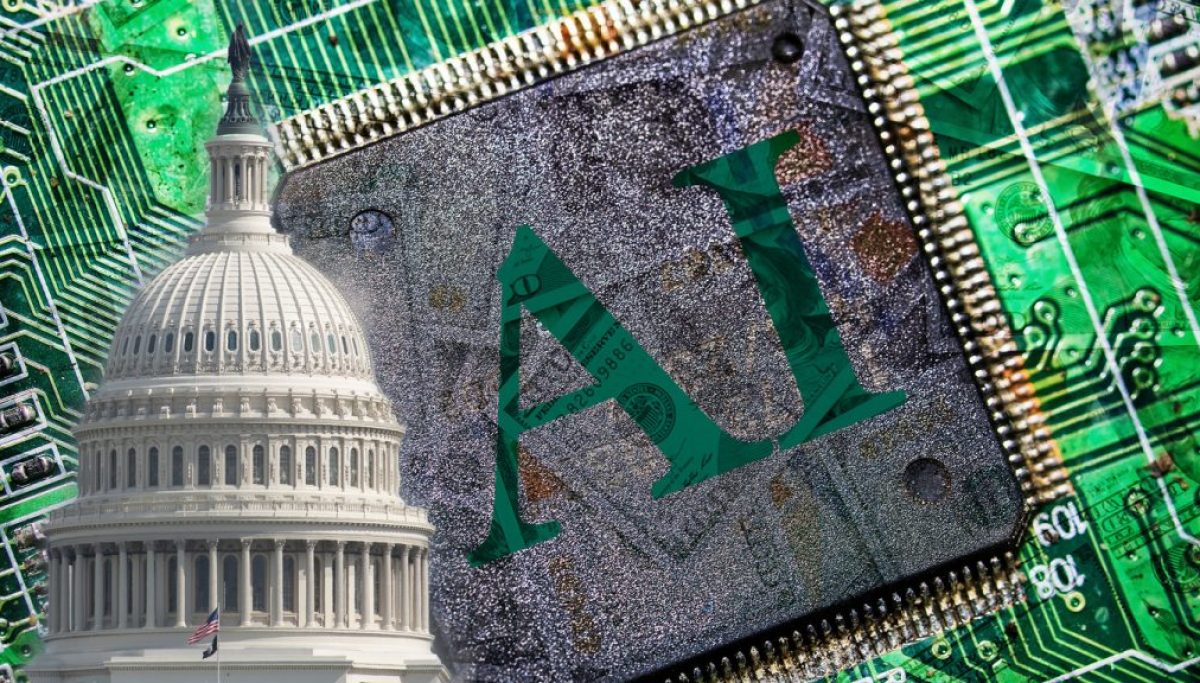
People worry about the ways artificial intelligence will change jobs, education, creativity, and daily lives, according to polling. But they harbor skepticism about the ability of government to regulate it — and rightfully so. Therefore, it’s particularly concerning when prominent thought leaders and lawmakers crusade for larger roles for the state in AI. For example, Ezra Klein, a futurist thinker and leading voice on the Left, has just proposed a government-developed “public option” AI model. Something like a government-provided or government-controlled AI entity that competes with private providers — AI.gov instead of OpenAI, Anthropic, Google, and so on. Whatever gripes people may have with current and future AI offerings, the notion of government-run AI poses several major problems.
Government cannot keep pace with innovative, cutting-edge tech companies. Government is pretty good at collecting and distributing data and administering programs under well-defined rules, such as sending Social Security checks and averaging hospital costs, but it’s just not set up to produce commercial services efficiently or quickly. Consider that the IRS recently needed billions of dollars to update its systems, including migrating from a software coding language that is practically extinct in the private market. Healthcare.gov was a colossal failure at launch, despite having years to prepare. How is government supposed to build or improve an extremely sophisticated product, such as AI, or compete with what the rest of the world is producing? A government AI would be obsolete before it was finished.