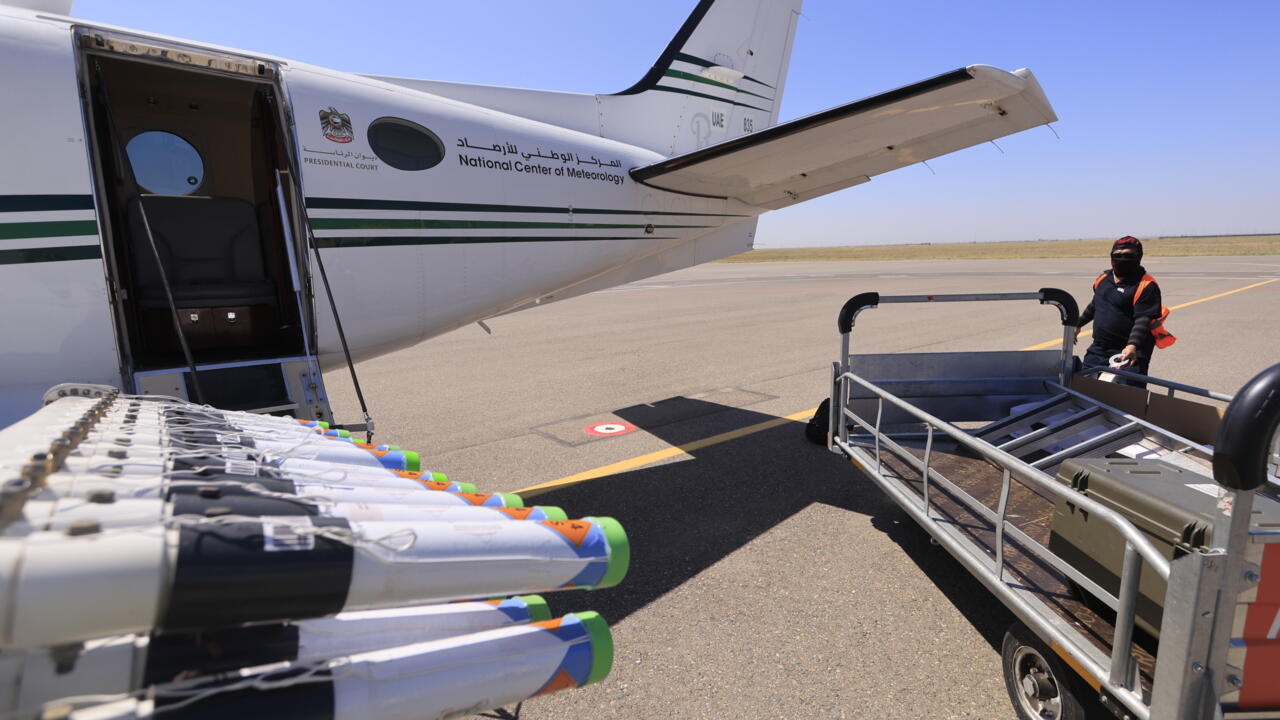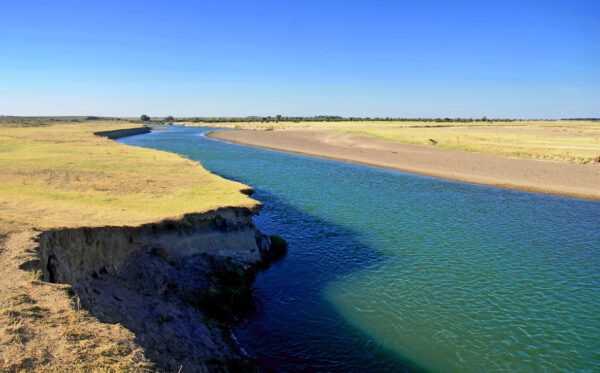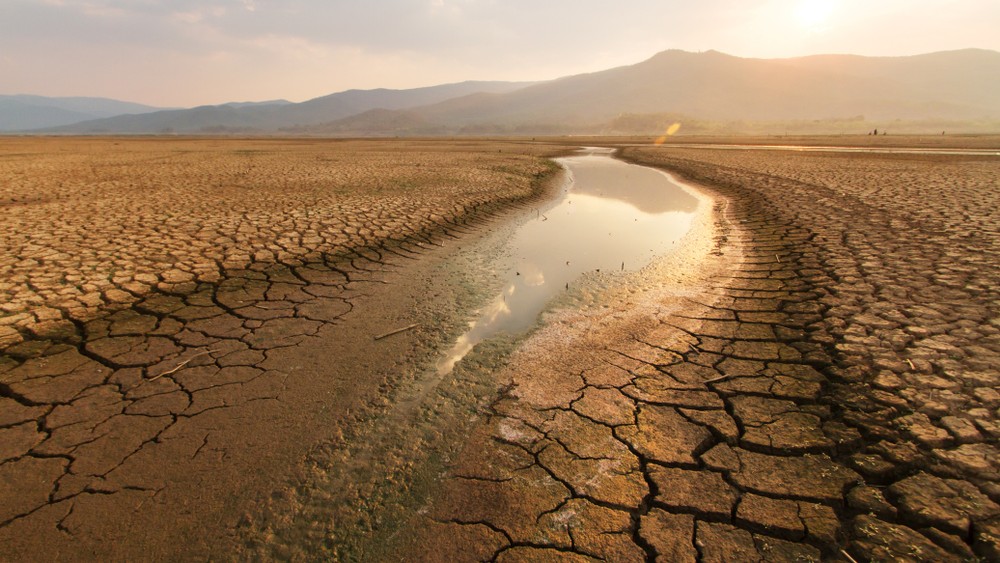
When Kazakhstan launched Central Asia’s first large-scale cloud-seeding program on May 17, it called it a high-tech response to drought, water scarcity, and accelerating desertification.Run in the southern Turkistan region in partnership with the United Arab Emirates (UAE), the project targets more than 900,000 hectares of vulnerable farmland in an effort to boost rainfall and stabilize agricultural output in one of the country’s driest zones.Cloud seeding is a weather modification technique that disperses substances into clouds to encourage precipitation and increase rainfall or snowfall.But across the border in neighboring countries, the experiment has sparked immediate concern over whether manipulating rain in one state could have unintended consequences beyond its borders.The debate comes at a time when weather modification is increasingly morphing from a scientific pursuit into a geopolitical flashpoint.
A now-deleted social media post from the Iranian Embassy in Afghanistan on April 21 claimed that an Iranian military strike on a secret UAE facility had altered weather patterns across the Middle East. The post boasted that the military operation had “improved” regional weather conditions, pointing to unusual rainfall and a drop of around 5 degrees Celsius in the brutally hot zones of Iran and Iraq.While that specific claim was widely ridiculed by global meteorologists, it highlighted a broader trend: Iran has repeatedly accused its neighbors -- particularly the UAE and Saudi Arabia -- of stealing its clouds and deploying rain-collecting technology as a climate weapon. Similar anxieties are now appearing in Central Asia.The Social Media StormJust the day after the experiment began, Kazakhstan’s meteorological agency Kazhydromet issued a forecast warning of heavy rains across several southern regions.“Heavy rains are expected on May 19 and 21 in the Kyzylorda and Turkistan regions, and on May 19–21 in the Zhambyl region.”When the storms arrived as forecast, social media platforms quickly filled with speculation that the downpours were the direct result of cloud-seeding operations. The reaction escalated rapidly, prompting Kazhydromet to issue a clarification stating that the rainfall was caused by a naturally occurring cyclonic system moving across the region.But by then, the debate had already spilled across borders and into broader regional discourse about weather control and water security.In Kyrgyzstan, concerns emerged almost immediately. Former Prime Minister Akylbek Japarov warned that atmospheric systems do not respect national borders and that large-scale intervention could disrupt an already fragile regional water cycle.