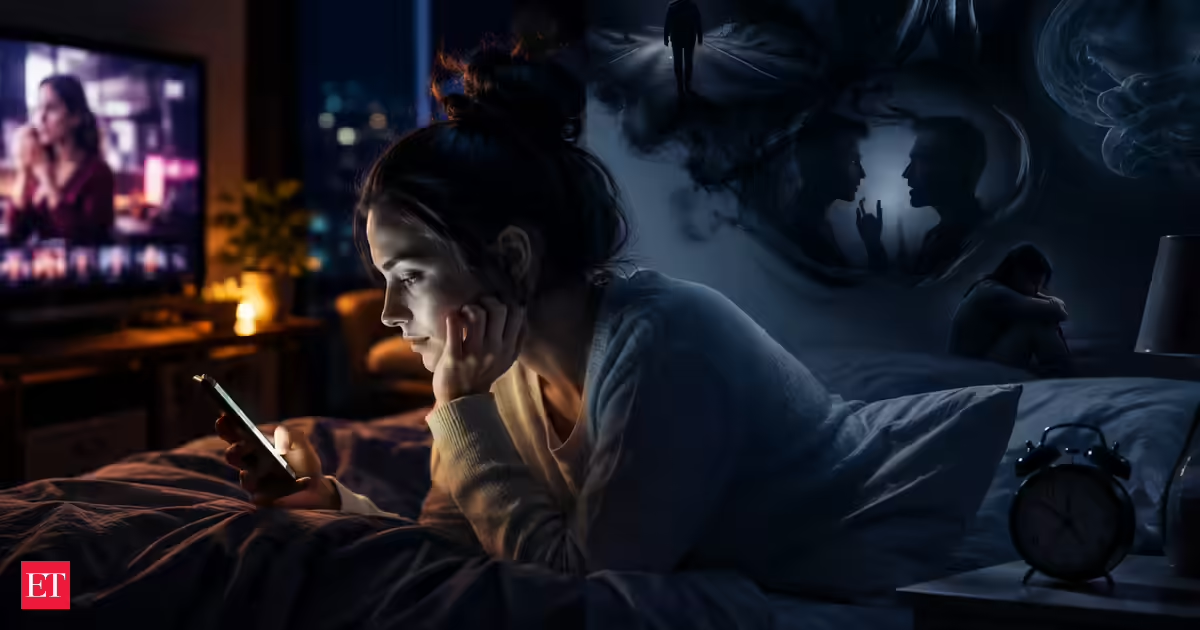
New research suggests that those who go to bed late may experience greater loneliness and late night anxiety07:28, 07 Jun 2026The time you head to bed at night could trigger loneliness and anxiety, new research suggests. A study has discovered that people who favour going to sleep later in the evening experience poorer mental health and increased feelings of isolation.The study's findings, set to be presented at the SLEEP 2026 annual meeting in the US, showed that individuals with an evening chronotype - those who naturally prefer retiring to bed and rising later - reported deteriorating mental wellbeing, heightened general loneliness, and intensified nocturnal loneliness. According to Study Finds, both forms of loneliness significantly contribute to the connection between chronotype and mental health.The research demonstrates that people with later sleep patterns experienced markedly elevated anxiety levels. Experiencing loneliness during nighttime hours was discovered to partially account for this association.Those with evening chronotypes were prone to suffering increased nocturnal loneliness, which was then associated with raised anxiety levels. When nighttime loneliness was factored in, the direct correlation between chronotype and anxiety became statistically insignificant, with the indirect pathway through nocturnal loneliness emerging as critical - indicating a vital connection between delayed sleep schedules and anxiety."People with later sleep patterns reported poorer mental health in part because they also experienced greater loneliness, including feelings of loneliness at night, and increased levels of anxiety," said lead author Alec Harlow, a researcher at Brigham Young University in Provo, Utah. "The findings suggest that both daytime and nighttime social experiences appear to be relevant when examining mental health among evening chronotypes."Chronotype refers to a person's natural tendency towards their sleeping and waking schedule, and evening types – those who prefer later bedtimes and wake times - may be more vulnerable to social misalignment with standard daily routines. According to the American Academy of Sleep Medicine, sleep is essential to good health, requiring adequate duration, high quality, suitable timing and consistency, alongside the absence of sleep disturbances or disorders.The study enlisted 442 participants through the online research platform Prolific. Those involved completed an online survey assessing chronotype using the Morningness-Eveningness Questionnaire, nocturnal loneliness using the Nocturnal Loneliness Scale, and anxiety using the Patient-Reported Outcomes Measurement Information System Anxiety Short Form.A structural equation model was then used to establish whether nocturnal loneliness served as a mediating factor between chronotype and anxiety. Harlow observed that the findings emphasise loneliness - particularly nocturnal loneliness - as a potential area for intervention amongst evening types.He said: "Evaluating and addressing loneliness, including the challenges that arise at night, such as anxiety, may represent a meaningful intervention target for therapists, clinicians, and researchers to improve the well-being of people with later chronotypes."Article continues belowIf you are experiencing anxiety, the NHS says you should speak to your GP if:You're struggling to cope with anxiety, fear or panicThings you're trying yourself are not helpingYou would prefer to get a referral from a GP
Night owls 'may suffer more loneliness and anxiety'
New research suggests that those who go to bed late may experience greater loneliness and late night anxiety
489 words~2 min read