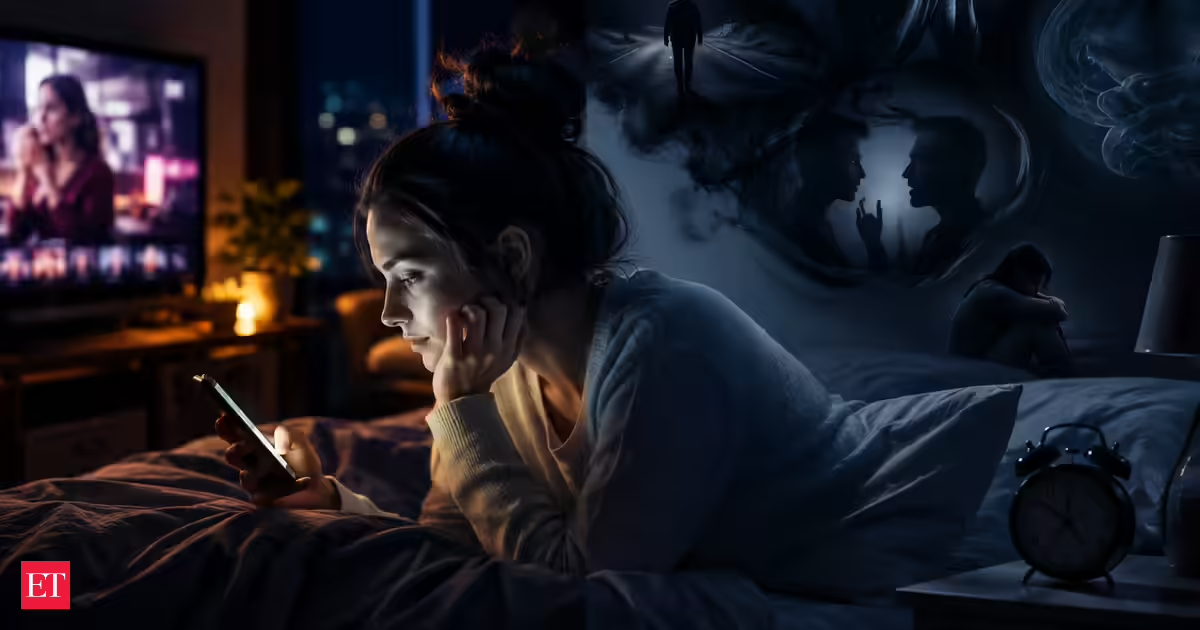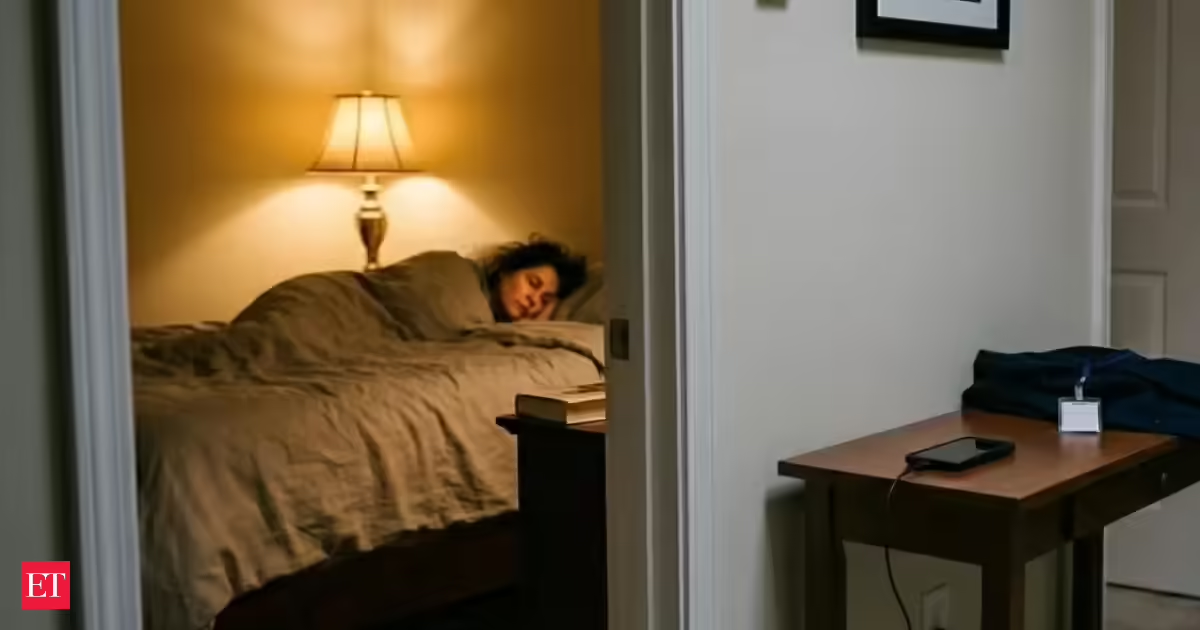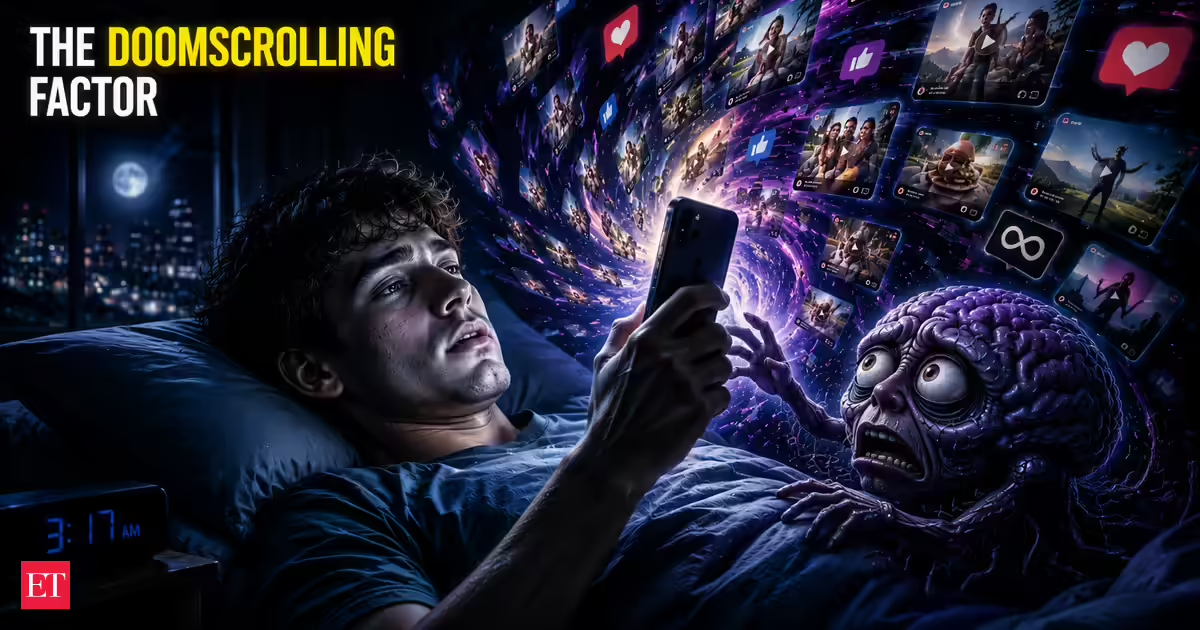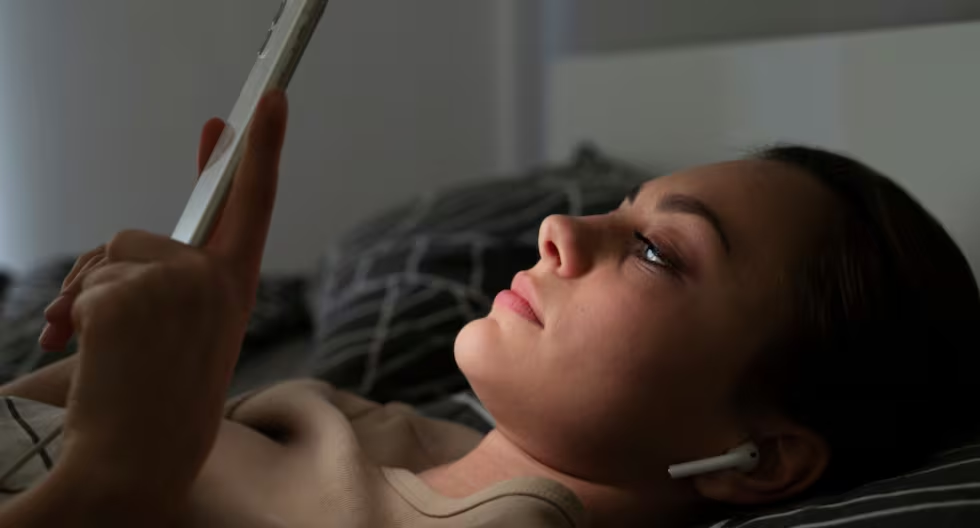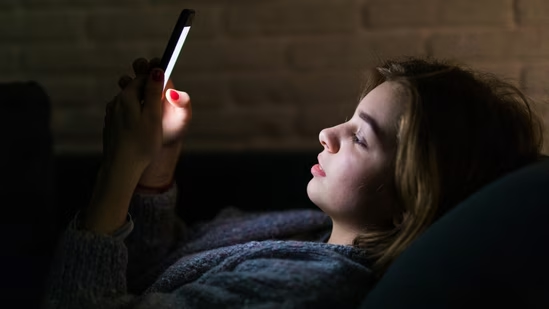
Your brain begins to ‘behave differently' if you continue to use your phone late at night, instead of sleeping on time. After dinner, when you head to bed, bedtime may not actually begin when you lie down. For many, they may sleep well after one or two hours, after they are done with doomscrolling, and even their feed seems to have run out of things to show. And it is not just social media.ALSO READ: Sleep doctor shares 2 rules to fix sleep routine and rest better: ‘When you go to bed at 10…’Many are in the habit of checking their phone in bed at night. (Picture credit: Freepik)Since most people spend the day busy with work, errands and responsibilities, it may extend bedtime at night in hope of getting some ‘me time,’ whether by binge-watching their favourite shows or curating their dream Pinterest boards. But this repeated late-night screen use can interfere with sleep, mood, focus and overall brain health. ,HT Lifestyle, in a chat with Dr G.K. Jadhav, senior consultant- radiation oncology at Indraprastha Apollo Hospital, New Delhi, to understand the health implications of late-night screen use.Why screens can confuse the brain at night?The doctor believed that screens can actually confuse the brain at night because the brain follows a natural internal clock that is responsible for regulating sleep and wake cycles.How does this natural process get disturbed by screens?“As evening approaches, the body starts producing melatonin, the hormone that signals it is time to sleep. However, smartphones, laptops and televisions emit blue light, which can interfere with this process and delay the brain’s sleep signals,” Dr Jadhav noted.To put it simply, your brain behaves as if it is still daytime, and this is not normal or natural. The doctor further flagged that this is not an isolated, scattered habit. This behaviour is now seen across the world, with adults globally setting their bedtime by an hour late due to late-night screen use.What does sleep loss do to your brain?The immediate effects may include feeling tired the next day. Dr Jadhav also drew attention to poor mood, reduced focus, and weaker memory. But when late-night screen use becomes a routine, you may begin to notice yourself becoming more irritable, mentally exhausted, and less able to manage stress. While these are the short-term implications, the long-term implications can be even more concerning, ranging from worsening existing neurological and mental health concerns to disrupting the body's natural sleep-wake cycle.Quit extending your bedtime! (Picture credit: Freepik)What can you do to sleep better?Listen to a podcast instead of watching something before bed! (Picture credit: Pexels)How can you fix your sleep? The oncologist listed bedtime changes:Put your phone away a little earlier before sleeping, at least 30 to 60 minutes before bed.Switch on night mode or blue filter in the evening on your devices.Avoid endless scrolling while lying in bed.Create a screen-free wind-down routine before bedtime.Read a book instead of using your phone.Listen to calming music or a relaxing podcast.Note to readers: This article is for informational purposes only and not a substitute for professional medical advice. Always seek the advice of your doctor with any questions about a medical condition.Adrija Dey’s proclivity for observation fuels her storytelling instinct. As a lifestyle journalist, she crafts compelling, relatable narratives across diverse touchpoints of the human experience, including wellness, mental health, relationships, interior design, home decor, food, travel, and fashion that gently nudge readers toward living a little better. For her, stories exist in flesh and bones, carried by human vessels and shaped through everyday endeavours. It is the small stories we live and share that make us human. After all, humans and their lores are the most natural and raw repositories of stories, and uncovering them, for her, is akin to peeling an orange under a winter afternoon sun. Always up for a chat, she believes the best stories come from unfiltered yapping, where "too much information" is kind of the point. A graduate of Indraprastha College for Women, University of Delhi, and an alumna of the Indian Institute of Mass Communication (IIMC), Delhi, Adrija spends her idle hours cocooned with herbal tea and a gripping thriller, scribbling inner monologues she loosely calls poetic pieces, often with her succulents in attendance. On lazier days, she can be found binge-watching, for the nth time, one from her comfort-show holy trinity: The Office (US), Brooklyn Nine-Nine, or Modern Family. Dancing by herself to her peppy playlists, however, is an everyday ritual she swears by religiously.Read MoreSocial MediaHealthMental HealthSleepCatch every big hit, every wicket with Crick-it, a one stop destination for Live Scores, Match Stats, Quizzes, Polls & much more. Explore now!.Catch your daily dose of Fashion, Taylor Swift, Health, Festivals, Travel, Relationship, Recipe and all the other Latest Lifestyle News on Hindustan Times Website and APPs.See Less
Doomscrolling before bed? Oncologist shares how late-night screen use may ‘confuse’ your brain
Your brain begins to ‘behave differently' if you continue to use your phone late at night, instead of sleeping on time. | Health
801 words~4 min read