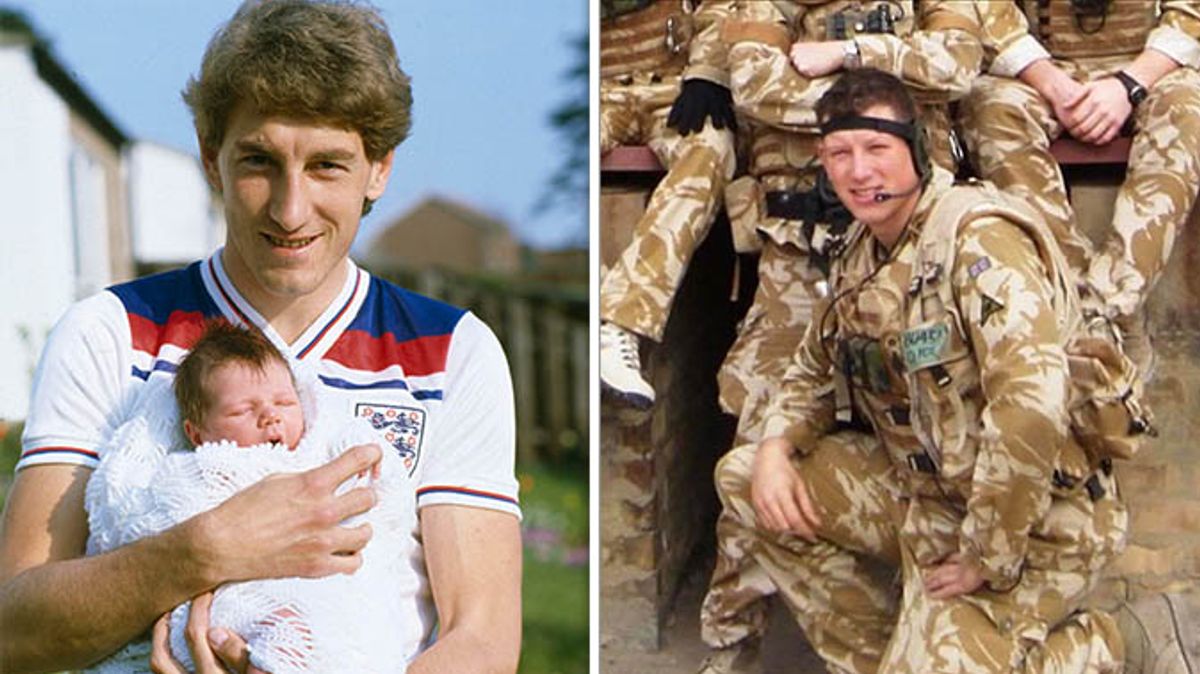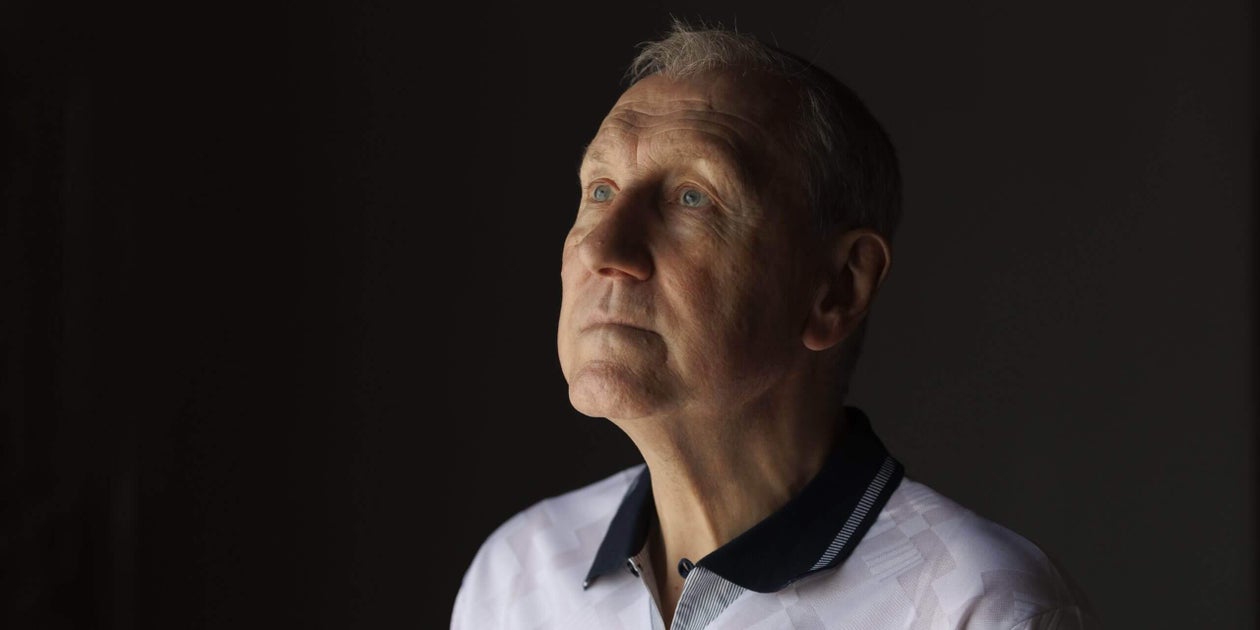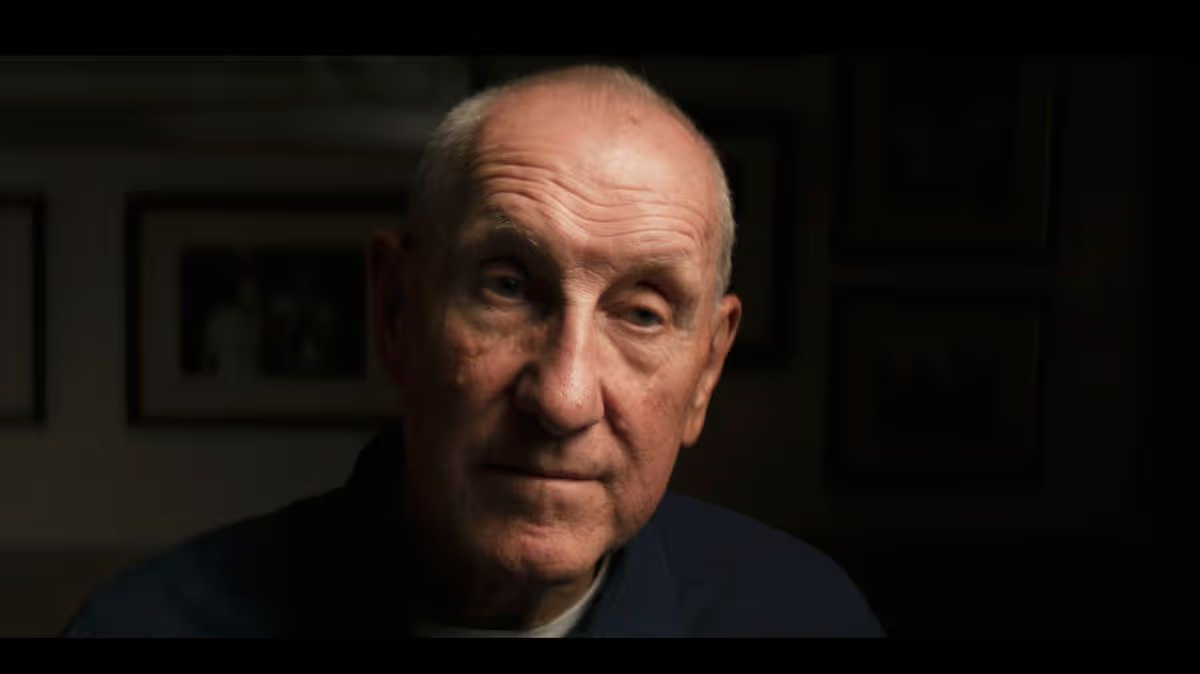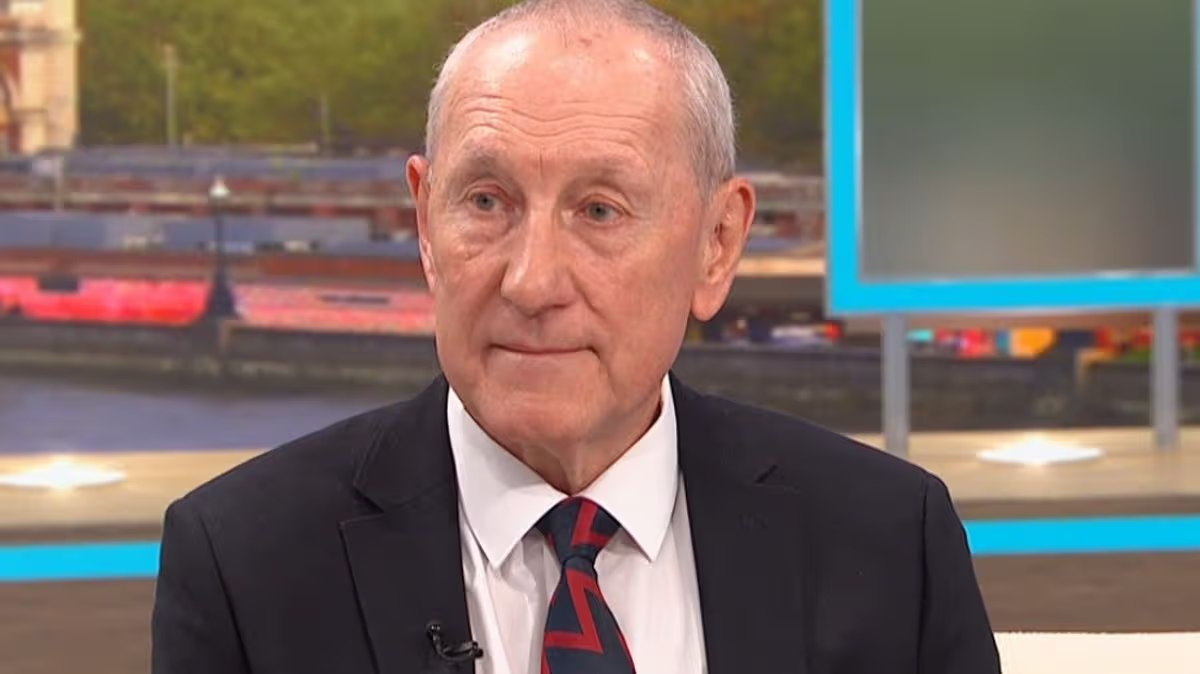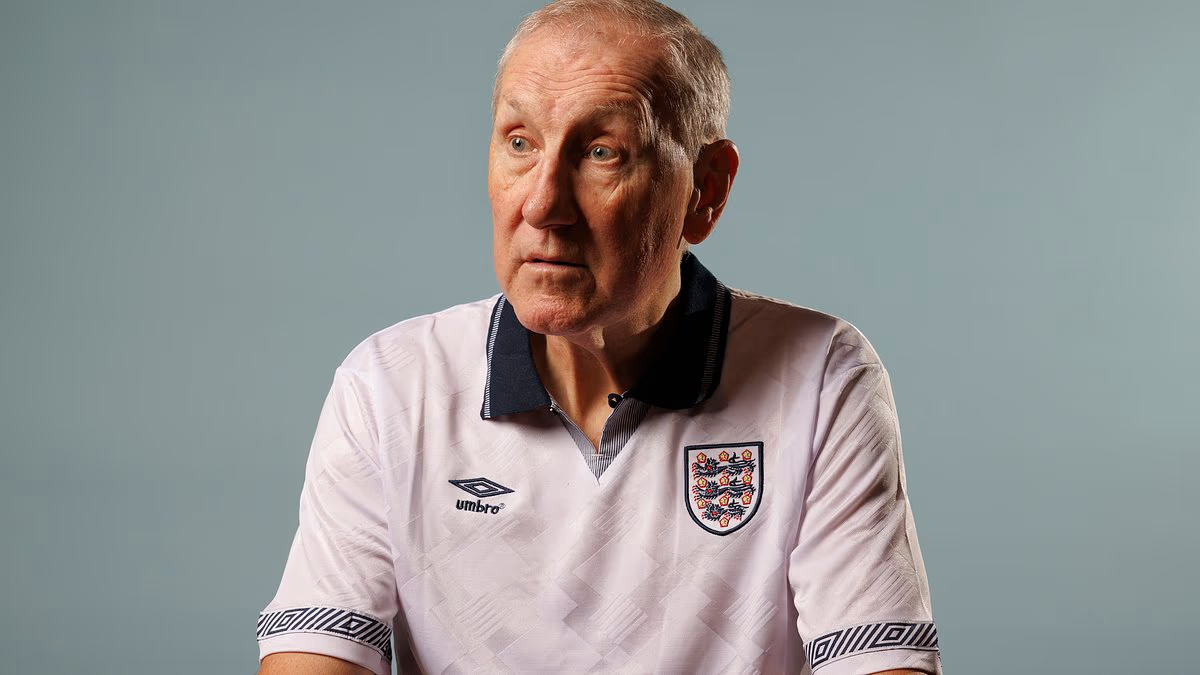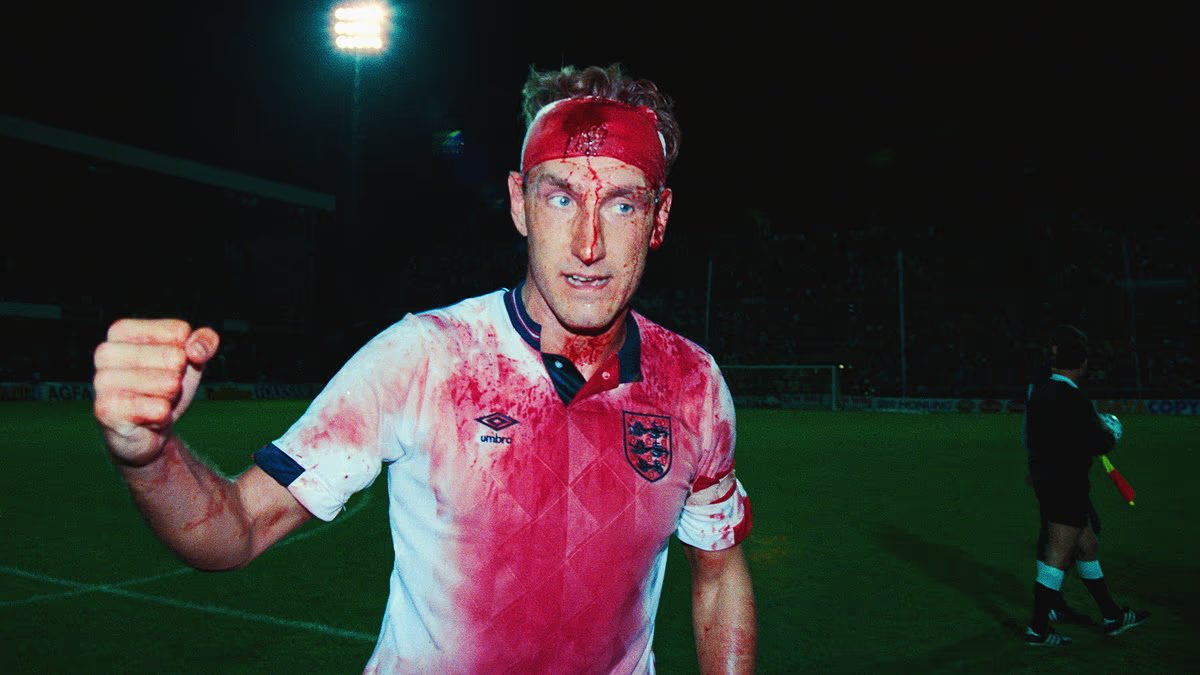
Terry Butcher captained the England football team, winning 77 caps in a ten-year international career, leading them to one of their best World Cup performances in 1990.The 67-year-old enjoyed success as a defender at Ipswich Town from 1976 to 1986, and Rangers from 1986 to 1990, and was named player of the year in both 1985 and 1986.He later managed Coventry City and Sunderland, among other teams.Terry is now a patron of the veterans' mental health charity Combat2Coffee, after the father-of-three's army officer son, Christopher, died aged 35 while suffering from PTSD following tours in Iraq and Afghanistan.He lives in Suffolk with his wife, Rita. Legend: Terry Butcher captained the England football team, winning 77 caps in a ten-year international careerWhat did your parents teach you about money?My dad was in the Royal Navy before getting a job as a prison guard at the old Blundeston Prison near Lowestoft. My mum, who turns 90 this year, worked in a careers office.I got a bit of pocket money as a kid, and my first job was, ironically, at a butcher's.When I got my first credit card, Access, Dad told me to write down everything I spent in a little book, which was valuable advice. Perhaps if young people did the same today it might help them keep track of their spending.Have you ever struggled to make ends meet?I joined Ipswich Town on £50-a-week in 1976, which wasn't much even then.So after paying £5-a-week rent to my Mum – I later moved into digs – and my other expenses, there wasn't much left over.I certainly couldn't afford to buy anything from Gucci or Armani, like some of today's footballers.I needed to supplement my wages with my appearance fee. If I got injured, though, I missed out on the fee. That's why a lot of players – including me – carried on playing even when injured.My football kit was supplied by Ipswich, but the club was reluctant to part with football boots, so you had to make them last.Mine usually lasted three years, and the club cobbler would repair them to make them last longer.Have you ever been paid silly money?Yes – when I joined Coventry City in 1990 as player-manager on a six-figure contract. That's the most I've ever been paid as a footballer or manager.That was my first managerial job but I was sacked after 13 months. Yes, it was a blow, but in footballing you often learn more from your setbacks than successes.It took me two years to get the financial compensation I was owed out of them, but I got there.What was the best year of your financial life?The year I spent at Coventry City. But I've been lucky to have a long and successful career as both a player and manager, so my longevity has probably been more important than any one financial year. Yes, I got appearance bonuses playing for England, but there was no 'win bonus'.I was just proud to represent my country. Part of me felt that we should have paid the Football Association for the honour of playing for England.The most expensive thing you bought for fun?A year after moving to Rangers in 1986, we won the Scottish league, a memorable moment.We players all got paid a bonus, so to celebrate our achievement I bought myself a Cartier watch for a four-figure sum. I still wear it from time to time, but you've got to be careful when you wear such a timepiece nowadays.Who did I want to win this year's Scottish Premiership title? Not Celtic or Hearts. I'll always be a Rangers man.What has been your biggest money mistake?I stupidly made a considerable financial investment in a sports agency around the year 2000. A year later it went bust and I lost the lot, a five-figure sum – my wife still hasn't forgiven me!Best money decision you have made?I lived next door to a Lloyd's underwriter in the late 1980s, and he suggested I should use my name to create an insurance business, named Terry Butchers Insurance Consultants Ltd.I was one of four investors in the company, which took off. We ended up with four offices in Suffolk, but eventually sold it to the Norwich and Peterborough Building Society, now part of Aviva, which netted me a few quid.As an Ipswich man, it was nice to take money from a company based in Norwich!One of my other best investments was buying Al Stewart's album Year Of The Cat in 1976 – I still play it 50 years later. Will you pass down your money or spend it all?We're still acting as the Bank of Mum and Dad, like many parents. But I'll naturally look after my two surviving sons, and my grandchildren – and if they ever need help financially, I'll see what I can do.At the same time, I want to ensure that Rita and I have enough to play a bit of golf and go on the occasional cruise. Terry is now a patron of the veterans' mental health charity Combat2CoffeeDo you have a pension?Yes. Professional footballers can retire at 35, but I started paying into a pension in my late 20s. It was a bit of a struggle keeping up the payments in the early days but I'm glad I did – it's paid off big time.Do you own any property?My wife and I bought our first place, a lovely terraced house, for £13,000 in 1979 and we gradually moved up the property ladder.We now live in a newish four-bedroom house on the Suffolk coast which cost a six-figure sum in 2012. We love living by the sea.If you were Chancellor, what would you do?I'd cut taxes and then resign! I feel sorry for young people who go to university now because it takes them so long to repay their student loans. The student loan system is ripe for reform.What is your number one financial priority?Outside of making sure that my wife and I have a comfortable retirement, I want to keep on volunteering for Combat2Coffee, which does such amazing work supporting military veterans and their families.Butcher: Invisible Wounds airs on ITV4 on Tuesday June 9 at 10pm, and will then be available to stream on ITVX. Terry is a patron of the veterans' charity, Combat2Coffee.
TERRY BUTCHER: We had to get old boots repaired by the club cobbler
Terry Butcher captained the England football team, winning 77 caps in a ten-year international career, leading them to one of their best World Cup performances in 1990.
1,046 words~5 min read