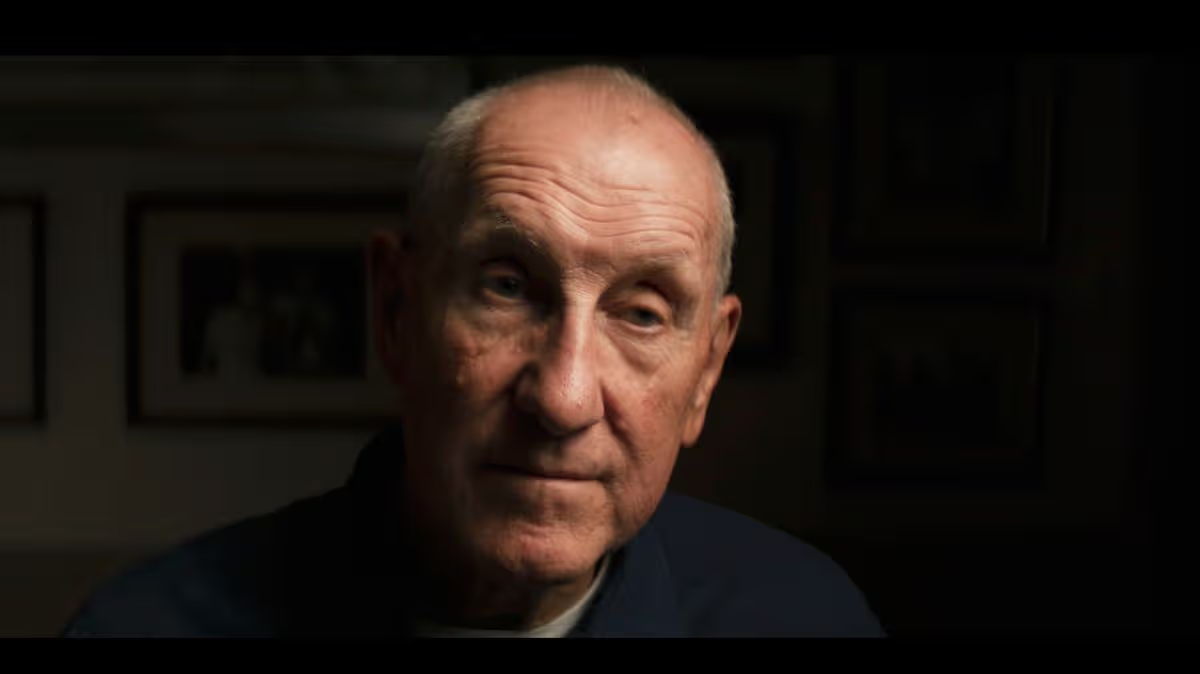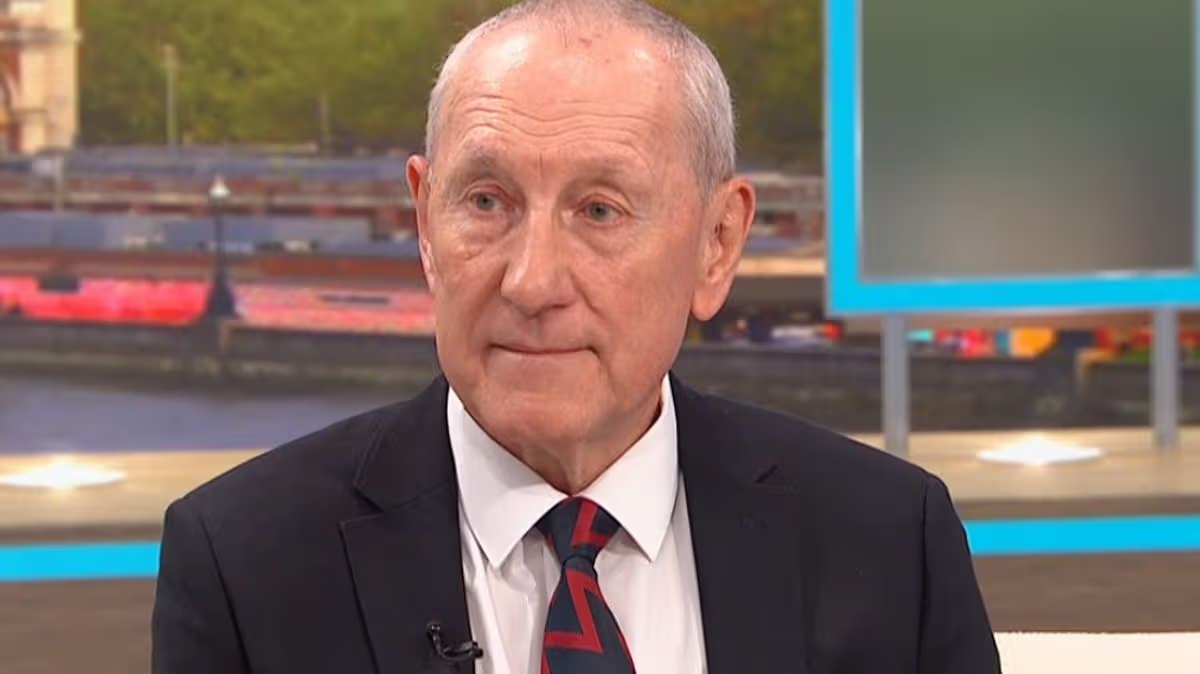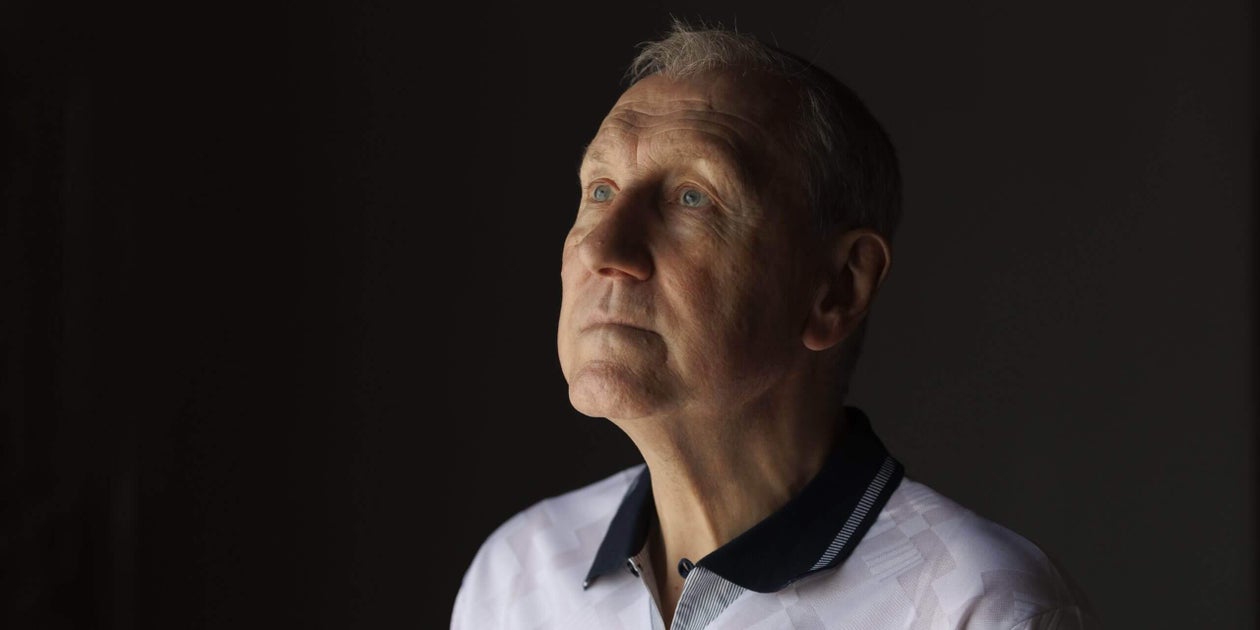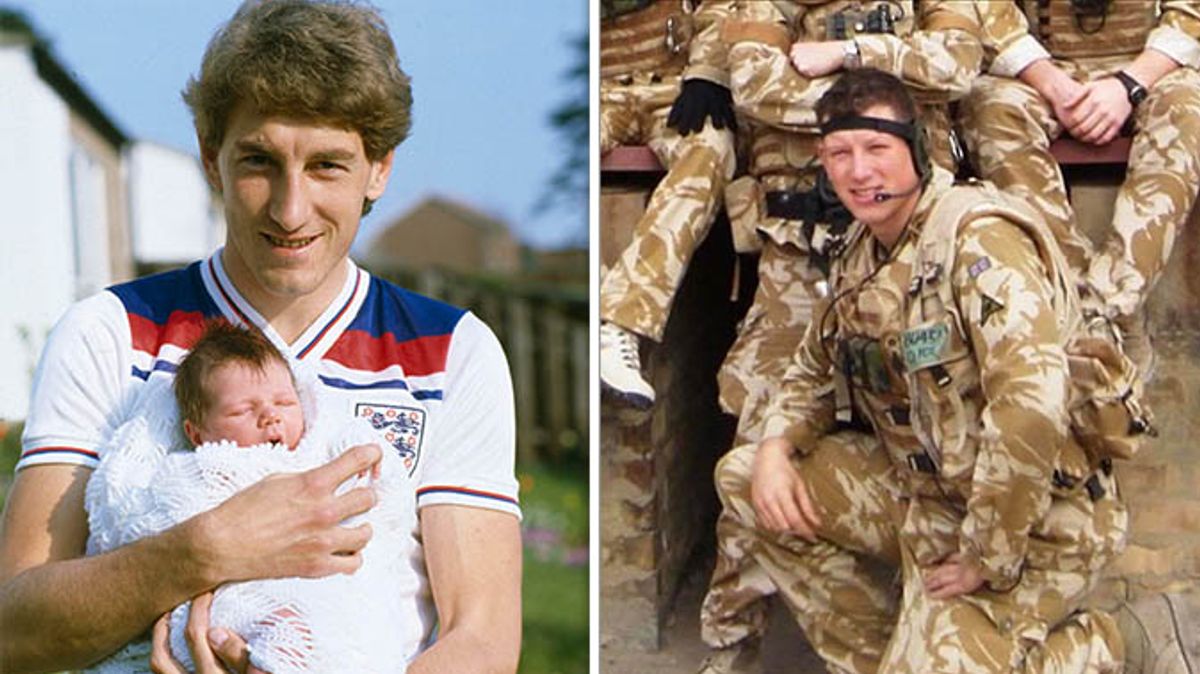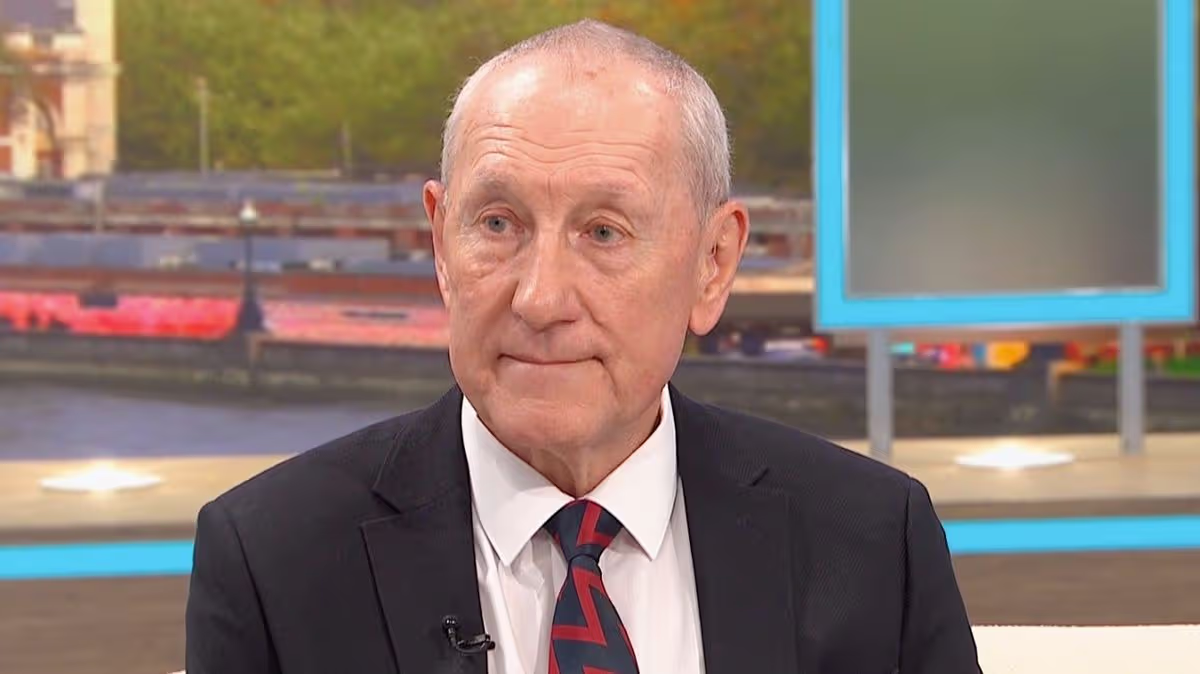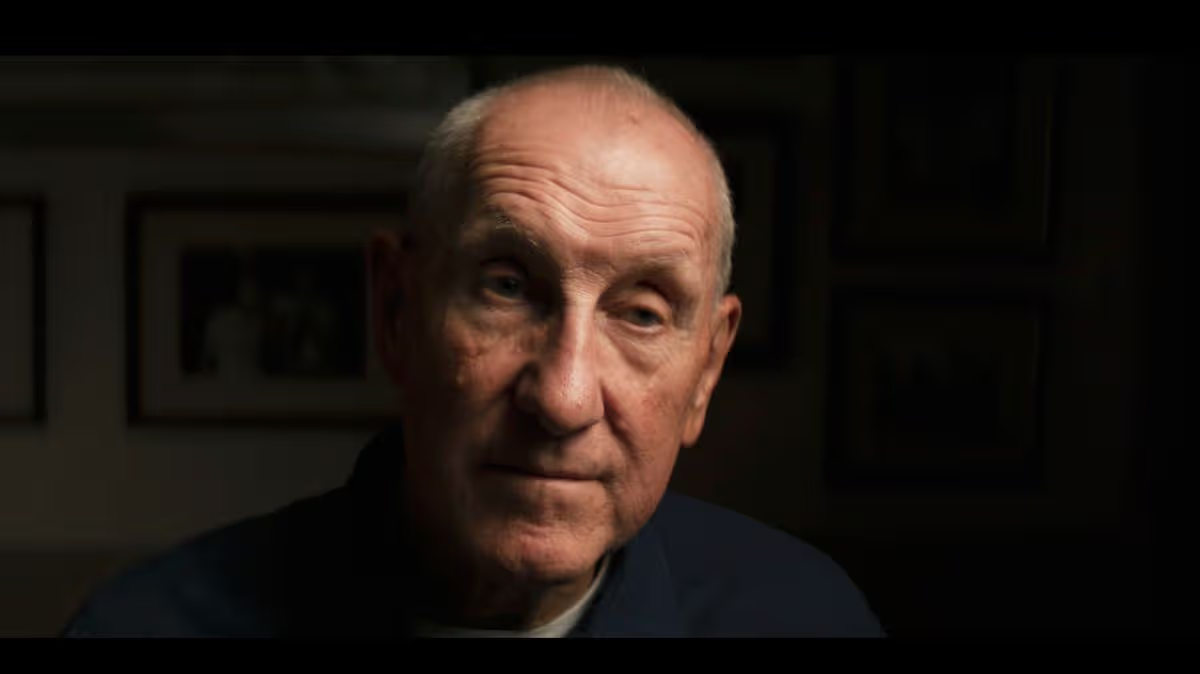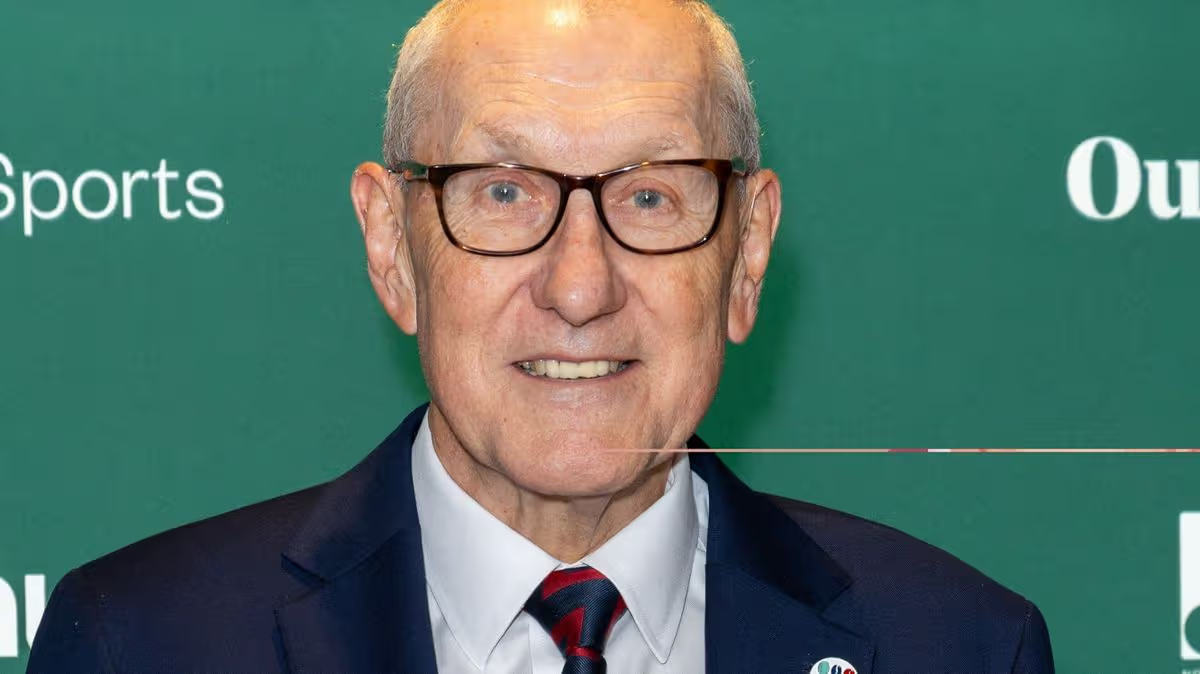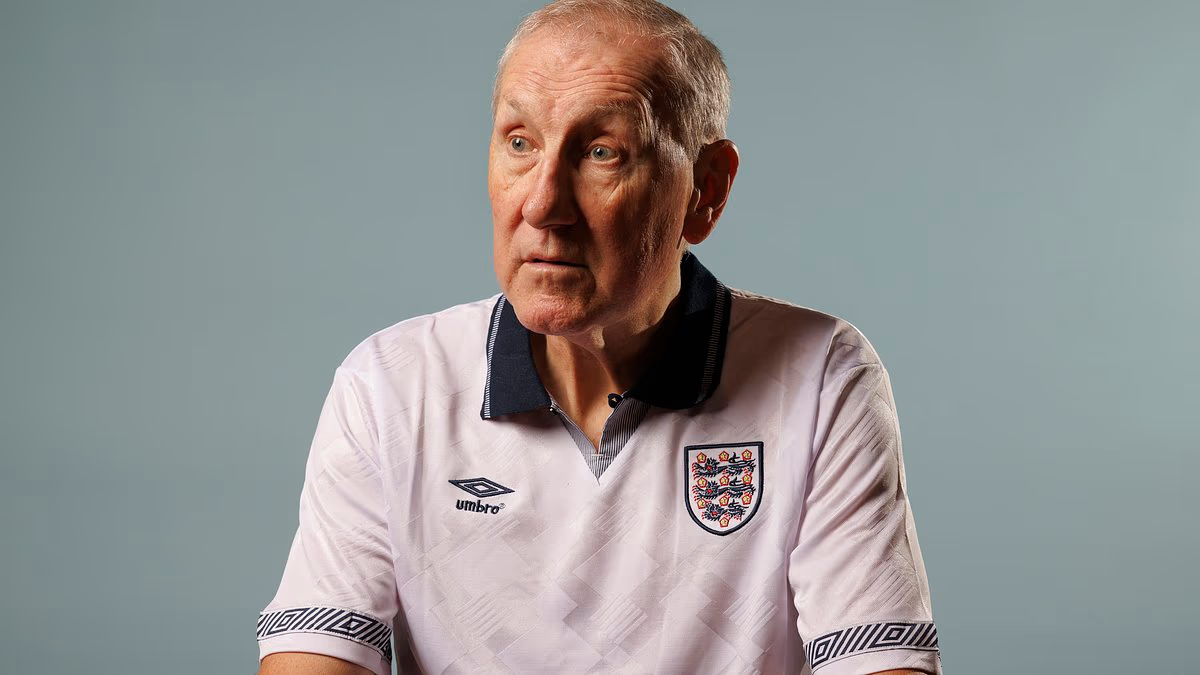
Three Lions legend Terry Butcher, who once played for England in a shirt soaked with his own blood after a head injury, has told how his ‘whole world collapsed’ after the death of his son, an Army captain who served in Iraq and Afghanistan.Terry, 67, found the body of 35-year-old Christopher in his bedroom at the family home. Known as a warrior on the pitch, the former England skipper says he cries now when he hears the music Chris loved or somebody uses a favourite expression of his. ‘There is guilt there as a parent because you see your son suffer and you can’t do anything about it. It can break you, it really can.’After Chris’s death in 2017, Terry told an inquest that he was ‘a victim of war’. The coroner found that he died of an abnormal enlargement of the heart, of uncertain cause, combined with the effect of drugs against a background of PTSD.Chris had served in the Royal Artillery. On a tour of Afghanistan his unit suffered heavy casualties, and he went to the memorial of every serviceman who was killed. When Chris came home, ‘He could hear the voice of a screaming Iraqi girl in his head, and a sergeant major constantly berating him,’ says Terry. ‘He started drinking heavily so he would pass out and not hear the voices.’Chris and his wife lived in Manchester but one day he barricaded himself in the house. ‘He came to live with us in Suffolk for the last 15 months of his life,’ says Terry. ‘He was almost impossible to live with. It’s like he had two personalities, the normal Chris and someone who was moody and aggressive. You didn’t know which one you were going to see. He was suicidal. He tried to take his life three times. It was really harrowing.’Terry tells a new ITV documentary, Butcher: Invisible Wounds, that he and his wife Rita were left to cope by themselves. He struggled to talk about his son’s death for years, but joining a project for veterans and their families eventually helped him to move on from the darkest days of his life.A never-say-die defender, Terry won some of the highest honours in the game and was capped 77 times by his country. He became a symbol of English grit after playing on during a World Cup qualifier against Sweden in 1989 despite a streaming head wound that turned his bandage and shirt red. Terry Butcher was capped 77 times for England and won some of the highest honours in football Christopher Butcher with his wife Laura on their wedding day Terry in 1985 with his wife Rita and sons Christopher, then three, and six-week-old EdwardHe also played in the game against Argentina when Maradona scored the notorious ‘Hand of God’ goal at the World Cup finals in Mexico in 1986. He was nicknamed ‘Winchester’ because of the way he could rifle a pass straight to a teammate. A fierce competitor, he hated to lose and would sometimes take out his frustration on the door of the referee’s dressing room. ‘Several doors were – what can I say? – tested by me,’ he laughs.Tall and lean, with close-cropped hair and glasses these days, he lives near Felixstowe in his old stomping ground of East Anglia. The documentary tells the story of Terry’s career, with contributions from old teammates including Gary Lineker and Ally McCoist, as well as the loss of his son.The Butchers married in 1980 and Chris, their first child, was born two years later. The couple have two other sons. In the documentary, Chris’s brother Edward says he always wanted to be in the Army, and Terry recalls the proud day his son passed out of officer training at Sandhurst, where he had been in the same intake as Prince Harry.Chris knew that he might not return from war zones. As for his family who were waiting at home, Terry says, ‘You’re only a phone call away from devastation.’ Chris felt a great sense of responsibility to the men under his command. ‘When he came home, he didn’t feel right,’ says his dad. ‘He had survivor’s guilt.’Terry says Chris got some help from the Army in Germany. ‘He was showing signs of problems but he hadn’t been diagnosed and he felt he could get over it. We flew out to see if he was OK and, honestly, it was pitiful, it really was, it was awful.’ Terry in the now-famous blood-soaked shirt from the World Cup qualifying game in Stockholm, Sweden, in 1989 Terry holding Christopher as a newbornIn the documentary, Edward Butcher says the Army wanted Chris to go back to Afghanistan but he was given a medical discharge. ‘He was all set to go but then he realised he couldn’t handle it. And the next thing you know, “You’re out of the Army now!” and that was devastating to him. He used to say to me he didn’t have a purpose any more; he’d lost everything he wanted to be.’One morning Terry took a cup of tea to his son’s bedroom and found him cold and motionless. ‘It was the worst day of my life. My whole world immediately collapsed.’ In the film, he looks directly into camera and says, ‘I apologise for telling you my heartbreaking story but this tale has been repeated in hundreds if not thousands of households all over this country.’The programme-makers say one in eight UK armed forces personnel was seen in military healthcare for a mental health-related reason in 2024-25, according to Ministry of Defence records. After Chris’s inquest, the MOD said, ‘This is a tragic case and our thoughts remain with the family and friends of Christopher Butcher.’ Officials said they were committed to providing troops and veterans with ‘the care they deserve’ and had increased spending on mental health.Does Terry feel that the services did enough for Chris? ‘I don’t want to go into complaining. I said what I had to say at the inquest. There were lots of wrongs and rights, things could have been done better.’Did he feel he hadn’t done enough? ‘I always think that, it’s the same when I played football. People would come up to me and say you played well, but I knew I hadn’t. I just felt, if we can do the best that we can do for him at home and make him comfortable, then maybe we’ll be able to get help. The NHS does marvellous things but they struggle to understand PTSD in the Forces.’ Terry played in the 1986 World Cup game against Argentina when Diego Maradona scored the infamous 'hand of God' goal Terry and Peter Shilton try to stop Maradona in full flow later in that game... the Argentine scored a brilliant second after dribbling past half of the England teamEdward Butcher describes his parents as ‘old school: if you have any problems or feelings you’re struggling with, you push them down.’ His father agrees. ‘We thought, “Should we get help?” But initially you’re in a blur, you just exist. We hoped that it would ease but it never really did.’ There’s much more support available now, he says. ‘Oh my goodness me, yes. There’s so much more of that around than ten years ago when we were going through this.’Terry doesn’t do social media apart from LinkedIn, and that’s where he came across a group called Combat2Coffee. It’s a not-for-profit organisation based in Suffolk that starts conversations about mental health among ex-servicemen and their loved ones over a brew. Terry went to meet them and liked what he saw, so much so that he became their patron. He says he can talk about Chris now and finds solace in doing so.‘I meet people at functions who don’t know the story about Chris and they’ll say, “How many children have you got?” And you say, “Three.” And they say, “Where are they now?” and you think, “I’ve got to tell them.” I can’t say, “Well one’s away” because really he’s passed away. But then the conversation stops, because people don’t know what to say. I hope one day I’ll say to somebody, “One of them’s passed away” and they will just say, “Oh how did that happen then?” and “What was he like?”‘Even though I hate hearing my voice and seeing myself on screen, I made the documentary to show what happened to us as a family. It’s happened to a lot of families of military personnel, but the same thing happens in the case of first responders and the blue lights guys, with what they go through. We wanted to put a message out there that people can get better.’Terry is baffled when fans praise him for his performance in that bloodied shirt against Sweden. ‘It’s just what you’re brought up to do. Loads of players have injuries but unless you break a leg, you carry on. There’s no heroics about it. It’s like when you hear the media describe a team losing a final as a “tragedy”. A tragedy is what happened to Chris.’He’s glad that a new generation of leaders in football, including the former England manager Sir Gareth Southgate, are raising awareness of mental health issues in the game.‘When I started your coaches would shout at you. At Ipswich, Bobby Robson and his assistants turned me from a country boy into a beast on the pitch. They gave me my career. But for a while, I thought, “I don’t know if I can do this.” I nearly packed it all in. I had a place at technical college to do quantity surveying – whatever that is!’Terry is looking forward to the World Cup later this month and fancies England’s chances. ‘Spain and France look good but I think we can go all the way.’ He won’t be pulling on an England jersey as he did at three previous World Cup finals, but he says it feels like the old days when he dresses in a Combat2Coffee shirt for one of their events. It’s even got a badge on it, he says, like the Three Lions.Butcher: Invisible Wounds, Tuesday, 10pm, ITV4 and ITVX.For confidential support, call Samaritans on 116 123 or visit samaritans.org
'It breaks you': TERRY BUTCHER opens up on his soldier son's suicide
Three Lions legend Terry Butcher has told how his 'whole world collapsed' after the death of his son, an Army captain who served in Iraq and Afghanistan.
1,705 words~8 min read