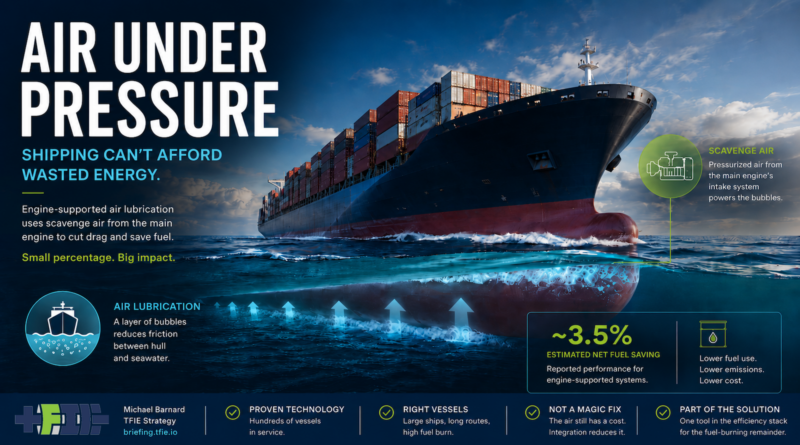
Engine-supported air lubrication may trim ship fuel use by reducing hull friction, but the useful number is net savings after the air has been compressed and delivered.
Support CleanTechnica's work through a Substack subscription or on Stripe.
The interesting part of Everllence and Silverstream’s Engine Supported Air Lubrication concept is not that ships can reduce drag by pushing air under the hull. That has been known for decades, and commercial systems are already in service. The interesting part is where the air comes from, because air lubrication’s least glamorous problem has always been the power required to make and deliver the air in the first place.
Hull air lubrication is simple in concept. Push air beneath the hull, create a bubble layer or air layer, reduce friction between the hull and seawater, and the ship needs less propulsive power for the same operating condition. Naval architects can argue properly about bubble drag reduction, air layer drag reduction, partial cavity systems, outlet geometry, air retention and hull coverage. For the transition discussion, the key question is narrower: after the ship has spent energy compressing, moving and controlling the air, is there still a net fuel saving?