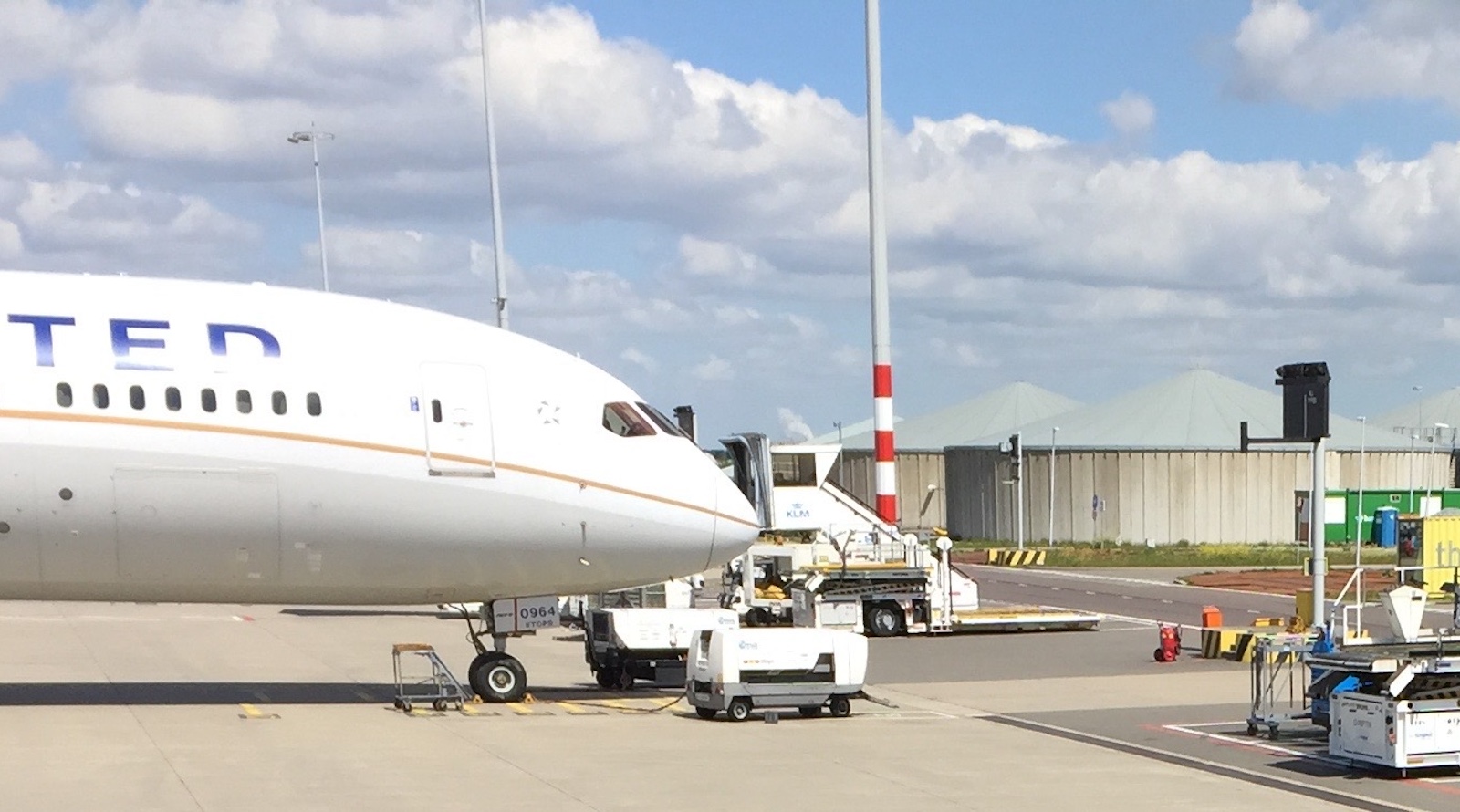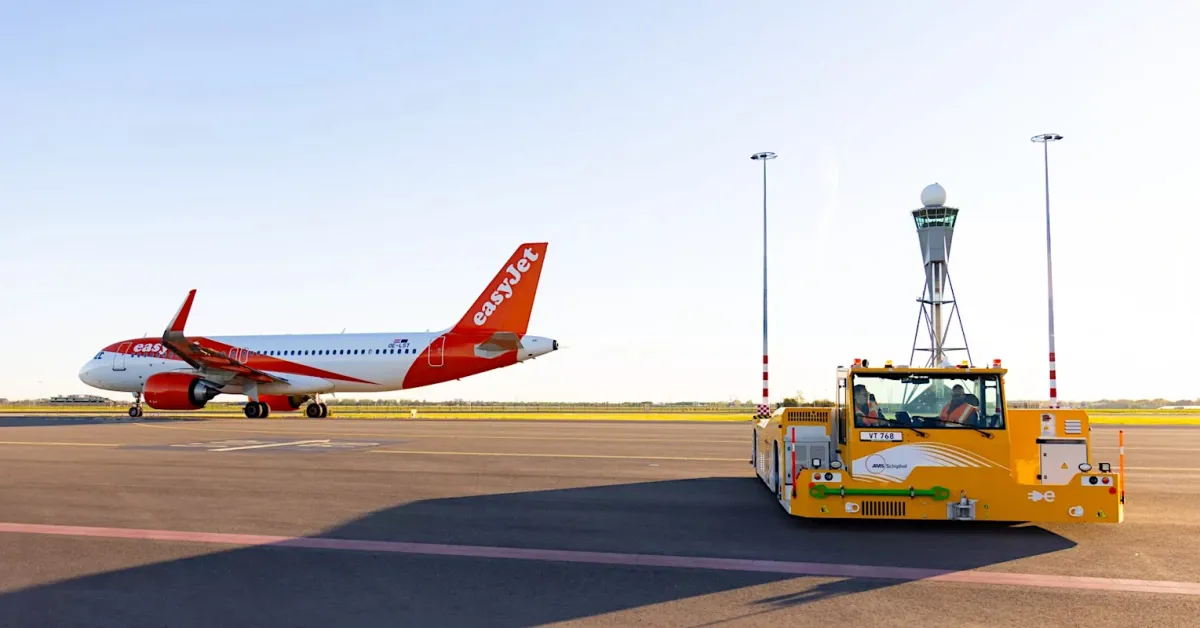
Amsterdam’s Schiphol Airport is testing an electric aircraft tug that can both move the plane around the tarmac and power its auxiliary systems – and that second bit could slash ground-level airport emissions by more than 80%, saving gobs of money on fuel in the process.
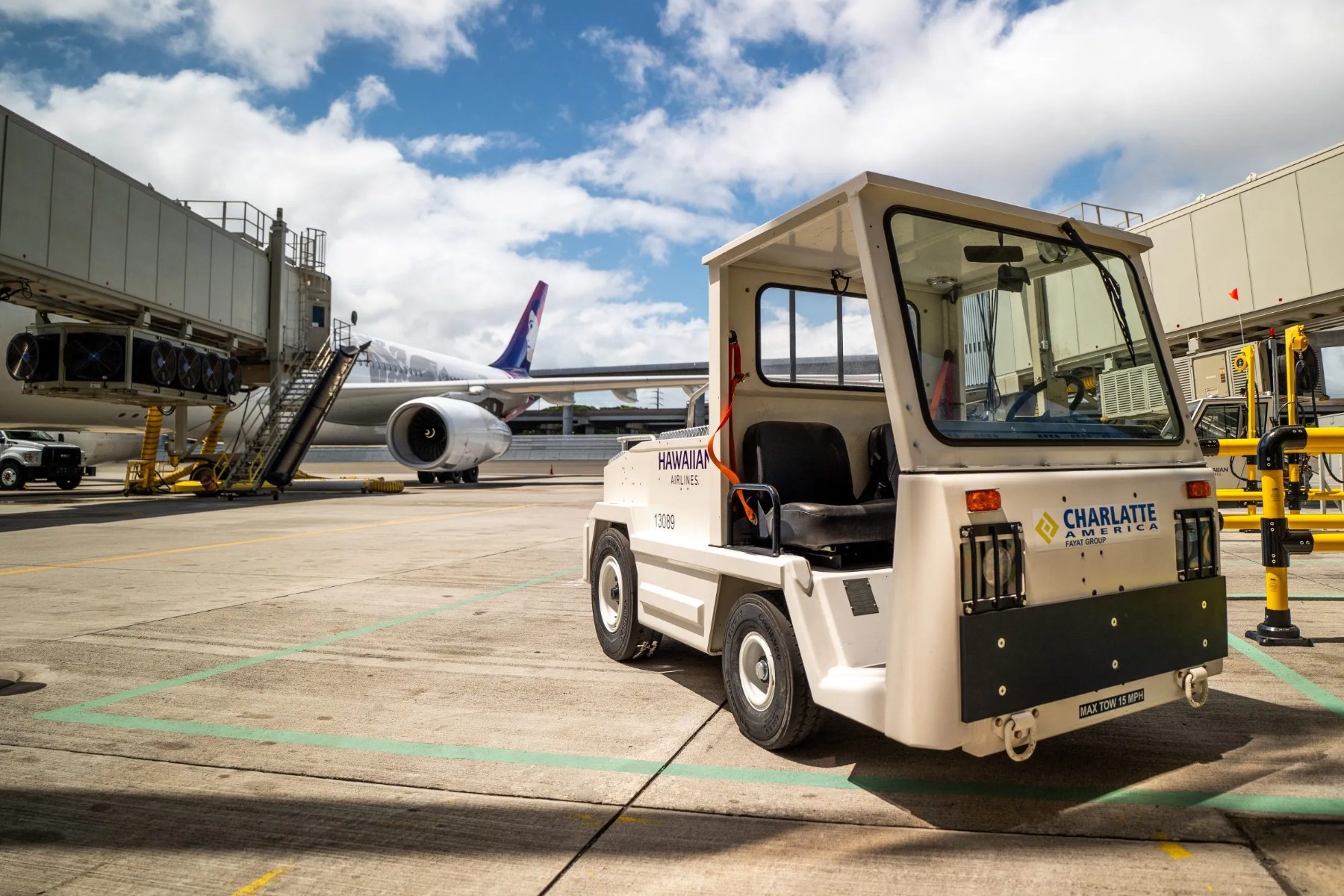
Conventional airport operations occasionally use diesel-powered tugs that can connect to the front landing gear and pull the aircraft around the airport. The whole time that’s happening, however, an auxiliary power unit (APU) in the plane’s tail is fired up, generating electrical power for the aircraft and providing enough compressed air to light the main engines. The alternative is to use the main engines at a low idle to taxi the plane. In either case, that’s a lot of fuel burned, emissions spewed, and noise made for the people living and working near the aircraft to deal with – and precisely what the TaxiBot was developed to address.
“By deploying the TaxiBot, we’re taking another practical step towards reduced emissions and noise on the apron,” explains Esmé Valk, Chief of People & Transformation at Royal Schiphol Group. “This is how we’re creating a healthier and cleaner workplace, and an ever more sustainable and modern airport that is ready for the future.”