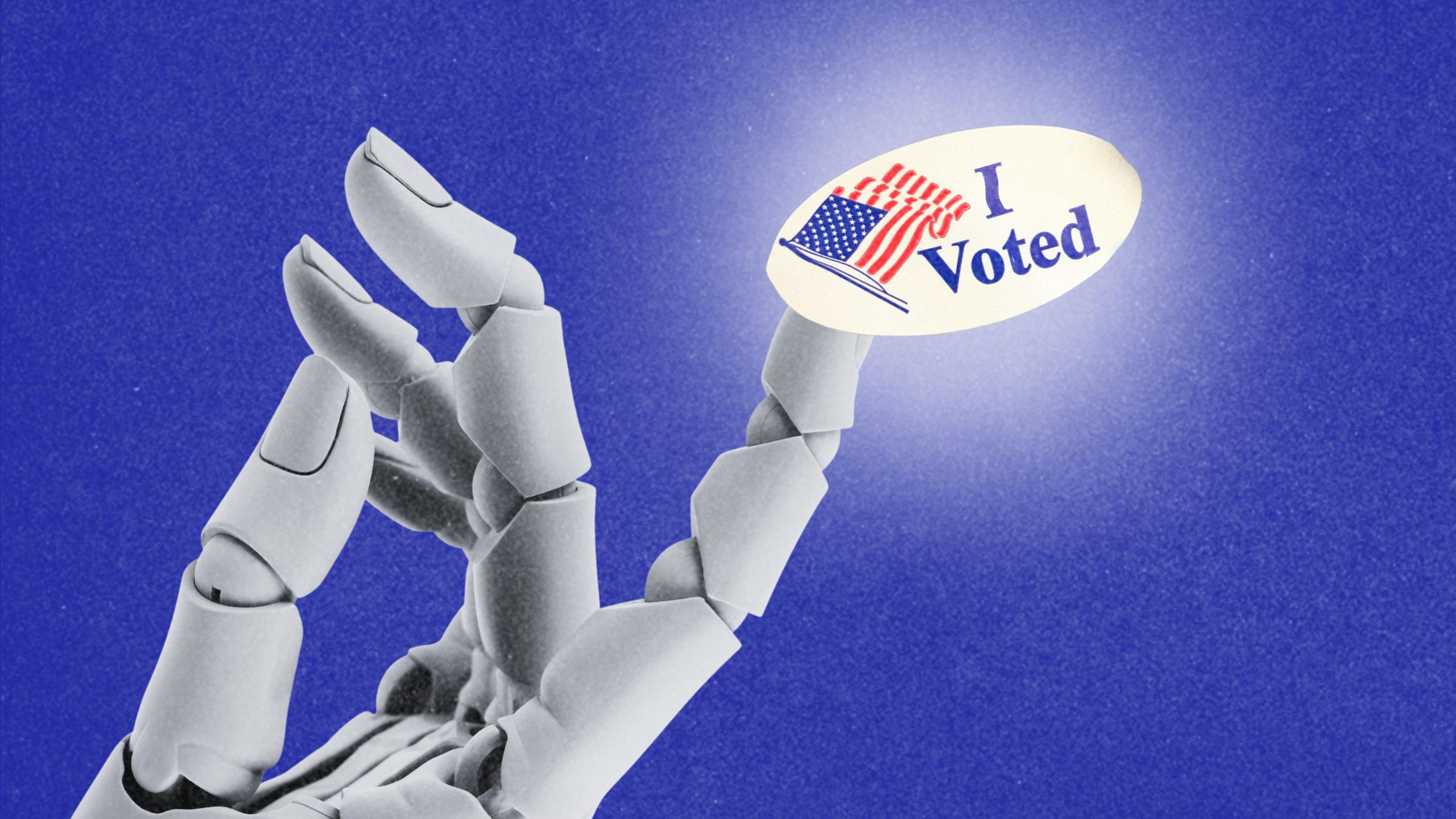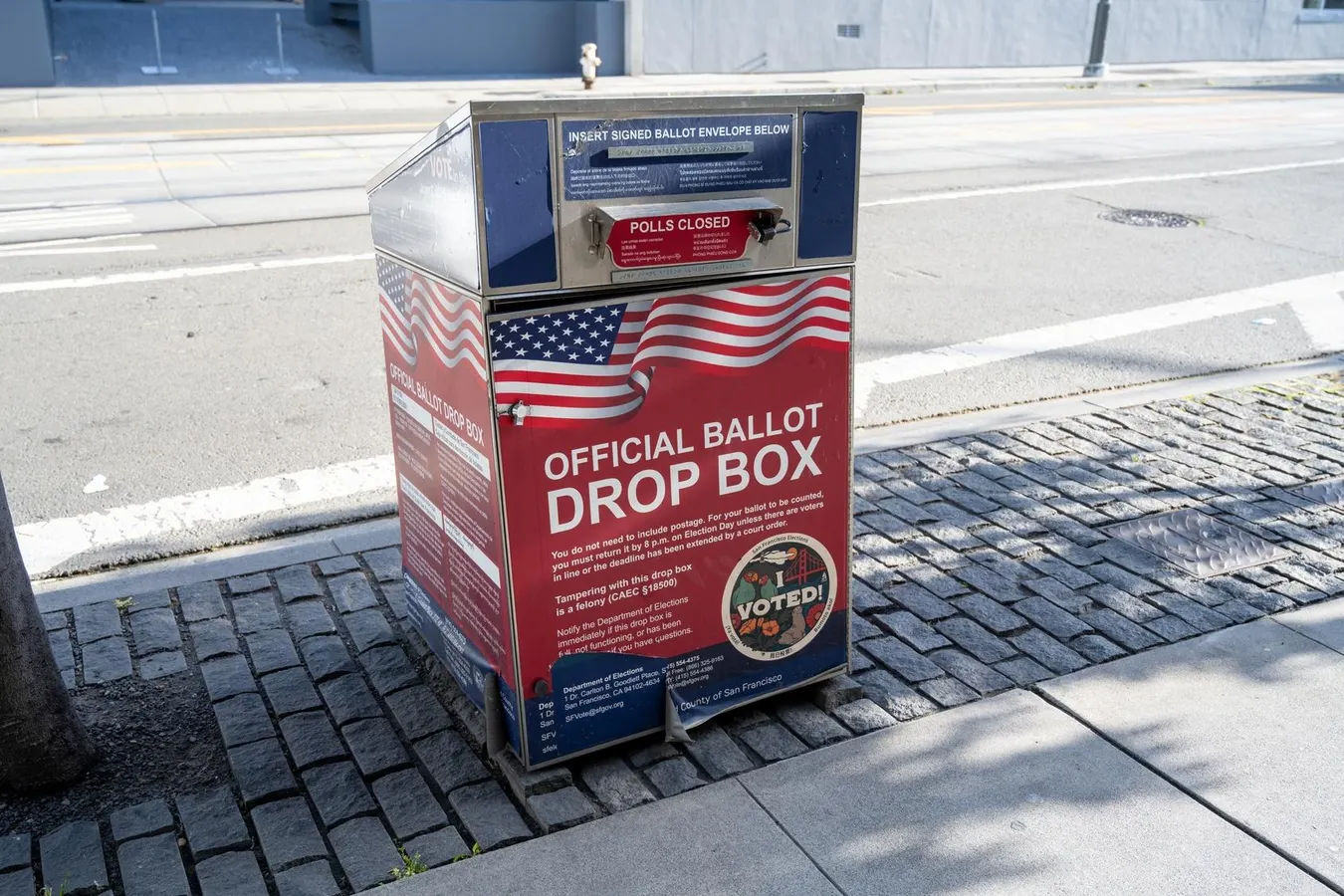
Official ballot box, San Francisco, California, January 29, 2026. (Photo by Smith Collection/Gado/Getty Images)Gado via Getty ImagesAs the world gets ready for another American mid-term national election in November, there’s a lot of debate about how it is going to go. There are many factors in play, but one big one is brand new: the ability of AI to introduce information into the public electorate, to influence people in new ways.“Tech companies have taken important steps recently to help protect elections from AI, but more needs to be done to safeguard democracy,” writes Mekela Panditharatne at the Brennan Center for Justice.Basically, the raw power of these technologies may mean that there are many more attack vectors from which to launch misinformation, distortions, or other phenomena that can impact a clean vote, especially in a country of this size, and with the particular history that is the heritage of the U.S.A.Words from BostonRecently, a panel convened here at MIT to talk about these specific issues, of AI and democracy. Moderator Songyee Yoon interviewed Bailey Flanigan, Charles Stewart and Lily Tsai about related issues, and the prospect for electoral health.Flanigan mentioned challenges in evaluating the scope of AI’s impact.“It's really hard to actually get a bird's eye view of what these technologies are doing, and how they're intervening on the public, which I think just really changes the landscape of regulation and requires like new tools that are being developed right now for auditing, but for which we were really, I think, not prepared,” she said, suggesting a public consensus for regulation.MORE FOR YOUStewart added thoughts about how the government doesn’t always keep up with the rate of technology change over time.“In some ways, this is the old story of moving from the telegraph to the telephone, to radio and television, eventually to social media and all of that,” he said. “At each point we've disrupted past communications. But I think importantly in the United States, the form of government really hasn't changed. It's difficult for our institutions to adapt.”It’s hard for people, too, he added.“The chatbot experience can fool you into believing you're actually participating in small one on one conversations,” he said. “And that's likely to be kind of overwhelmingly persuasive to a degree, and probably, you know, it probably shouldn't be.”Individual National Paths“I think the U.S. is going to probably chart a different path than much of the rest of the democratic world,” Stewart said. “We have a pretty fundamentalist view of freedom of speech, and that affects our ability to regulate all sorts of political interactions.”On the other hand, he noted, there are the parts of the world that have evolved more on democracy.“If you go to most of Western Europe and other parts of the world that have robust electoral institutions, there's much greater regulation about when political speech even can be held, the nature of political speech, the ability to sanction misleading political speech, etc.,” he said. “The U.S. doesn't have any of that.”AI, Tsai pointed out, is one factor in the erosion of norms that comes from a variety of societal changes.“These norms and commitments are things like a commitment to mutual respect, which requires democratic participants to be responsible for informing themselves about the facts, working with others to have a shared understanding of the facts,” she said. “And of course, you know that has gotten eroded, first through social media. But AI, I think, is just another amplifier of some of the issues that we're seeing.”Tsai also mentioned how people need to do the work of democracy, not just farm it out to AI.“Democracy was not designed to be easy,” she said. “It was designed to be hard, and I think that one of the problems with having bots take away some of our tasks as democratic citizens, just means us giving into a passive disposition, rather than an active orientation to citizenship and giving away, maybe even in bits and pieces, our agency and autonomy.”New Methods of Democratic WorkFlanigan, in a related point, mentioned how people’s influence paradigms may also be behind the curve.“They're thinking of it in this very consequentialist way, where the entire goal is to just get everyone's beliefs, which are just static and fixed and already exist, and try to get them into some kind of decision, kind of skipping the entire process of democracy,” she said. “And there is a reason to think that this is kind of nice, because it is more efficient, it's easier, but it loses.”Stewart seemed to agree.“The reduction of politics to right and wrong answers, I think, mischaracterizes how we know normal people actually interact politically,” he said.Design Principles for PoliticsNear the end of the talk, Tsai brought up, again, the idea of having defined principles that can guide us in electoral work and much more in the political world.“It’s really important,” she said, “not just in terms of design principles, but again, the commitments of designers to be familiar with the values and principles that characterize what democracy is based on: agency, political quality, mutual respect, inclusion and autonomy.”Stewart talked about where protective rules and guidance should come from in a society, and what we are all observing now.“Should we, you know, autonomously, be killing people in war?” he said. “That's a moral judgment. In a democracy, you would want that considered by the elected representatives. I mean, that's what Congress and these deliberative bodies are about. But instead, it gets sucked into a procurement process.”He had this to say about social media:“We've sensed that social media has been difficult to regulate toward the common good. And I think maybe we're learning from the social media case.”Flanigan took another close take on the processes by which society changes.“Technology is affecting the public in this incredibly decentralized way, where it's changing the nature of the public itself, which is something that we kind of like all tacitly agreed to,” she said. “Individuals, when we uptake this technology, or we try to resist it, that's actually a very difficult dance, because you may be left behind, if everybody else uptakes it and you don't.”And then there’s access.“A huge percentage of Americans don't have access to broadband internet, much less AI, right?” Tsai noted. “So the old questions of the digital divide still exist.”Lightning RoundIn conclusion, Yoon asked each panelist what he or she is most worried about in the AI world right now.Tsai talked about how AI summarization has the power to set the agenda. You might think, she suggested, that this would be a convenience, but there are pitfalls too.“I think the sort of typical approach is to ask human users to help the AI be more representative, and align the AI with that,” she said, “but that actually runs against kind of old ways or traditional theoretical ways that we have thought about representativeness and democratic theory.”Stewart brought up some concerning scenarios around contested elections.“If an election is called into question, that can lead to violence, and we've already seen in the low-tech eras, election results being manipulated,” he said. “And the thing that worries me is what I'm going to observe this coming election day and the Wednesday after, and if AI has helped create irreversible disruptions to the election system, that's what I worry about.”Flanigan mentioned uneven commitments across the landscape of stakeholders.“You get these kinds of ‘race to the bottom’ dynamics like you saw with Anthropic and OpenAI, where all it takes is one company to say ‘yes,’ because it's profitable to them, and then the standard is then set, the norm is set, and that's happening faster and faster,” Flanigan said.The panel gave us a compelling look at how human psychology aligns with the technologies that we now confront, as people. We have embodied AI in the form of robotics, and ever-evolving models that astound the public. Let’s stay on top of how these are impacting our social processes.
AI And Our Human Societies
AI threatens democracy through misinformation, persuasion, inequality, and weakened civic engagement, experts warn.
1,322 words~6 min read