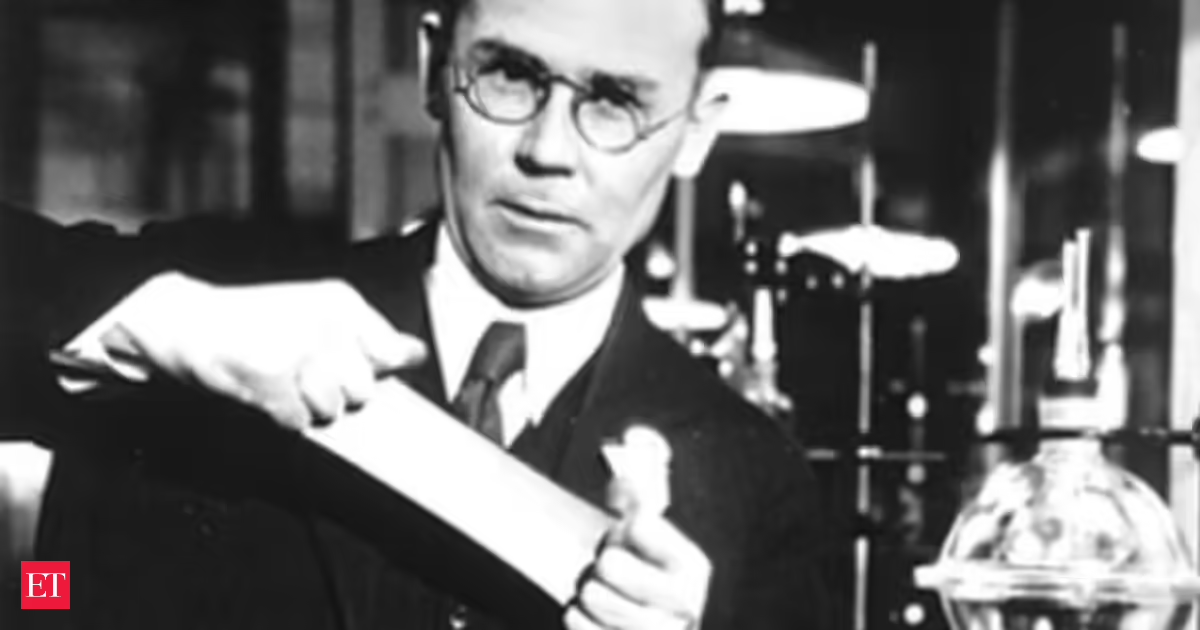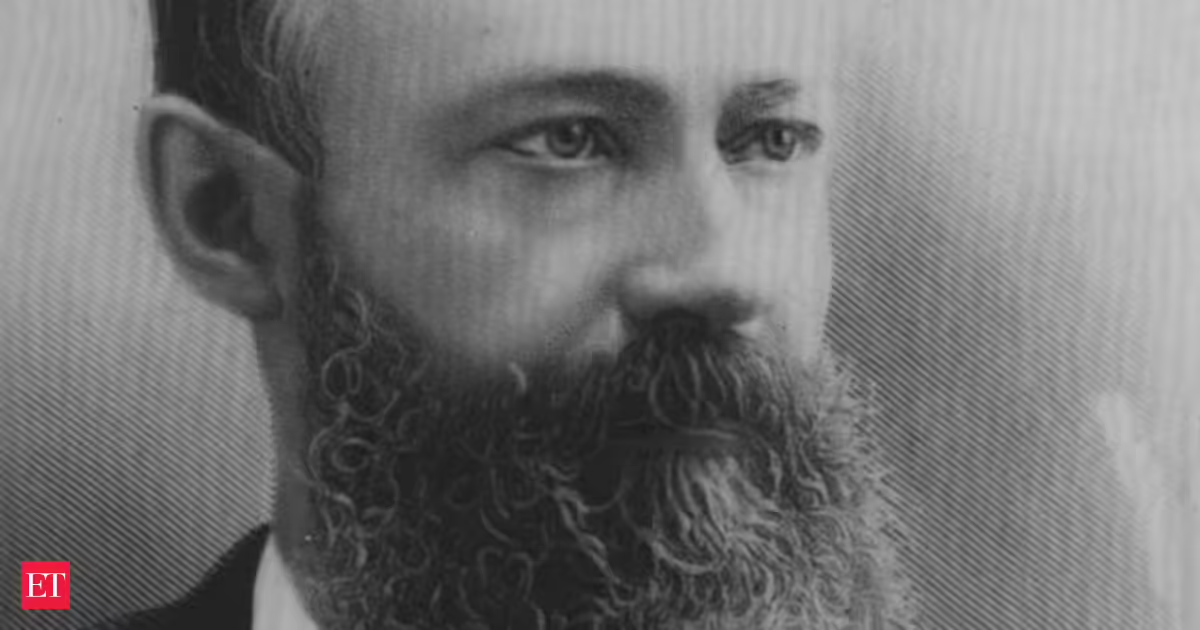
In the 1860s, ivory was super hot: everyone wanted it for piano keys, combs, billiard balls, and lots of other fancy items. But getting ivory became such a pain because it got way too expensive, prompting manufacturers to look for something else that looked and behaved like ivory but was easier to obtain. Enter John Wesley Hyatt, who set out to create an ivory replacement.People usually say he made celluloid to solve one problem, changed the game, and left it at that, yet there's more to the story. Hyatt's win with celluloid came from working with industry demand, experimenting, shaping materials, and feeding a trend in which companies sought out factory-made goods rather than things found in nature. So yeah, his work and timing played a big part in bringing one of the world's earliest successful plastic inventions to regular folks.Old cellulose films | Wikimedia CommonsA billiard-ball prize turned scarcity into an opportunityThe issue Hyatt faced started with billiards. In the nineteenth century, people used ivory to make top-notch billiard balls, but sourcing enough ivory became really tough and costly. The famous billiard company Phelan & Collender offered a huge $10,000 prize in 1864 for anyone who could create a good replacement.According to a 2023 study in Heritage Science, Hyatt's experiments relate directly to that prize. This study says that finding an ivory substitute actually spurred the development of practical plastics. Now, while Hyatt could've aimed for a big science breakthrough, he was simply tackling a real, specific industrial issue. His goal was to make something that looked good, felt right, and worked well enough for players to use.This shows how many key inventions come about: they start from addressing particular problems in certain markets. Hyatt wasn’t out to revolutionize manufacturing overall; he just wanted to fix a specific problem. Still, time and again in history, these narrow challenges led to consequences far greater than anyone thought possible back then.The first “celluloid” balls were more complicated than the legend suggestsPopular versions of the story suggest that Hyatt created a magical new material that immediately solved the ivory problem, but according to modern analysis, the truth is way more interesting. A 2023 Heritage Science study examined some of Hyatt's early billiard balls using techniques such as spectroscopy and peptide analysis. And guess what? Those famous 1868 balls weren't just made from pure celluloid; they had a mix of cellulose nitrate, camphor, and ground cattle bone.This means Hyatt didn’t just invent one thing; he figured out how to blend things together to create something useful. Actually, this makes his accomplishment even cooler. You see, the first practical plastics didn't appear in their final form right away; they developed over time through lots of experimenting, mistakes, tweaks, and compromises. Hyatt showed that you could engineer materials to copy desirable natural substances, rather than trying to make exact replicas. These efforts with billiard balls ultimately proved a bigger point: industry could replicate many of a material’s desirable qualities through chemistry and manufacturing processes, rather than relying on nature alone. So, Hyatt’s invention isn’t just about individual plastic; it marks the beginning of a shift towards creating synthetic alternatives.John Wesley Hyatt | Wikimedia CommonsCelluloid escaped the billiard roomBilliard balls started the hunt, but celluloid's impact zoomed way past cue sports. According to the Smithsonian Institution, it became the first commercially successful plastic ever. But its story wasn’t just about being an ivory stand-in. As soon as manufacturers saw how celluloid could be shaped and even mimic pricey natural stuff, well, the ideas poured in. Combs, jewelry, ping-pong balls, collars, toys, and home decor items were popping up, made from celluloid. Folks loved it because things that used to need rare materials, like ivory, could now be churned out in huge amounts at a fraction of the cost. This material fit right into an economy that cared more and more about looks, price, and churning out masses of products.The Smithsonian’s history of celluloid highlights a key detail that's often ignored: celluloid was never perfect. It was known to be flammable, and many people thought natural materials were better. Still, perfection didn't really matter. The real point was how useful celluloid was: it worked, looked good, and was cheap enough to catch on, and this balance between innovation and compromise is why John Hyatt’s story remains relevant today. He didn’t make a flawless ivory replacement, and he didn't single-handedly start the plastics age. What Hyatt did help show was that we weren't stuck with just natural materials anymore. Companies could start creating alternatives that focused on being affordable, looking right, and functioning well. In hindsight, a billiard ball seems like a tiny thing to start such a big movement. But Hyatt’s search for an ivory alternative helped change how we view materials. Scarcity turned into a design problem, and developing solutions became an opportunity for manufacturers to innovate, and, as a result, one of the first practical plastics came to life. This material played a key role in ushering industrial society into a brand-new era.
In the 1860s, an inventor chased an ivory substitute and helped push celluloid into history
In the 1860s, a billiard ball competition ignited a quest for substitutes for ivory. John Wesley Hyatt's groundbreaking research culminated in the development of celluloid, one of the earliest plastics. This revolutionary material soon found its way into products beyond gaming, permeating ordinary life.
838 words~4 min read