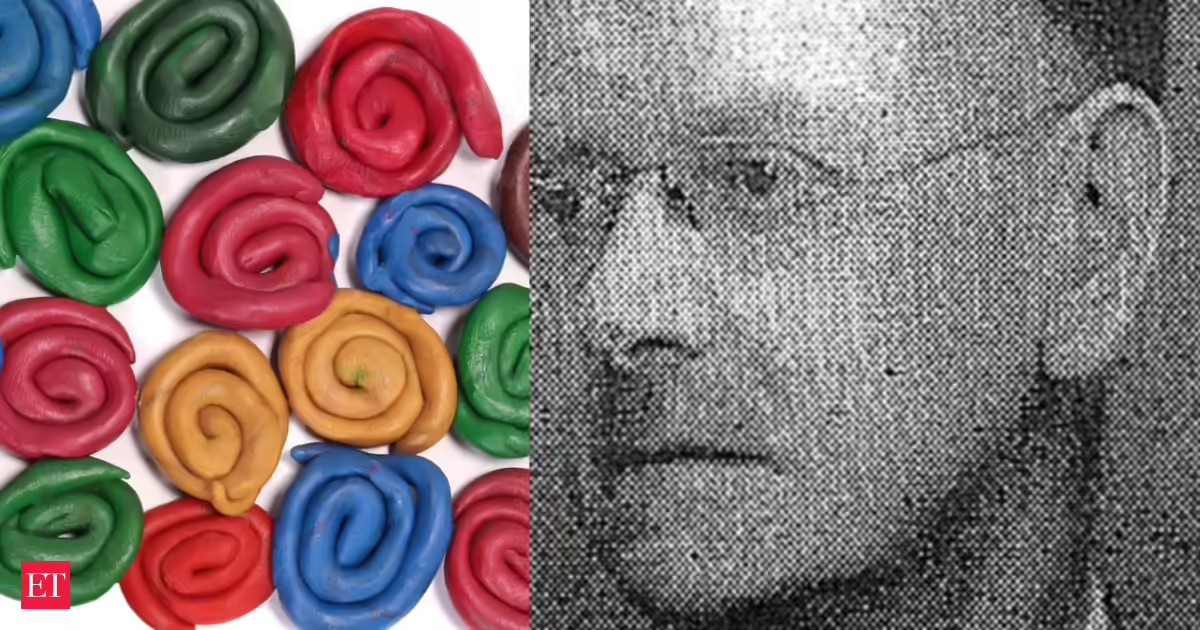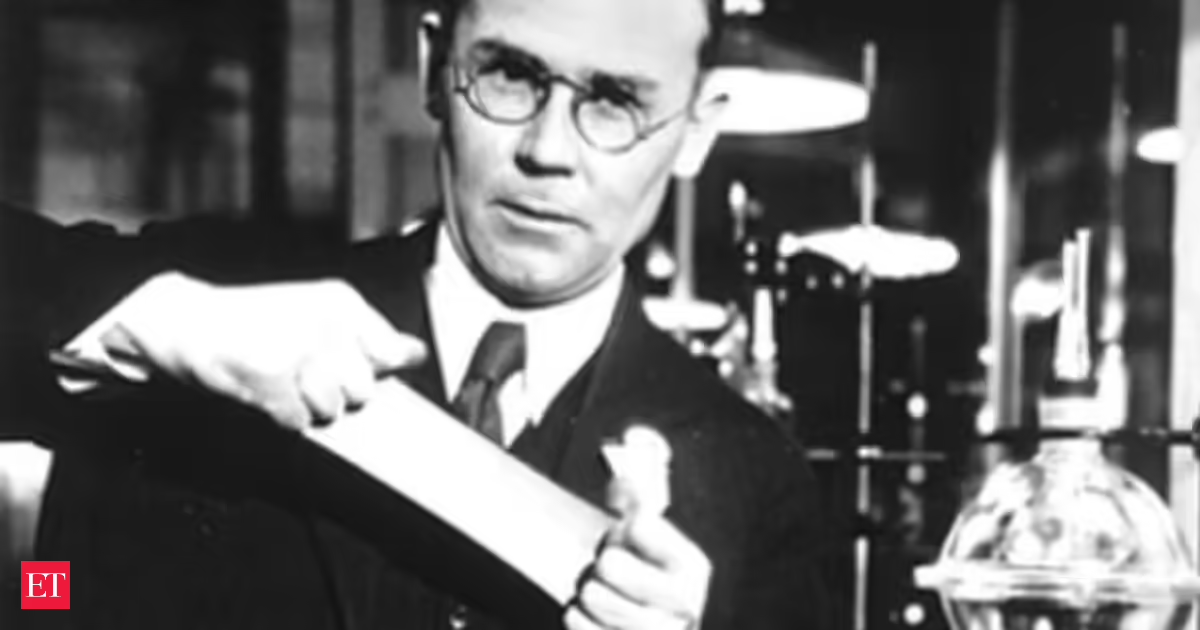
SynopsisIn a twist of fate, a humble lab experiment by chemist Julian Hill in the 1930s turned a sticky substance into a global phenomenon. What started as a gooey polymer evolved into the resilient, elastic wonder we now know as nylon. This breakthrough made waves beyond the laboratory, infiltrating everyday life with products like sleek stockings and durable parachutes.Early research into synthetic materials | Wikimedia CommonsIn the early 1930s, chemist Julian Hill came across something unexpected while working on synthetic polymers at DuPont. The material he was handling was gooey and sticky, sort of like warm taffy; it could be drawn out into threads. But here's where things got interesting: after it cooled, the thread became stretchier and tougher. At first glance, it seemed like just an odd find in the lab. Little did anyone know that this tiny detail ended up leading to the creation of nylon, a hugely influential synthetic material from the last century.This breakthrough wasn't about having a eureka moment for a finished product right away, instead, Hill figured out how to make a lab-made polymer useful, turning it into fabric. That one insight transformed textiles, manufacturing, and everyday items we use all over the globe. So, what started as a minor observation turned into a big deal in the world of materials science and production.Early research into synthetic materials | Wikimedia CommonsA sticky material became a usable fiberThe breakthrough emerged during routine experimentation rather than a planned attempt to create nylon itself. According to the American Chemical Society’s National Historic Chemical Landmark account of Wallace Carothers and polymer research at DuPont, Hill discovered that filaments could be formed by pulling strands from molten polymer, producing threads that could later be stretched dramatically beyond their original length. The process mattered because stretching aligned the polymer chains, improving both strength and flexibility.Historical material from Purdue University’s Department of Chemistry describes the moment in similarly practical terms. While studying polyesters, Hill found that the polymer could be wound around a stirring rod and slowly drawn into silky fibers. Continued experimentation eventually led researchers toward polyamides, producing what became the first synthetic fiber later known as nylon. Rather than a single lucky accident, the discovery emerged from repeated testing, observation, and refinement. What made the result exciting was that it showed chemists something entirely new. A synthetic polymer was not merely a substance sitting in a container. It could be shaped into fibers with useful physical properties, opening possibilities that extended far beyond the laboratory.Why stretching changed everythingThe science behind Hill’s observation was just as crucial as the thread itself. According to the American Chemical Society, when polymer strands were drawn out, their long molecular chains became more orderly and aligned. This alignment made the material stronger and more elastic, fitting for durable fiber uses. Caltech archives describe Hill’s experiments as a key step in nylon’s development. They mention a superpolymer being drawn into a thin strand, then stretched after cooling, which produced a tougher and more durable fiber. This event is called "the real beginning" of nylon, as it showed how synthetic polymers could be made into useful materials rather than remaining lab oddities.This shift in thought was hugely important. The breakthrough went beyond finding a new chemical compound; it involved learning how tweaking a material’s physical structure could create whole new properties.Nylon Suture: Surgical suture is a medical device used to hold body tissues together after an injury or surgery | Wikimedia CommonsFrom a laboratory strand to a global materialHill’s work was part of the bigger DuPont research program headed by Wallace Carothers. According to Polymers, nylon 6,6 was first made by Carothers and Hill at DuPont in the early '30s. This placed Hill’s fiber-drawing experiments right at the center of early nylon development. Their research laid the groundwork for a material that swiftly moved from lab benches to our daily lives. It spread super quick. As The Open University details, nylon hit the public in the late '30s and before long was in all sorts of things - stockings, toothbrushes, ropes, tents, and parachutes. Thanks to its strength, flexibility, and lightweight nature, it found value in both consumer goods and industrial uses.A recent review in PubMed Central shows how widespread nylon's impact was, covering clothing, hosiery, sports gear, industrial fabrics, and military supplies. This versatile stuff proved that synthetic polymers could stand up to natural fibers like silk and cotton, altering industries that were once entirely traditional, and, in retrospect, that famous thread of Hill's looks incredibly simple. Essentially, a chemist stretched a sticky polymer and spotted something crucial about synthetics. It started with pulling a strand from a lab beaker, which ended up sparking the creation of one of the most key materials in modern times. As time went on, nylon touched fashion, wartime production, and big-time manufacturing. Still, it all began with that basic experiment in a lab.Read More News on(Catch all the US News, UK News, Canada News, International Breaking News Events, and Latest News Updates on The Economic Times.) Download The Economic Times News App to get Daily International News Updates....moreless
In 1934, a chemist pulled a sticky polymer into a thread, and nylon moved toward everyday life
In a twist of fate, a humble lab experiment by chemist Julian Hill in the 1930s turned a sticky substance into a global phenomenon. What started as a gooey polymer evolved into the resilient, elastic wonder we now know as nylon. This breakthrough made waves beyond the laboratory, infiltrating everyday life with products like sleek stockings and durable parachutes.
849 words~4 min read