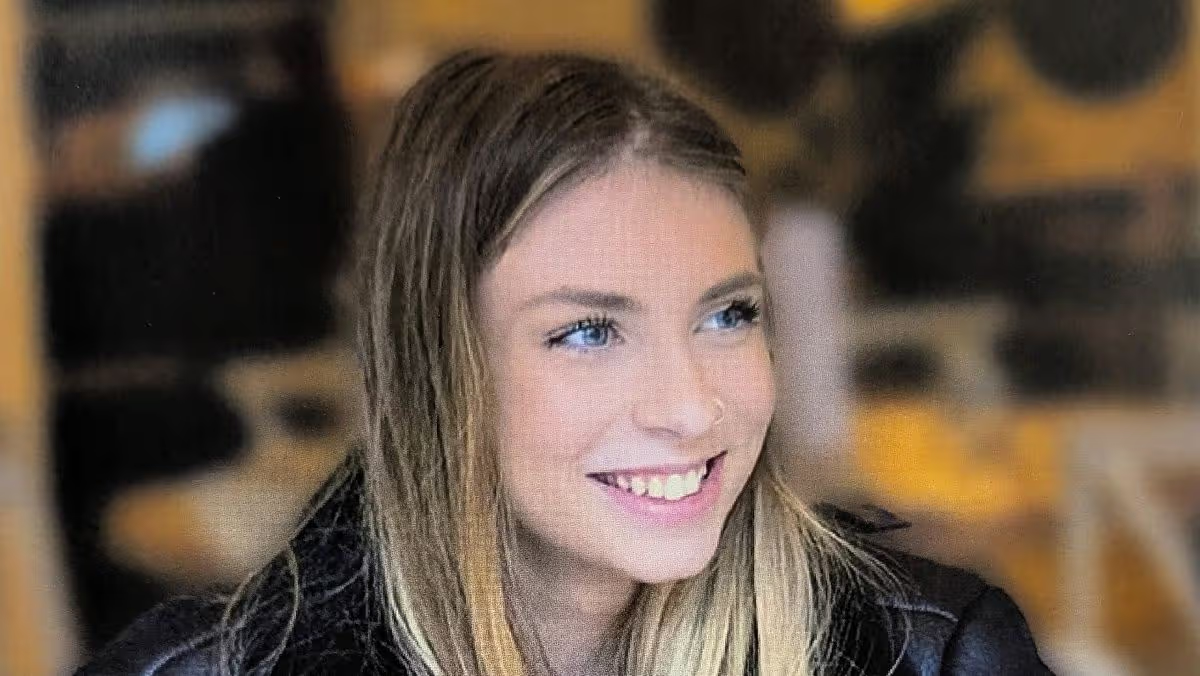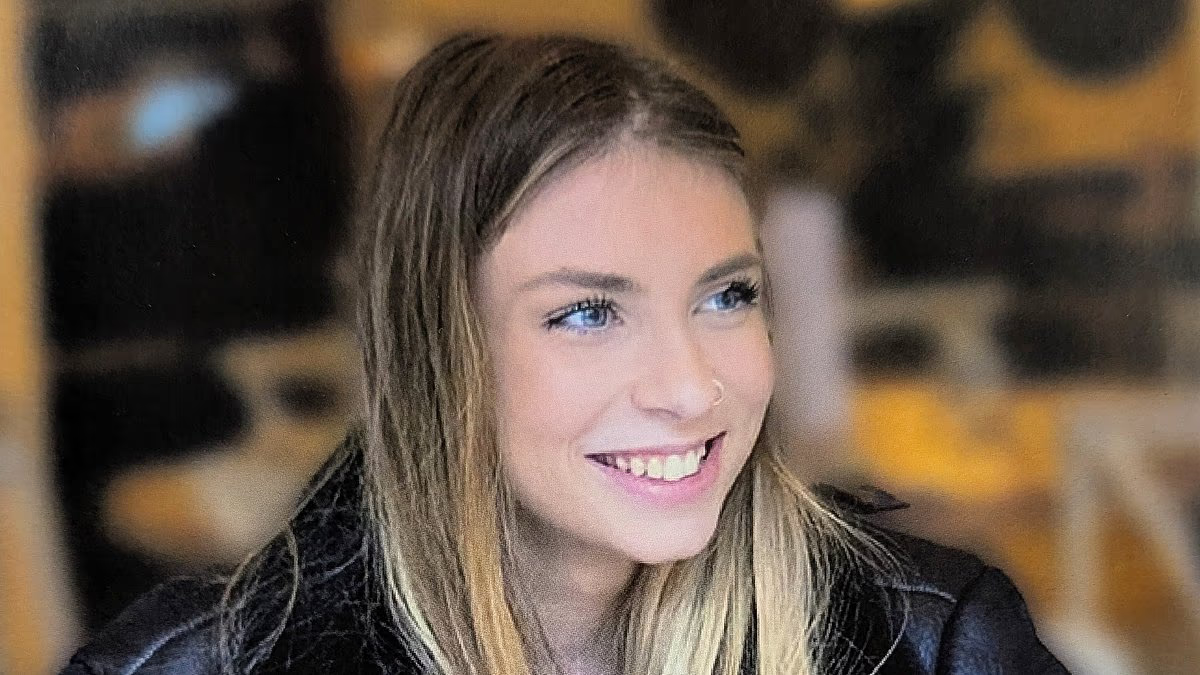
The mother of a 22-year-old estate agent whose ketamine addiction led to her death has called for the drug to have its classification upgraded.Isabelle Sapherson-Moralee, known as Izzy, suffered chronic pain and was just 5st 9lb (39kg) when she died in April 2025, five years after she first started taking ketamine.Her mother Ann Moralee said she believed young people saw ketamine as safer than other drugs because it is classified as class B.Drug classifications determine the penalties for possessing, taking, making or dealing them, with the punishment's severity increasing from the lowest class, C, to the highest, A.Class C drugs include anabolic steroids, nitrous oxide, or laughing gas, and benzodiazepines.Ketamine is classified as class B alongside cannabis, codeine and amphetamines.Drugs classified as class A include cocaine, ecstasy and heroin - the maximum penalty for possessing these drugs is up to seven years in prison, an unlimited fine or both, while supplying and producing them can mean life in prison.Meanwhile possession of class B drugs can be punished by up to five years in prison, an unlimited fine or both, while supply and production can mean up to 14 years in prison. Isabelle Sapherson-Moralee, known as Izzy, died aged 22 after a five-year ketamine addiction Her mother Ann, pictured leaving the inquest into Izzy's death, has called for the drug to be reclassified as a class A substanceMs Moralee urged the coroner who presided over her 'beautiful and smart' daughter's inquest to produce a prevention of future deaths report recommending it be reclassified and pressure the Government to make the change.Coroner Brendan Allen said he had made a similar report to Home Secretary Yvette Cooper last year after the death of Gemma Weeks, 28, and was aware of other coroners doing the same.However no move to upgrade ketamine has yet been made.But he said he would consider writing another report after he concluded Izzy's 'regular and sustained use of ketamine' contributed to her death.Ms Moralee's solicitor Antonia Jameson said: 'The family want to see something good come out of this horrific situation. A further report could make them consider reclassification again.'The inquest heard Izzy started taking ketamine during the pandemic lockdowns in 2020 but hid it from her family for three years.Ms Moralee only found out about her daughter's addiction after she became unable to hide the physical effects of the drug.Izzy developed so-called 'ketamine bladder', where the drug causes scarring to the organ causing chronic pain and incontinence.Her mother said her condition became so bad she spent £500 a month on incontinence pads.Izzy became so unwell she had to leave her job as an estate agent and was severely underweight as her mother spent 18 months trying in vain to help her.Ms Moralee said she felt health officials could have done more and 'missed opportunities' to help her daughter.Izzy, previously an estate agent, suffered chronic pain and became severely underweight before she diedShe said Izzy was seen simply as a ketamine addict and ignored when she appealed for help.After a bad experience with a urologist at Salisbury District Hospital who Ms Moralee said was 'vile' to Izzy, she said her daughter no longer trusted doctors.On April 24, 2025 - two days before she died - Izzy 'had enough' and discharged herself from hospital to go home.She told her mother: 'No more hospitals mum, I can't do it anymore.'Ms Moralee, a flight attendant and former nurse from Wimborne, Dorset, said: 'She knew she was dying that last 48 hours.'I have saved a lot of lives in my career, both as a nurse and flight attendant, but ultimately I couldn't save my daughter.'Izzy's official cause of death was respiratory depression, where breathing becomes too slow or shallow to restore oxygen to the body.The cause was recorded as combined severe morphine and gabapentin toxicity - two pain relief drugs.Both medications showed higher than normal levels in her blood and the gabapentin would have worsened the morphine's toxic effects.Dorset area coroner Mr Allen concluded Izzy died as a result of misadventure, with her 'regular and sustained use of ketamine' causing significant pain that led to her needing the prescription pain medication which led to her death.He said she likely took more than her prescribed dosage of her pain medication but he was satisfied this was 'most likely done to alleviate her pain rather than with the intention of ending her life'.Mr Allen said he was satisfied she had not intended to cause her own death, wanted to get better and was 'making efforts within the limits of her addiction'.He said: 'It's clear that Izzy wanted to get well and to address her ketamine addiction.'She even spoke about a future where she could help and support others. If she had reached that stage of her recovery I'm sure she would have excelled in that role. Izzy hid her addiction from her family for three years after first taking ketamine during the pandemic lockdowns'Ketamine had a very significant role to play in Izzy's death.'Without the sustained ketamine use she would not have experienced the significant pain that led to the long term use of opiates that exposed her to the risk of overdose.'He acknowledged Ms Moralee's concerns that Izzy should have stayed in hospital but said she was not detainable under the Mental Health Act and had turned down a referral to the community mental health team.Mr Allen made a prevention of future deaths report last year, recommending the government consider reclassifying ketamine as a class A drug, adding users believed it had 'lesser' risks due to its current class B label.That was the third time since November 2024 that a coroner called for the drug's reclassification.Mr Allen said the reports had prompted a review by the Advisory Council on the Misuse of Drugs but it decided not to reclassify.Ms Moralee's solicitor told him: 'The boots on the ground say it's becoming more and more prevalent, every opportunity should be taken to address that.'There is a misconception that it isn't as addictive as other drugs. If you compare it with other class A drugs, the damage it does to a body is unparalleled.'There is a misconception among youngsters that because it's class B it's safer.'It's also cheaper and really accessible, both those things are likely to be because it's class B rather than class A.'Dr Deborah Mayne, an A&E consultant, had told the Bournemouth inquest of the rise in cases doctors were seeing of young people suffering from the effects of ketamine.She said: 'I haven't seen any data but it feels like it is just much more frequent. It is unbelievable how accessible it is, I've heard of children taking it in schools.'It’s such a horrible drug. It just seems to have such a strong addictive profile and is so hard to stop once you have started. And we are seeing the long term effect coming in.'The Home Office was contacted for comment.
Mother of ketamine addict, 22, who died says drug must be made Class A
Isabelle Sapherson-Moralee, known as Izzy, suffered chronic pain and was just 5st 9lb (39kg) when she died in April 2025, five years after she first started taking ketamine.
1,147 words~5 min read