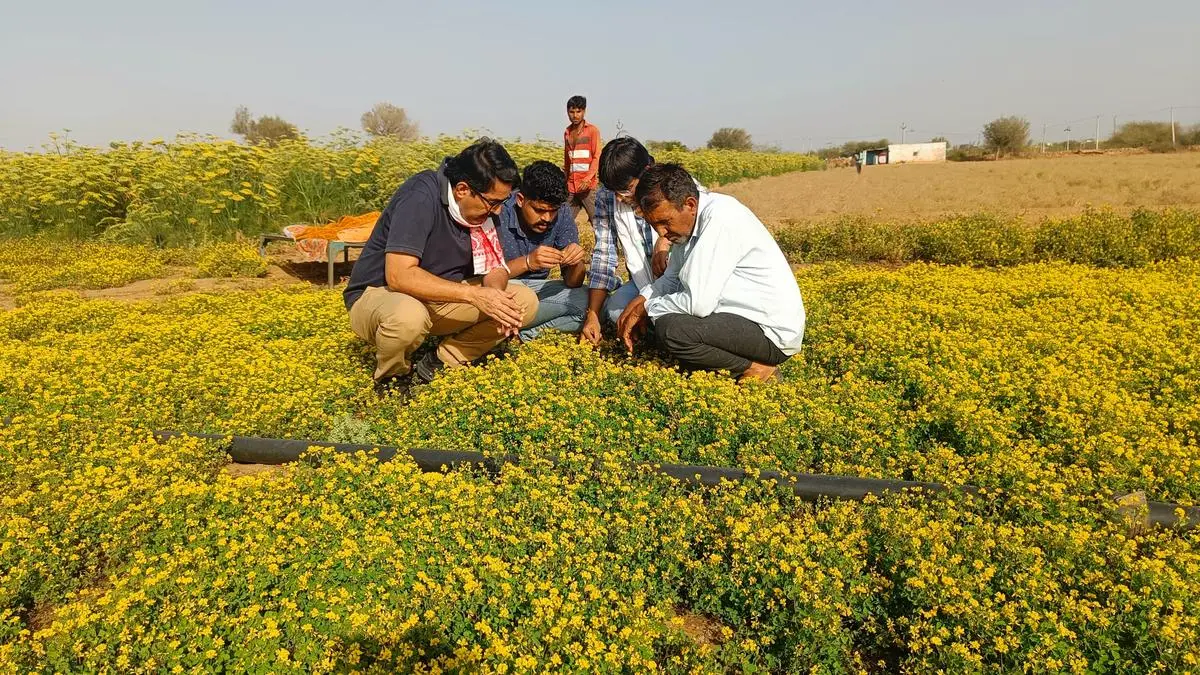
As we celebrate World Environment Day with its focus on nature, climate and our collective future, India’s silent revolution in seed sovereignty deserves far greater national attention. While debates on food security often revolve around production and procurement, a deeper transformation is unfolding in the realm of plant genetic resources, farmers’ rights and biodiversity governance. The sharp rise in registrations under the Protection of Plant Varieties and Farmers’ Rights Act, 2001 reflects not only India’s scientific preparedness but also a strategic assertion of sovereignty over its vast agricultural biodiversity at a time when global negotiations over seeds, genetic resources and digital sequence information (DSI) are intensifying.Between 2005 and 2025, the Protection of Plant Varieties and Farmers’ Rights Authority (PPV&FRA) granted final registration certificates to more than 10,500 plant varieties, including over 5,250 farmers’ varieties, 3,118 private-sector breeder varieties and 2,164 public-sector varieties. Significantly, more than half of these registrations were granted in the last 2-3 years alone, indicating an unprecedented acceleration in India’s plant variety protection ecosystem.This growth is not merely administrative but signals India’s strategic readiness at a moment when the international community is debating expansion of crop coverage under the International Treaty on Plant Genetic Resources for Food and Agriculture (ITPGRFA) and framing rules governing access to DSI which will shape future control over seeds, breeding material and genetic wealth.Plant variety registrationUnlike patents granted under the Indian Patent Act, plant variety registration under India’s sui generis framework involves rigorous field-based evaluation for distinctness, uniformity and stability (DUS), often conducted across multiple crop seasons through designated testing centres under ICAR and SAUs. Nearly 2,500 varieties are currently undergoing field evaluation across the country. The process is scientifically stringent, yet socially inclusive.India’s decision in 2001 to adopt a sui generis system instead of seed patents was among the most farsighted policy decisions in agricultural governance. Responding to obligations under Article 27.3(b) of the WTO’s TRIPS agreement, India deliberately rejected a purely corporate patent model and instead enacted a law that balanced breeders’ rights with farmers’ rights. In a country dominated by smallholders, this legal architecture ensured that farmers retained the right to save, use, exchange and sell farm-saved seed without fear of litigation.India’s plant variety protection framework under the PPVFRA is unique in that it accommodates a wide spectrum of plant genetic resources and breeding innovations through multiple categories of registration including formally bred new varieties, extant varieties of common knowledge (VCK), extant notified varieties, essentially derived varieties (EDVs) and, importantly, farmers’ and community varieties.Crop coverage under DUS systemThe result is a uniquely democratic IP framework in which farmers are recognised not merely as cultivators, but also as breeders, innovators and custodians of biodiversity. That more than half of all registrations belong to the farmers’ rights category is a remarkable global precedent.Equally important is the broadening of crop coverage under the DUS system. Initially dominated by cereals such as rice and wheat, registrations are increasingly expanding into horticulture, fibre crops, spices, medicinal plants and neglected traditional crops. This transition has been enabled by painstaking work to develop and notify crop-specific DUS guidelines. Without such guidelines, no variety, however unique, can be registered.A significant policy breakthrough came in late 2025, when the PPV&FRA approved the adoption of related crop descriptors for species lacking formal DUS protocols. This administrative reform may appear technical, but its implications are profound. It opened the door for registration of several neglected and underutilised crops, including lotus, blueberry, turmeric and the now-celebrated Nagauri Paan Methi, which is botanically distinct from conventional fenugreek.The registration of Nagauri Paan Methi under community rights in 2026 is more than a regional success story. It is a powerful illustration of how biodiversity conservation, women’s leadership and IPR can converge into a transformative rural development model. Known popularly and often misrepresented as “Kasuri Methi”, it is prized for its intense aroma and rich flavour after drying.Regulatory flexibility’s roleFor years, however, this unique genetic resource remained outside the formal protection framework because no crop-specific DUS guideline existed for the species. The recent regulatory flexibility resulted in the grant of community rights to Pradhan Mrs Geeta Devi of Mundwa in Nagaur under the PPV&FR framework at a time when FAO is observing 2026 as the International Year of Women Farmers.Additionally, the registration protects Nagauri Paan Methi from biopiracy, counterfeit seed trade and unauthorised commercial exploitation. It creates the basis for benefit sharing, strengthens the pathway toward securing a Geographical Indication (GI) tag and developing a formal seed chain and export ecosystem.India’s biodiversity wealth is immense, but much of it remains undocumented, unprotected and vulnerable. Climate change, land-use shifts and rapid changes in farming systems are accelerating genetic erosion. Meanwhile, countries such as China are aggressively expanding plant variety registration systems, reportedly registering over 10,000 seed varieties annually.India cannot afford complacency in the rapidly changing dynamics in access and benefit sharing arising out of the utilisation of genetic resources in both physical and digital form. The plant authority is responding in a timely manner to the imminent changes by streamlining the registration procedures, reducing bureaucratic delays, expanding DUS infrastructure and encouraging farmer communities, public institutions and start-ups to document and protect indigenous genetic resources. Minor crops, traditional landraces and community-conserved varieties now receive the same policy attention once reserved only for major cereals.The real significance of India’s plant variety regime lies not merely in intellectual property protection, but in its ability to create a farmer-centric model of biodiversity governance. In an era when genetic resources are emerging as strategic global assets, safeguarding India’s agricultural diversity is no longer just a scientific responsibility but an economic, ecological and geopolitical imperative.The author is the founder and director of South Asia Biotechnology Centre (SABC), Jodhpur.Published on June 5, 2026
Protecting India’s seed sovereignty
Over 10,500 plant varieties registered under PPV&FRA, including over 5,250 farmers’ varieties, 3,118 private-sector breeder varieties and 2,164 public-sector varieties
950 words~4 min read