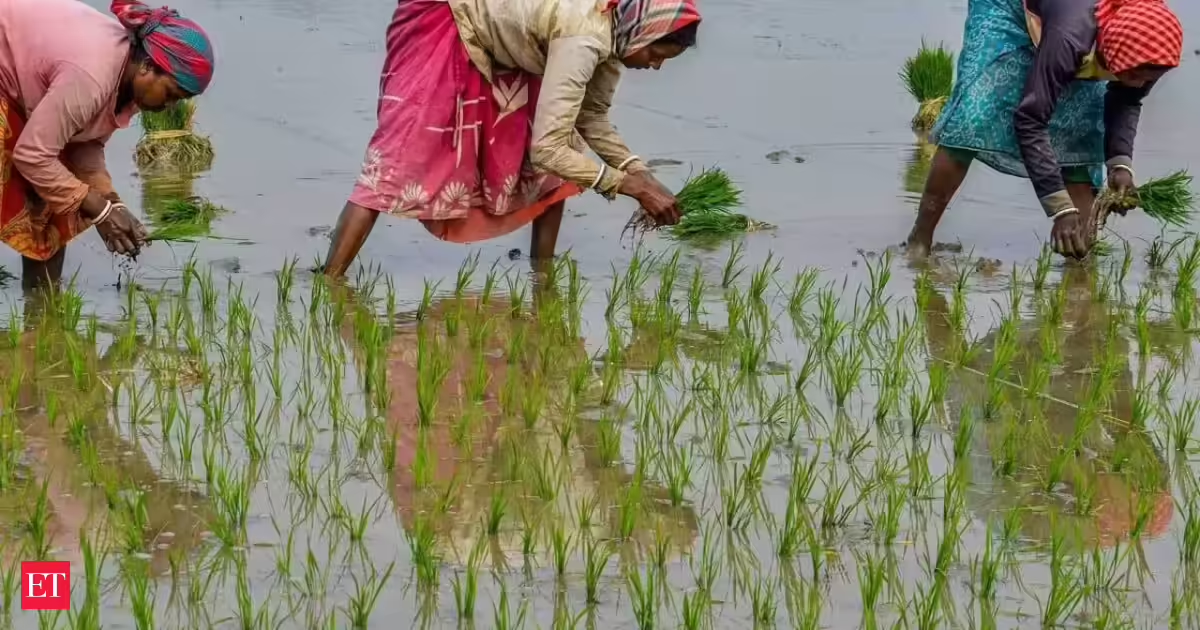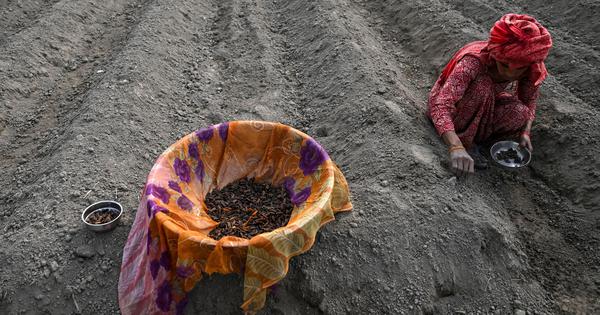
Agricultural Minister Shivaraj Singh Chouhan recently announced that he would introduce a new Seeds Bill in the next session of Parliament replacing the vintage Seeds Act, 1966 enacted during the Green Revolution. The new law is aimed at regulating the quality of seeds being made available to Indian farmers and vests significant powers in the Union Government to regulate the seed industry and by implication, agriculture across the country.A draft of the bill was made available in November for public consultations but without a white paper explaining the government’s rationale for the bill and its policy objectives. From statements made by the Minister, the primary aim of the bill is to tackle the flood of complaints from farmers about the poor quality of seeds being sold to them.The private seed industry has largely supported the bill on the grounds that it will improve “ease of doing” business. On the other hand, some farmer groups and activists have criticised the bill on the grounds that it will consolidate corporate control over the trade of seeds, adversely affect crop biodiversity and traditional farming practices, including community seed banks.A more fundamental question, which has received little attention, is whether Parliament has the legislative competence under the Constitution to enact the seeds law in the first place. This is an important question to ask since “agriculture” falls within the ambit of the State List laid down in the Seventh Schedule to the Constitution. As per the Constitution, Parliament can only enact laws on the Union List or the Concurrent List in the Seventh Schedule, while only states can enact laws in relation to the State List. This question assumes all the more significance given the history of the Indian legal regime governing the seed industry.When states took the initiativeThe first attempt to enact a seeds law in India dates back to colonial rule. The Second World War had disrupted the import of seeds for “European Vegetables” and the colonial government was considering proposals to setup a domestic vegetable seed industry in Quetta and Kashmir to cater to the needs of vegetable farmers in British India. At a conference in 1943, the erstwhile Imperial Council of Agricultural Research had proposed the enactment of new law to regulate the quality of vegetable seeds being made available to Indian farmers. The Imperial Council of Agricultural Research even drafted an Agricultural Seeds Act which was circulated amongst the provinces for comment. Despite extensive consultations, this effort was abandoned weeks before India declared independence in July 1947 due to the uncertainty brought about by partition and the fact that the new Constitution was yet to be finalised.After India became independent and democratic under a new Constitution in 1950, it was the states which took the lead in enacting new laws related to seeds and other plant reproductive material. For instance, in 1952 the state of Jammu and Kashmir which acceded to India in 1948, enacted the Jammu and Kashmir Vegetable Seeds Act to regulate its growing vegetable seed industry.Similarly, Himachal Pradesh enacted the Himachal Pradesh Fruit Nurseries Registration Act, 1956 to regulate the supply of seeds to its booming fruit orchards. More recently in 2020, Punjab enacted the Punjab Tissue Culture Based Seed Potato Act, 2020 to regulate the type of seeds supplied to its potato farms. States have also enacted general laws to regulate the trade of seeds like The East Punjab Improved Seeds and Seedlings Act, 1949 and The Andhra Pradesh (Telangana Area) Seeds and Seedlings Act, 1951. The variety of different laws enacted by states reflects the vast diversity of agriculture in India.This variety of state laws reflect the fact that state governments were actively responding to the demands of their farmers and local agricultural economies. Some of these states have refined their laws over time – Himachal Pradesh has had two further iterations of its law regulating fruit nurseries, in 1973 and 2015, indicating that the state government is learning and adapting its regulatory framework to deal with evolving challenges. The new seed law proposed by the Union Government threatens to disrupt, and even void, these numerous state laws.The constitutional questionThe question now is whether Parliament can enact a new seed law when the states have already enacted laws on the issue?As per the Constitution, legislative powers are distributed between the Union and states across three lists in the Seventh Schedule to the Constitution. List I (Union List) specifies the subjects on which Parliament can enact laws, List II State List) specifies the subjects on which state legislatures can enact laws, and List III (Concurrent List) specifies the subjects on which both Parliament and state legislatures can enact laws, subject to parliamentary law over-ruling state law in case of a conflict between both laws.The Union Government and the seed industry will point to the fact that Parliament has already enacted a Seeds Act back in 1966. This law was a key component of the plan drawn up by the Rockefeller Foundation in the 1960s for the Green Revolution in India. The foundation had advised the Indian government to create a private seed industry in India which could supply seeds to farmers before every sowing season. This was a necessity at the time because the Green Revolution was driven by hybrid seeds which do not reproduce “true to type”. As a result, farmers had to buy new seeds every sowing season and somebody needed to supply those seeds. It was in this context that The Seeds Act, 1966 was meant to regulate the quality of seeds being supplied to farmers.However, when the Seeds Act, 1966 was being discussed in Parliament, the opposition had raised the issue of legislative competence, pointing out that since “agriculture” was on the State List in the Seventh Schedule and that Parliament lacked the competence to enact the seeds law. The government had no credible answer to this question and the discussion was adjourned, only for the bill to be passed by Parliament a few months later without providing a satisfactory answer to the constitutional issue raised by the Opposition.Since 1966, the issue of legislative competence pertaining to seeds has been litigated before the courts primarily in the context of seed pricing laws. For example, in 2011, the Gujarat High Court struck down as unconstitutional the Gujarat Cotton Seeds (Regulation of Supply, Distribution, Sale and Fixation of Sale Price) Act, 2008 on the grounds that the state law conflicted with union laws. In coming to this conclusion, the court identified Item 33 of the Concurrent List in the Seventh Schedule as the relevant clause because it specifically mentions “cotton seeds” in the context of inter-state commerce.Women workers pluck cotton at a field in Badarkha village, close to Ahmedabad, in this photograph from December 2009. Credit: AFP.But what about laws which regulate the quality, cultivation and trade of seeds other than cotton seeds? This question came up in court when the State Government of Punjab prohibited the sowing and sale of seeds of a specific variety of hybrid rice (PUSA-44) under the East Punjab Improved Seeds & Seedlings Act, 1949. This variety was prohibited because of concerns that it was guzzling water leading to increased use of scarce ground water and leaving behind more stubble which would then contribute to farm fires etc. That order banning PUSA-44 was challenged by the seed industry and ultimately in a judgment delivered in August, 2025 the Punjab & Haryana High Court struck down the ban. The court reasoned that Entry 33 of the Concurrent List was the relevant clause governing all seeds laws and since the Union had already enacted the Seeds Act, 1966; the state government could not exercise its legislative or executive powers in a manner which clashed with the Union’s laws.With all due respect to the High Court, its reasoning was deeply flawed. Traditionally in disputes regarding the legislative competence, Indian courts have followed the test of “pith and substance”. This test requires courts to ascertain the true character or essence of the law while determining the entry/list of the Seventh Schedule under which the law can be located. This could mean that different aspects of a single commodity can be regulated by different legislatures depending on the “pith and substance” of the law.For example, in the context of seeds, a law bestowing intellectual property rights in the seeds, like the Plant Variety Protection and Farmers Rights Act, 2001 can be located under Entry 49 of the Union List which deals with “patents, inventions” etc. However, a law regulating measures to protect seeds against pests and plant diseases will clearly fall within Entry 14 of the State List which deals with “Agriculture, including agricultural education and research, protection against pests and prevention of plant diseases”. Similarly, it could be argued quite easily that a law aimed at regulating the quality of seeds, such as the proposed seeds law, is essentially a law regulating agriculture. This is because any law regulating seeds is aimed specifically at the manner in which seeds are grown on farms to ensure the highest level of purity and germination. The essence of these activities, aimed at how plants are grown, arguably falls within the definition of agriculture.Therefore, if a state is opposed to the Union encroaching upon its powers to enact a seed law, it could challenge the constitutionality of the Seeds Act, 1966 by suing the Union before the Supreme Court under Article 131 of the Constitution. It is very likely that the court will hold that the Union can only regulate certain aspects of the seed industry such as import, export and inter-state commerce, while leaving the states with the power to regulate the quality of seeds grown, sold and cultivated within their borders.A worker separates grains of rice from the husk at a grain market in Lang village, near Patiala, Punjab, in this photograph from October 2018. Credit: AFP.Centralise powers over agricultureIf the new law is enacted it will significantly centralise powers to regulate the seed trade with the Union Government. The seed industry is in favour of such centralisation because it would spare them the pain of negotiating with individual state governments. They will have to deal with only one set of bureaucrats in New Delhi on contentious issues such as standards, certification requirements, labelling criteria and price control.Such centralisation of power bodes poorly for state governments and federalism in India especially with lucrative crops. For example, in 2017, the Union Government invoked its powers under the Seeds Act, 1966 to restrict the states in which basmati rice could be grown. This decision deeply prejudiced farmers in Madhya Pradesh.In the cases of both PUSA-44 and basmati, state governments were left to negotiate with New Delhi on an issue as basic as what can be grown within their own borders. Such an arrangement may not be desirable, given the history of bad blood between the states and the union, when opposing political parties are in power. This is especially true for states where seed quality has become an explosive political issue with farmers.As the impending delimitation of parliamentary seats creates ever more tension in India’s federal governance, the question of legislative competence on issues related to agriculture deserves more attention in the debate over the new seed law.Prashant Reddy Thikkavarapu is a doctoral scholar at the TC Bernie School of Law, University of Queensland, Brisbane, Australia.
A proposed seed law may be a new flashpoint in Indian federalism
Numerous states already have their own seed laws, which the Centre’s bill threatens to disrupt.
1,901 words~9 min read