Insider Brief
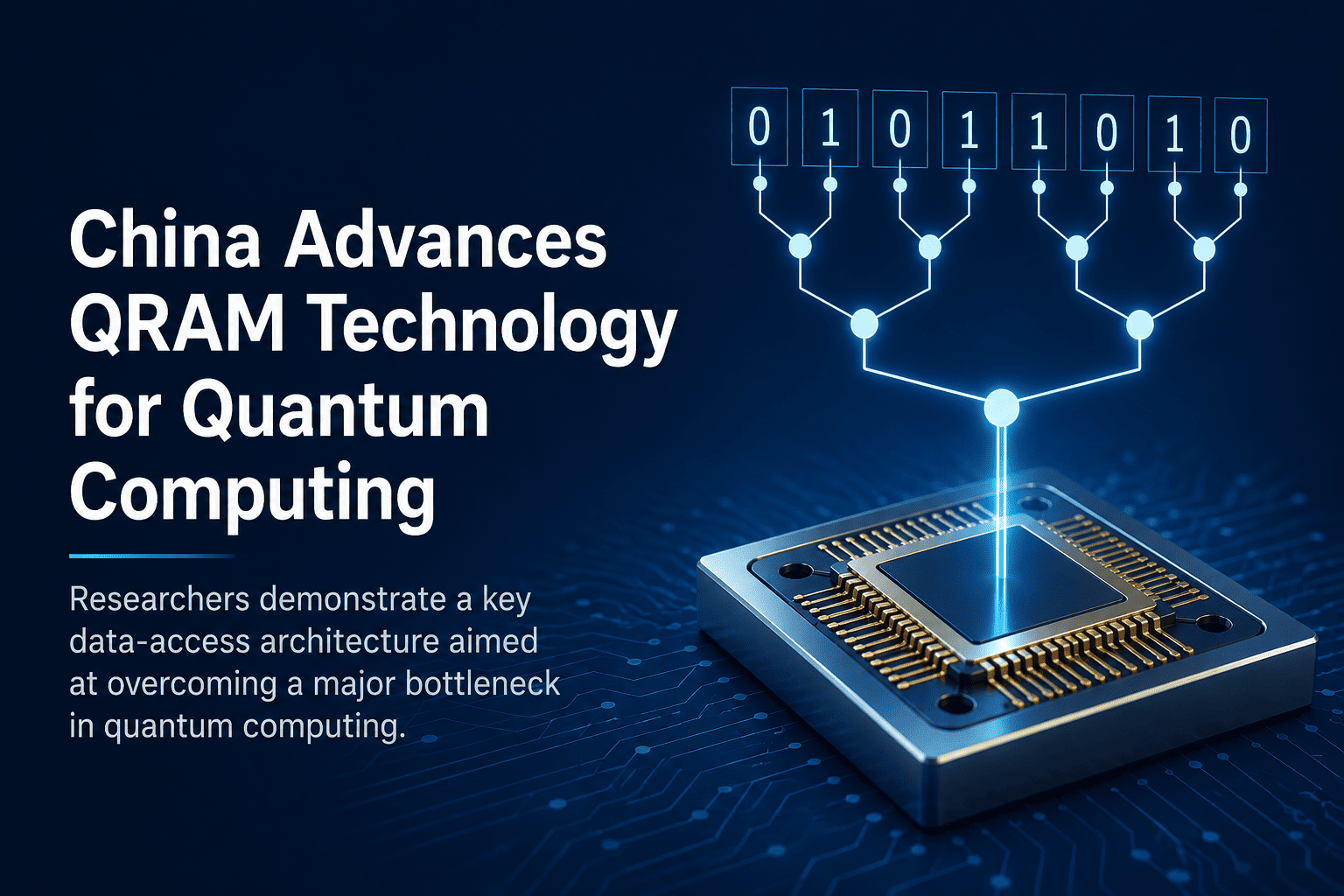
Researchers at Zhejiang University experimentally demonstrated a quantum random access memory (QRAM) architecture on a superconducting quantum processor, a step toward improving how quantum computers access classical data.
The team implemented four-bit and eight-bit QRAM systems using a bucket-brigade architecture, achieving query fidelities of up to about 81% and 60%, respectively, according to a study published in Nature Physics.
The demonstration remains at the proof-of-concept stage, with significant challenges in scaling, accuracy, error correction and hardware development before QRAM could support applications such as drug discovery, fraud detection or quantum-enhanced AI.
Chinese researchers have experimentally demonstrated a quantum random access memory architecture, or QRAM, on a superconducting quantum processor, marking what researchers describe as a significant step toward improving how quantum computers access large amounts of conventional data.