A gentle shower fell as four people in rain gear made their way deep into a spruce-fir forest high in Great Smoky Mountains National Park. Ducking beneath bright green underbrush and stepping away from the road, a hush took over.
Just a few steps in, they came across an aging yellow birch tree covered in moss.
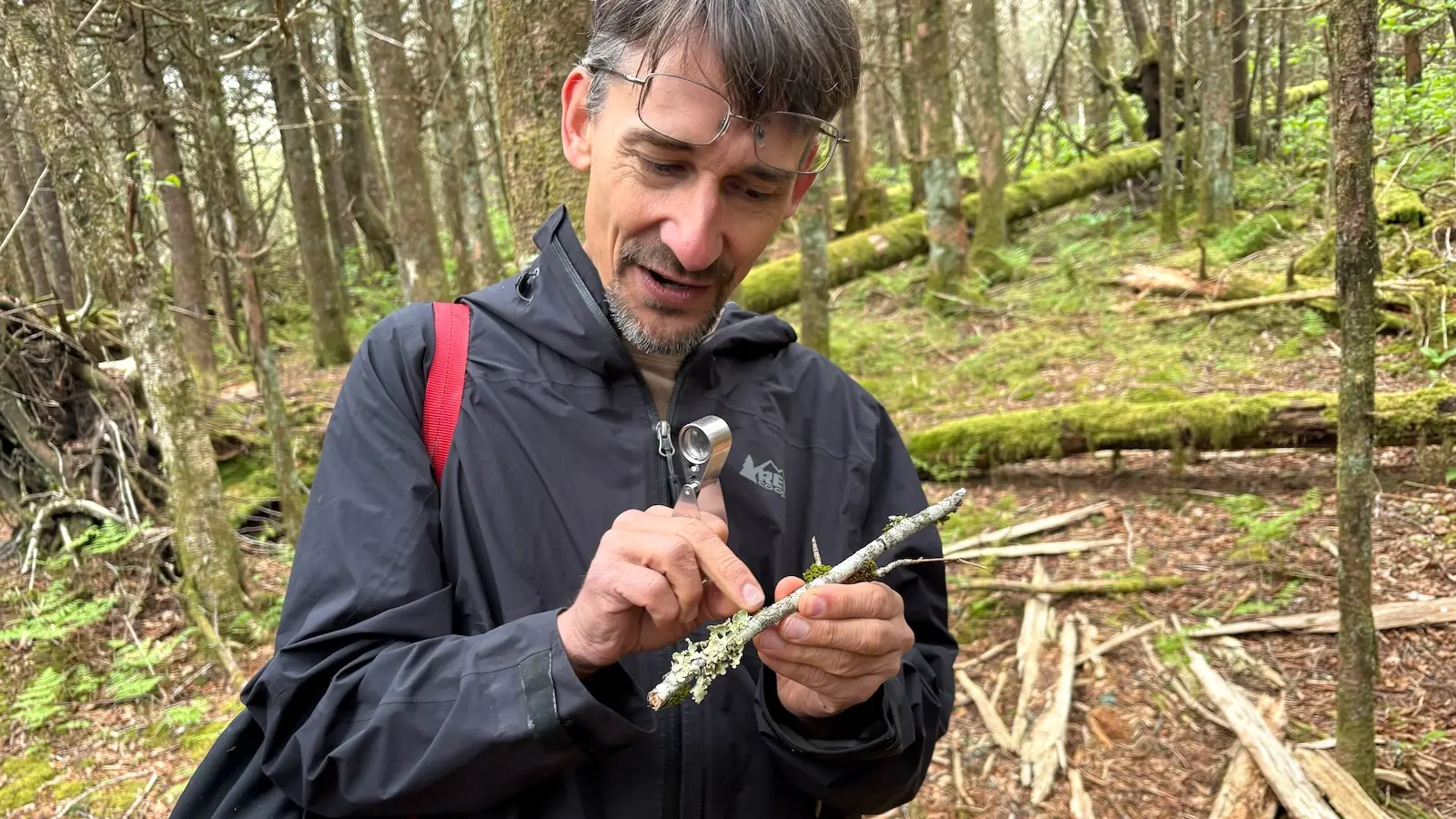
But it wasn’t just moss. James Hollinger, a retired computer scientist turned amateur lichen scientist, leaned closer and spotted a rare, spongy lichen that has been documented about a dozen times in the park. As far as he knows, it does not appear in any botanical guidebooks.
“So, we could, right here right now, come up with a common name for it,” Hollinger said excitedly, as fellow volunteer and lichenologist Laura Boggess unfolded her magnifying lens. Counting carefully, she found more than 17 other moss and lichen species on just one side of the tree.
Every square foot of the Smokies teems with life that most visitors never notice: lichens clinging to bark, fungi hidden in fallen logs, and salamanders darting beneath damp leaves. Scientists and volunteers say paying attention to those small creatures — and returning often enough to notice when they change — has grown increasingly urgent as climate change alters the park’s ecosystems and federal agencies see deep cuts that threaten long-term monitoring and biodiversity research.