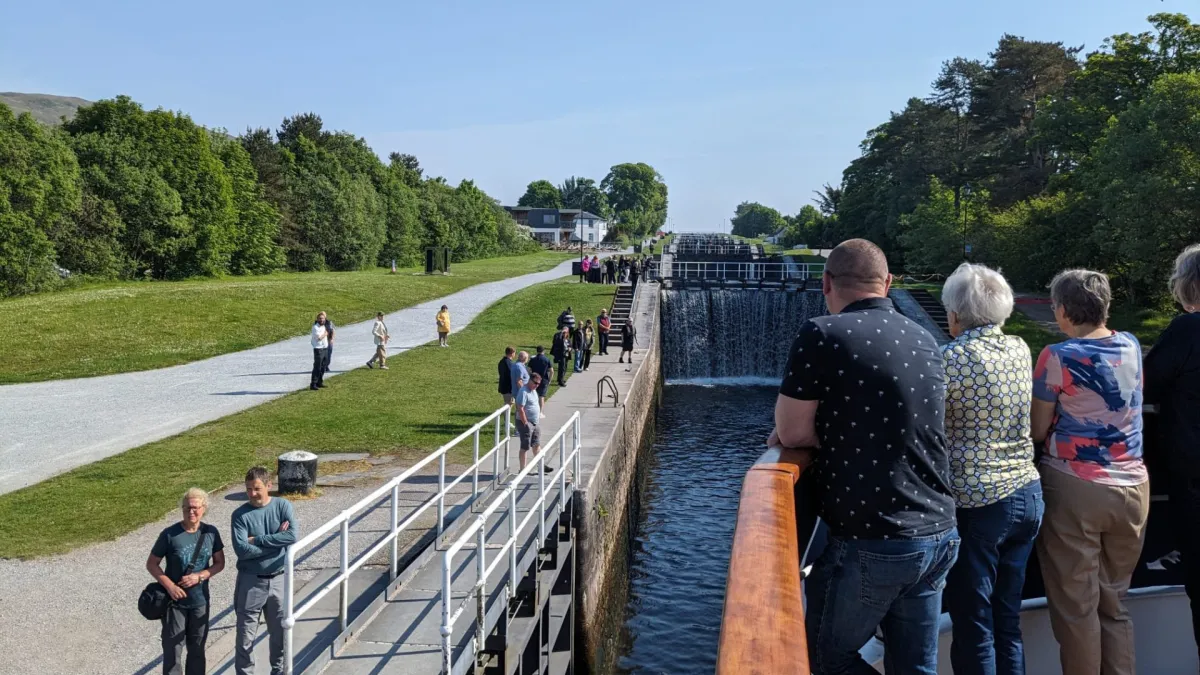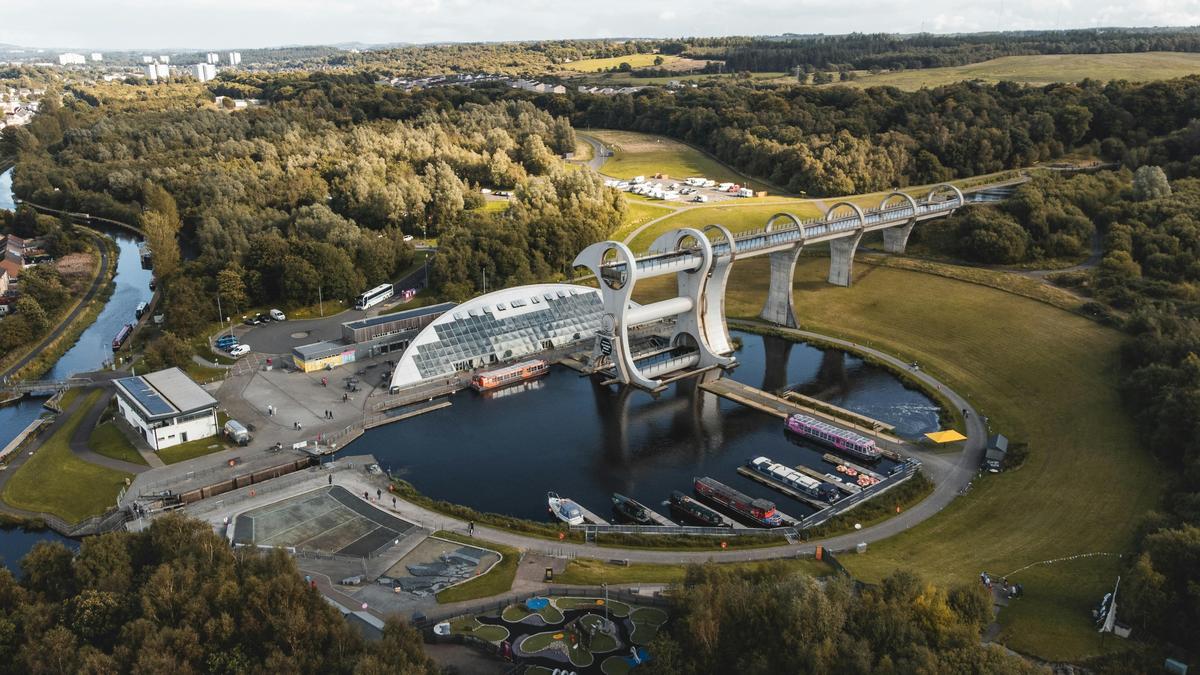
The Falkirk Wheel is an engineering landmark in Scotland that doubles up as a major tourist attraction. Since its inauguration in 2002, the Falkirk Wheel has attracted nearly 5,00,000 visitors every year, in addition to performing its primary role of connecting the Forth & Clyde Canal with the Union Canal. While the Falkirk Wheel came into existence only in 2002, these two canals had been previously connected in history. Scotland’s first inland waterway and considered the world’s first sea-to-sea canal, the Forth & Clyde opened in 1790. Once the Union Canal was opened in 1822, it wasn’t long before people started thinking that linking these canals would, in a larger sense, connect the two major Scottish cities of Glasgow and Edinburgh as well.There was, however, a catch as there was a change in the elevation of the two canals. The Union Canal runs about 115 feet or 35 m higher than the Forth & Clyde. This challenge was surmounted in the 19th Century by connecting the two canals at Falkirk with a series of 11 locks — a water navigation system used for lowering and raising boats. Even though the process took the better part of a day and used up a lot of water from the Union Canal, it worked. That is, until roadways and railways superseded waterways as the primary means of cargo transport. The locks fell into disuse and eventually they were dismantled in 1933. The canals themselves didn’t fare better, as they were obstructed and closed at many locations and were effectively closed by 1960.
Falkirk Wheel: The world’s first and only rotating boat lift
On May 24, 2002, the Falkirk Wheel was officially opened by Queen Elizabeth II as part of her Golden Jubilee celebrations. The world’s first and only rotating boat lift is an engineering feat of excellence that connects the Forth & Clyde and Union Canals in Scotland. A.S.Ganesh takes you on this waterway to tell you more about this unique wheel…
1,249 words~6 min read