If you start looking up “1893 Chicago” in India, then the predictive autofill suggestions provided by the search engine likely concerns three main subjects. One of these revolve around Swami Vivekananda. It was in the 1893 World’s Parliament of Religions in Chicago that Vivekananda wowed the gathered audience with his historic address – a speech that has since been immortalised. The other two subjects, which are in a way intertwined with the first, are worlds apart from faith. The World’s Parliament of Religions was held in conjunction with the World’s Columbian Exposition that Chicago hosted from May to October in 1893. It was during this exposition, better known as the Chicago World’s Fair, that the Ferris wheel made its debut. An Eiffel-sized challengeThe mood was grim late in 1890 when American architect Daniel Burnham was tasked with the role of converting a square mile of Chicago into a showpiece that would dazzle the world. It was going to be a rather tough follow-up act, given that the 1889 World’s Fair in Paris had had the Eiffel Tower as its grand entrance arch. Burnham assembled some of the best designers that the country had to offer at the time and asked them to leave no stone unturned. To his chagrin, the proposals that made its way were far from exclamatory. When speaking to a group of engineers working on the project, Burnham made his displeasure felt. Among them was a 33-year-old Pittsburgh engineer, George Washington Gale Ferris Jr.Huge revolving steel wheelWith the call to come up with “something novel, original, daring and unique” loud and clear, Ferris got to work. He was hit with the idea of a huge revolving steel wheel. He sketched it, added specifications to it and shared it with Burnham, who was concerned about its safety owing to fragility.Ferris wasn’t the first person to imagine such a scheme and smaller wooden versions of similar ideas were already doing the rounds. But what with Burnham’s backing to think big, and the huge attendance expected at the Chicago World’s Fair, Ferris went all out. He got investors on board, invested his own money in order to have skin in the game, hired engineers and conducted safety studies. The result was positive. On December 16, 1892, his wheel was chosen as the American answer to the Eiffel Tower. With over 1,00,000 parts, including two towers that rose up to 140 feet and an axle that weighed over 40,000 kg, it measured 250 feet in diameter and was fitted with 36 cabins, each with a capacity of 60 people. The first riders of the Ferris wheel included George, his wife, the invited guests including the entire City Council, and a forty-piece band. On June 21, 1893, the original Ferris wheel was put into action and then ran every day from 8 in the morning to 11 in the night.Views like never beforeThe Ferris wheel was a resounding success to say the least with more than 1.4 million people coughing up the 50 cents required over the next 19 weeks. In exchange, they got a 20-minute ride that included two revolutions and an almost indescribable aerial panoramic view that few had experienced before. Even though the wheel was a super hit and brought in a lot of money and even helped balance the books of the Fair, Ferris got caught in many lawsuits – regarding the debts that the fair owed to him and that which he owed to the suppliers. The financial ruin and immense stress was followed by a bout of typhoid fever, complications due to which led to his death at the age of 37 in 1896. His successful reinvention of the wheel, however, means that his name still remains popular, nearly 130 years after his death.
The story and science behind Ferris wheels
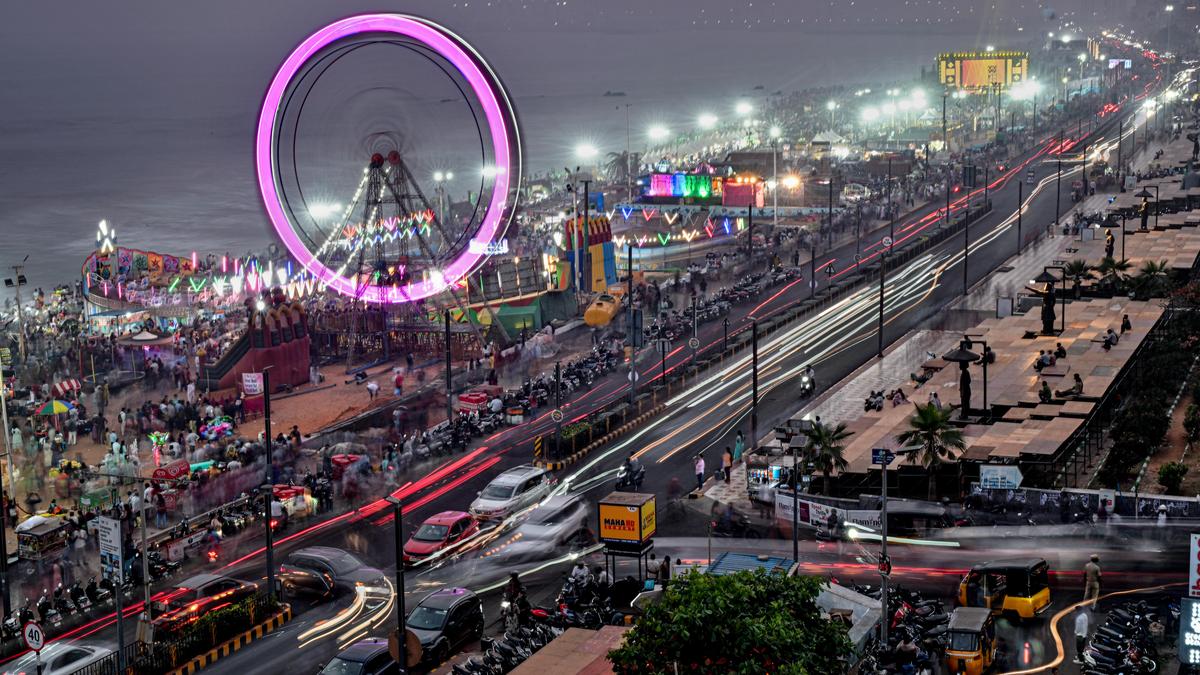
On June 21, 1893, the original Ferris wheel had its first riders at the Chicago World’s Fair. Envisioned as an American answer to the Eiffel Tower, this amusement ride has not only won over the hearts of countless people, but has also gone on to become a symbol of many cities in its 130-plus years of existence. Hop aboard one of the many cabins as A.S.Ganesh takes you on a ride like no other…
TL;DRAI
Ferris designed a 250-foot rotating steel wheel for Chicago's 1893 World's Fair, attracting 1.4 million riders at 50 cents per ticket. The design applies circular geometry and centripetal force—engineering principles foundational to modern rotating infrastructure worldwide.
1,224 words~6 min read