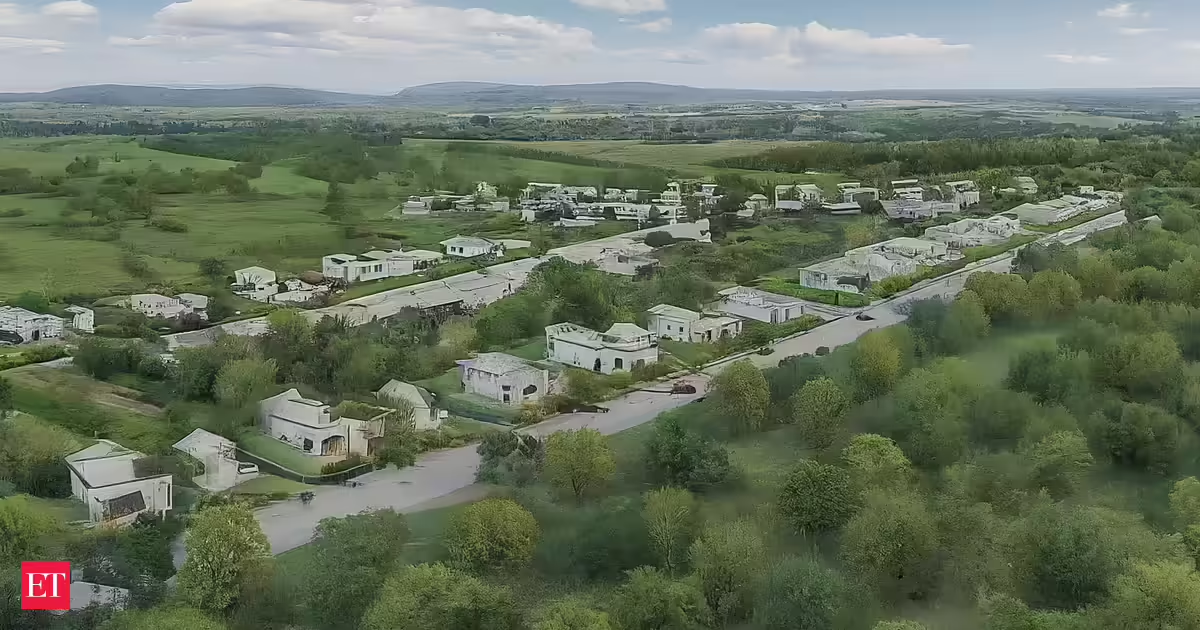
India's cities are growing faster than ever before. By 2047, millions more people will live, work and move through urban centres, increasing the demand for housing, transportation and public infrastructure. The challenge is to build India at a scale without placing an unsustainable burden on the environment.NBCC RECOGNISED AT THE 17TH GRIHA SUMMIT FOR ITS PROJECTS VANIJYA BHAWAN & KAUSHAL BHAWAN. (NBCC)The answer lies in promoting green infrastructure which will foster sustainable living standards.At the forefront of this transformation is NBCC (India) Limited, a Navratna CPSE that has steadily integrated sustainability into the core of its construction philosophy. From energy-efficient buildings to environmentally conscious townships, NBCC’s green initiatives are helping shape a more resilient and sustainable urban future.NBCC has adopted a policy of incorporating sustainable features into all major projects, ensuring that infrastructure growth aligns with national climate goals and global sustainability standards. Today, several landmark projects developed by NBCC carry prestigious GRIHA and IGBC ratings, demonstrating excellence in resource efficiency, renewable energy utilisation, water conservation and waste management.Among its most notable achievements is New Moti Bagh in New Delhi, a pioneering township that transformed a housing challenge into a model of sustainable urban living. Designed with extensive green spaces, rainwater harvesting systems, zero-waste management practices and a dedicated sewerage treatment plant, the project integrates environmental responsibility into everyday life. The township has also been recognized by the New Delhi Municipal Council (NDMC) as an “Anupam Colony” for its cleanliness standards and 100 percent waste segregation. New Moti Bagh showcases how modern urban housing can successfully combine comfort, aesthetics and environmental stewardship.NBCC’s green portfolio extends across the country. Bharat Mandapam, New Delhi, incorporates rooftop solar power, wastewater recycling and biodiversity-focused landscaping, while Vanijya Bhawan achieves significant reductions in water and energy consumption through intelligent building systems and renewable energy integration. Similarly, the IIM Sambalpur campus utilizes solar power, rainwater harvesting, waste-water recycling and extensive native vegetation to create a climate-resilient educational environment. The NACIN Bengaluru campus, rated five-star under GRIHA, demonstrates exemplary use of renewable energy and water conservation systems.NBCC has further institutionalized sustainability by making features such as zero-waste systems, dual plumbing, solar energy utilization, rainwater harvesting, smart metering and energy-efficient lighting mandatory across future developments. NBCC has completed the redevelopment of Nauroji Nagar by incorporating sustainable features. The redevelopment resulted in state of the art commercial complex of World Trade Centre, Nauroji Nagar, New Delhi. Similar Delhi based large-scale redevelopment projects at Kidwai Nagar, Sarojini Nagar and Netaji Nagar are being implemented with green principles at their core.Looking ahead, NBCC’s sustainability ambitions continue to grow. One of the most significant upcoming initiatives is the under-construction Net Zero Energy Sustainable Campus for the Central University of Odisha (CUO), targeted for completion by 2027. By combining renewable energy, resource efficiency and environmentally responsible design, NBCC is not merely constructing buildings - it is creating sustainable ecosystems that will define the future of urban India.Note to the Reader: This article is part of Hindustan Times' promotional consumer connect initiative and is independently created by the brand. Hindustan Times assumes no editorial responsibility for the content.
NBCC: Promoting Green Living
NBCC is promoting sustainable urban development.
514 words~2 min read