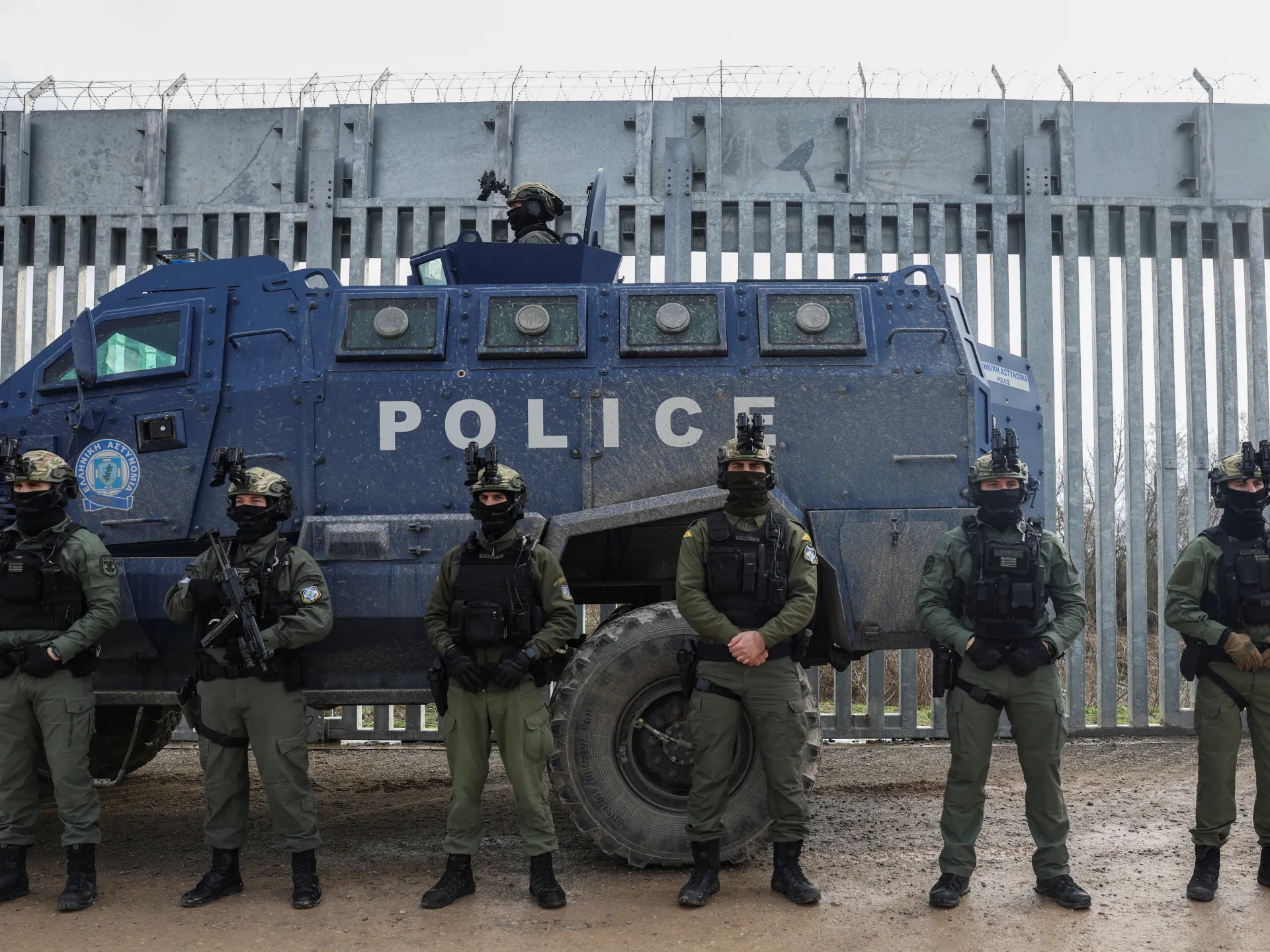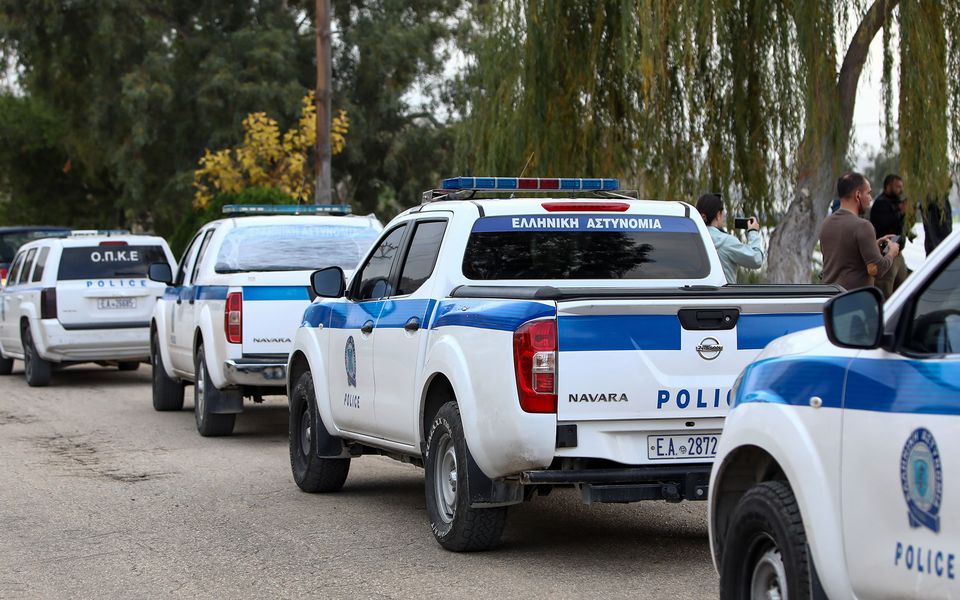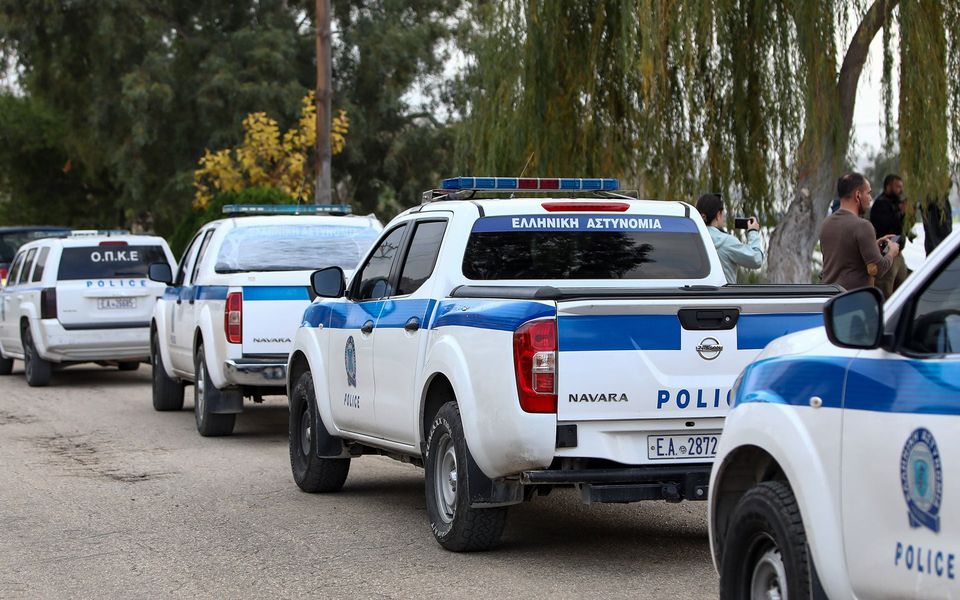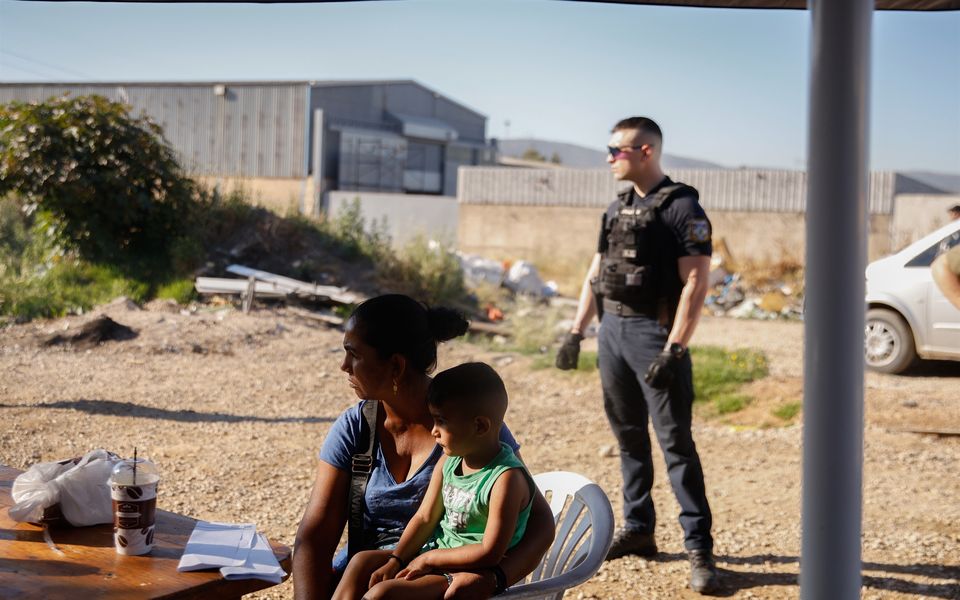
It’s early on a Thursday morning and a police motorcade turns off NATO Avenue toward the sprawling Roma settlement of Nea Zoi in Aspropyrgos, West Attica. The cars pull up at a clearing in front of three shacks. The officers form a security perimeter as a tactical team breaches the first of the two structures. Once the team clears the room, police officers can move in and search under furniture and tarps. “Stop frightening the children; they’re crying,” two women shout. The operation includes the presence of a prosecutor and a drone that can be heard buzzing overhead.
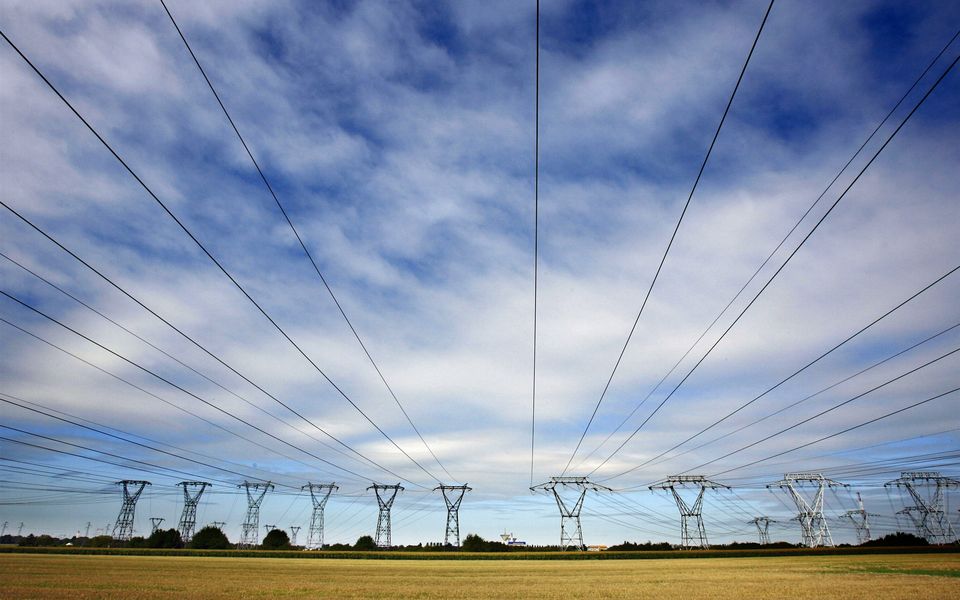
A few days earlier, gunshots had been reported during a party in the same neighborhood. No guns were found in the searches carried out that Thursday morning. However, four people were arrested for electricity theft, which was confirmed by a team from the power distribution company DEDDIE, which was called in later. They cut the main supply and rooted out the illegal wires that had been buried in the ground. Just the previous day, a fire had broken out a few meters down the road as a result of faulty wires connected illicitly to the main central supply line.
“Our orders are that there are no ‘no-go’ areas,” Brigadier General Konstantinos Pachis, a Western Attica official who commands a small army in operations like these, tells Kathimerini. “We’re not there to seize large quantities of narcotics or weapons – though we have found such things – but to demonstrate that we are maintaining a steady presence there.”