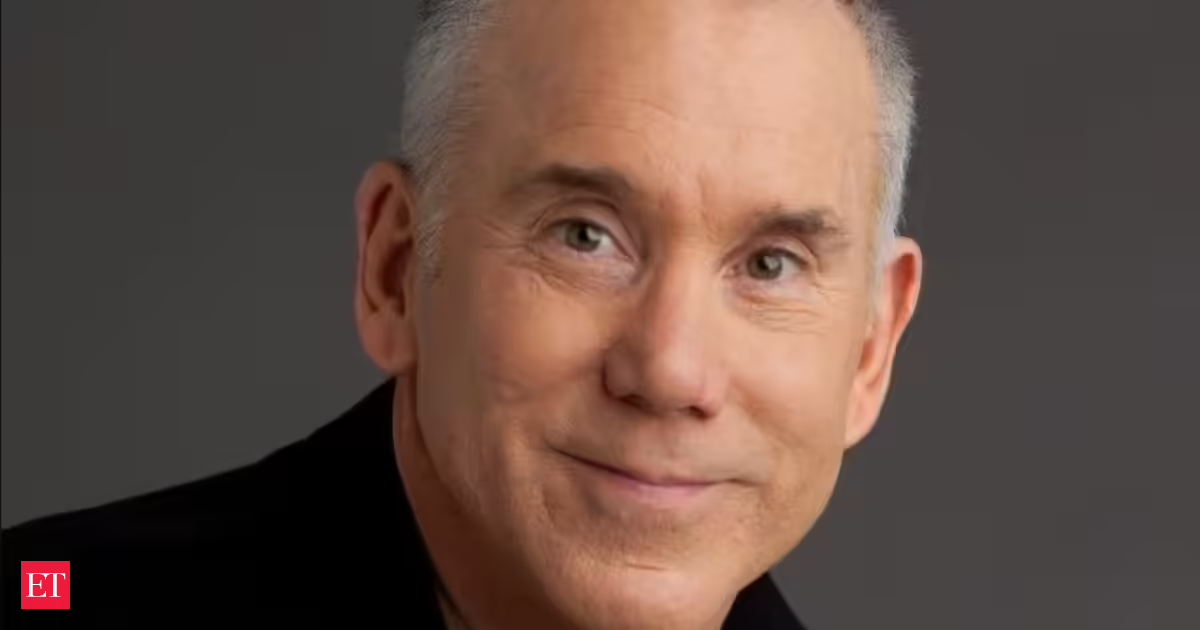
Ever feel exhausted by the endless cycle of wanting things? You chase a promotion, a relationship, a new home, or financial security, thinking that once you achieve it, peace will finally arrive. But somehow, the satisfaction fades. Or worse, you're stuck wanting something you can't have, and the frustration eats at you daily.Here's the uncomfortable truth: the problem isn't what you're chasing. It's the attaching itself to outcomes, at least for one American author.Quote of the Day by Dan Millman: "If you don't get what you want, you suffer; if you get what you don't want, you suffer; even when you get exactly what you want, you still suffer because you can't hold on to it forever."This profound observation about human suffering is widely associated with Dan Millman and remains strikingly relevant today. It captures a universal truth that people across generations, cultures, and life circumstances recognize immediately, the paradox that desire itself is often the source of our pain, not the fulfillment or lack thereof.Also Read: Quote of the Day by Socrates: 'I only wish that ordinary people had an unlimited capacity for doing harm; then they…' - Greek philosopher's lesson on why human potential can be used for both bad and goodWhat the quote is actually suggestingMillman is pointing out a trap most of us walk into without realizing it: suffering is built into the formula of wanting itself. Think about it in three scenarios: When you don't get what you want, you feel frustrated, disappointed, or desperate. You're stuck in lack.When you get what you don't want, you feel resentful, trapped, or angry. You're stuck in unwanted reality. When you get exactly what you want, you feel temporary joy, but then anxiety creeps in. You start fearing loss. You try to control the future. You realize nothing lasts forever.The deeper message? Peace doesn't come from controlling outcomes. It comes from releasing your grip on the need for specific outcomes. Millman isn't telling you to stop having goals or dreams. He's inviting you to pursue them without tying your entire sense of well-being to whether they materialize.This isn't passivity. It's freedom from the emotional roller coaster that keeping score with life creates.About Dan Millman: The thinker behind the ideaDan Millman wasn't born wandering mountaintops seeking enlightenment. He was born into achievement. A former world champion athlete, he excelled in gymnastics and track, then became a university coach and college professor. His early life was built on the kind of success metrics most of us chase: competition, grades, credentials, and performance.But somewhere along the way, the external wins stopped filling the internal void. What followed was an intensive, twenty-year spiritual quest, a deep dive into martial arts, meditation, and Eastern philosophy that would eventually reshape his entire understanding of life.Also Read: Quote of the Day by Hugh Jackman: ‘In the end, what do you want from your life partner? You want to be fully seen and…’ - The Prestige actor’s lesson on love, acceptance and relationships that lastThe result? The Peaceful Warrior's Way, a teaching born from Millman's own transformation. His first book, Way of the Peaceful Warrior (1980), recounts real incidents from his life and became a phenomenon, inspiring millions of readers across 29 languages and spawning a feature film about the peaceful warrior website.Dan Millman's thinking style and philosophy behind the quoteThis quote comes directly from the heart of Millman's philosophy: the Peaceful Warrior's Way is about living consciously in the present moment while releasing attachment to outcomes.Millman's teaching emerged from his own journey from a high-achieving athlete obsessed with performance to someone who discovered that true peace comes from within, not from external validation. His background in martial arts taught him discipline and presence. His spiritual quest taught him that suffering is optional and that most suffering is self-created through our relationship with desire.The quote reflects his core belief: we suffer not because life is hard, but because we resist life as it is. We want things to be different than they are. We want permanence in an impermanent world. We want control in a universe that flows unpredictably.Millman's approach is practical, not preachy. He doesn't ask you to abandon ambition or become a monk. Instead, he invites you to engage with life fully while maintaining an inner stillness that isn't shaken by success or failure. That's the "peaceful warrior," someone who fights for their dreams but doesn't lose themselves in the fight.Also Read: Quote of the Day by American author H. Jackson Brown Jr.: ‘Never make fun of someone who speaks broken English. It means…’ - A seemingly simple reason on why you should be proud of your accentWhy this idea still matters todayThere is no doubt that now we live in an era of amplified desire. Social media shows us what we're missing. Self-help culture tells us to manifest, hustle, and achieve. The message is constant: You need more. Better. Bigger. Faster.The result? Burnout, anxiety, and a persistent sense of not-enoughness. Millman's quote cuts through the noise with surgical precision. It applies to work life, where we chase promotions while forgetting to enjoy the work itself; relationships, where we want a partner to "complete" us rather than finding wholeness within; mental health, where we obsess over fixing every emotion instead of allowing them to flow; parenting, where we live through our children's achievements instead of witnessing them as their own people; and self-growth, where we treat spiritual practice as another goal to master rather than a way to be. In a world teaching us to want more, Millman offers something radical: the freedom that comes from wanting less control. This isn't about giving up. It's about giving yourself permission to pursue what matters without tying your worth or peace to the outcome. It's the difference between saying "I'll be happy when I get this" and "I'm already whole, and I'm moving toward this with joy." That shift, from conditional happiness to unconditional presence, is where the Peaceful Warrior lives. And it's available to anyone willing to release the grip.
Quote of the Day by author Dan Millman: ‘If you don't get what you want, you suffer; if you get what you don't want, you suffer; even when…’ - Why getting what you want still leaves you suffering
Quote of the Day by author Dan Millman explains why desire often leads to suffering. Whether you get what you want or not, pain can follow. American author Dan Millman suggests peace comes from releasing the need for specific results. This idea remains relevant today. It encourages pursuing goals without tying well-being to their achievement.
1,005 words~5 min read