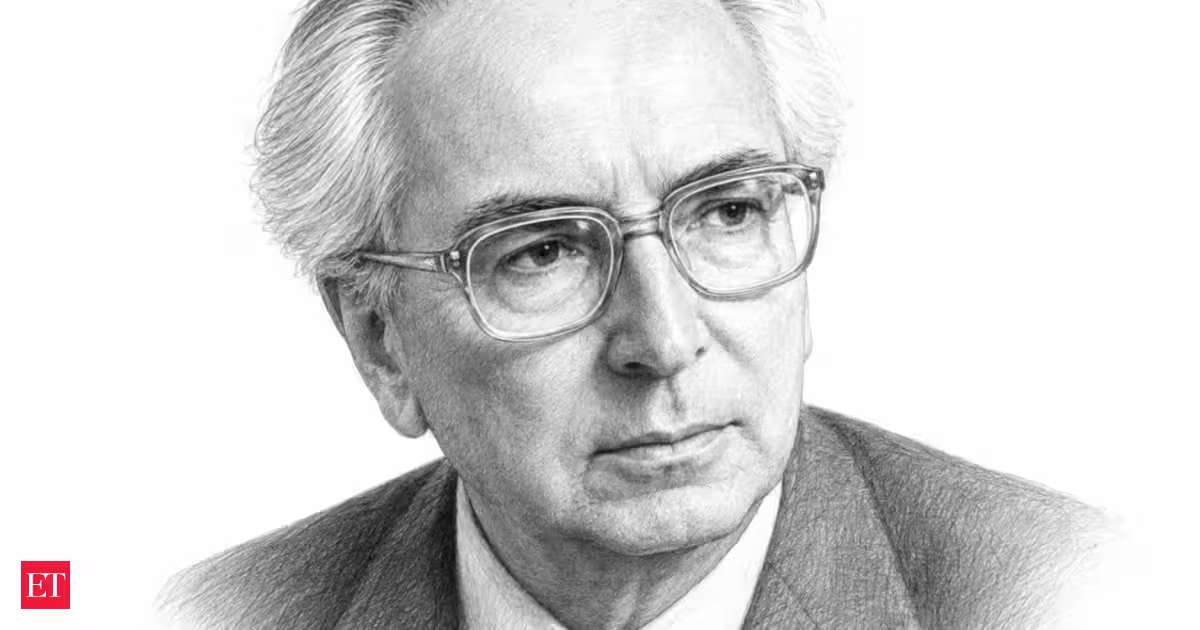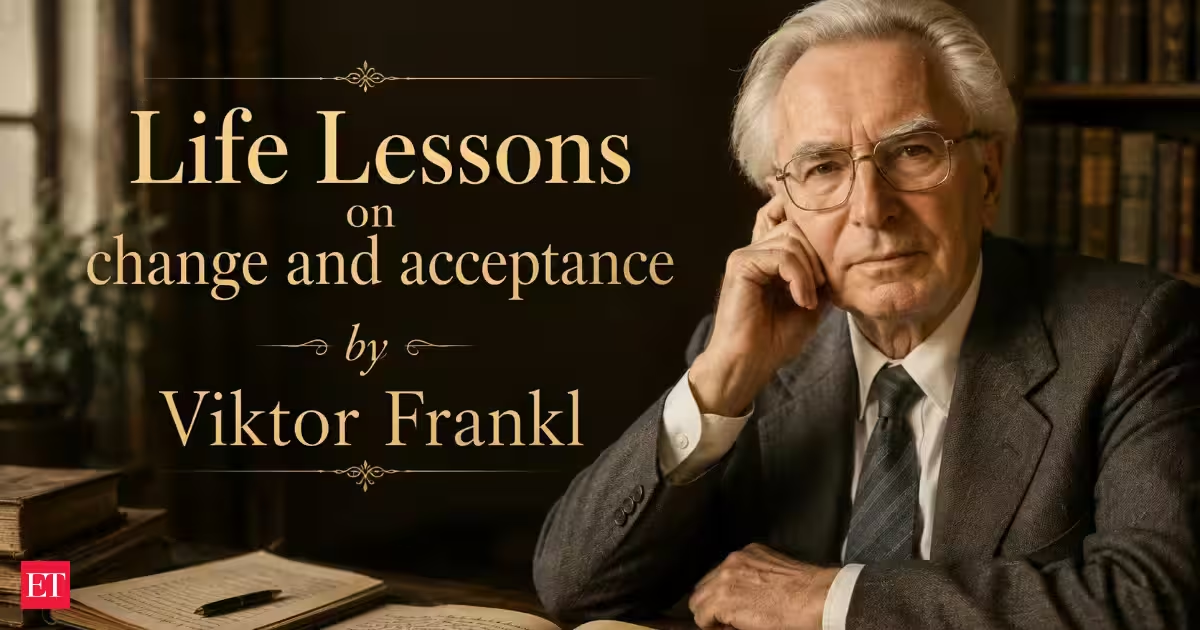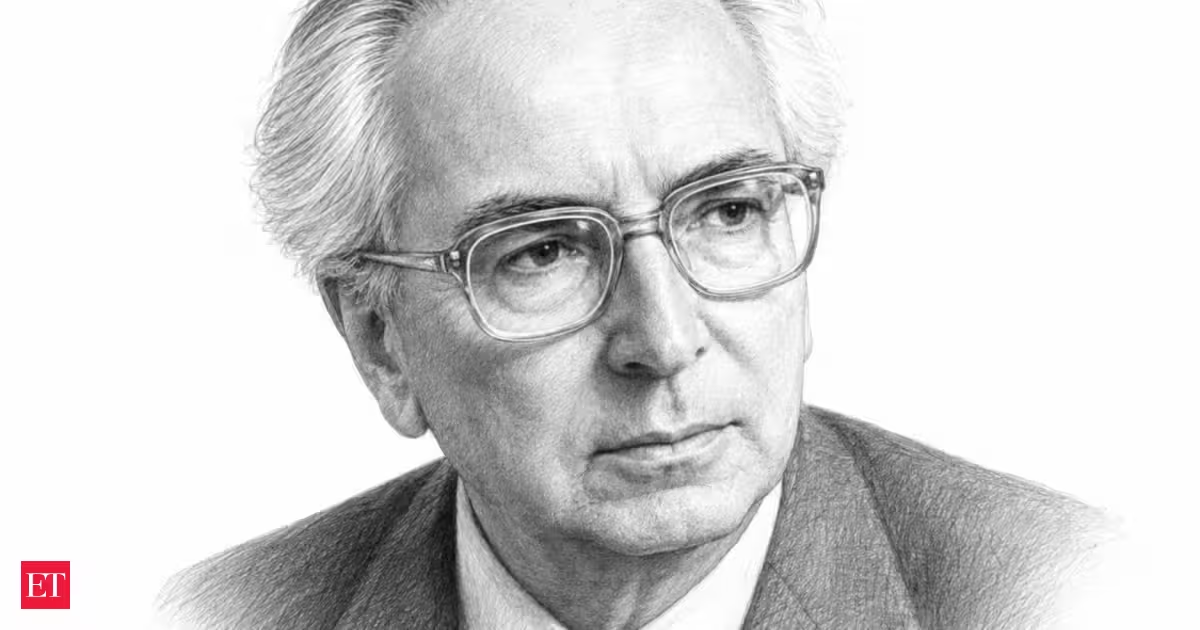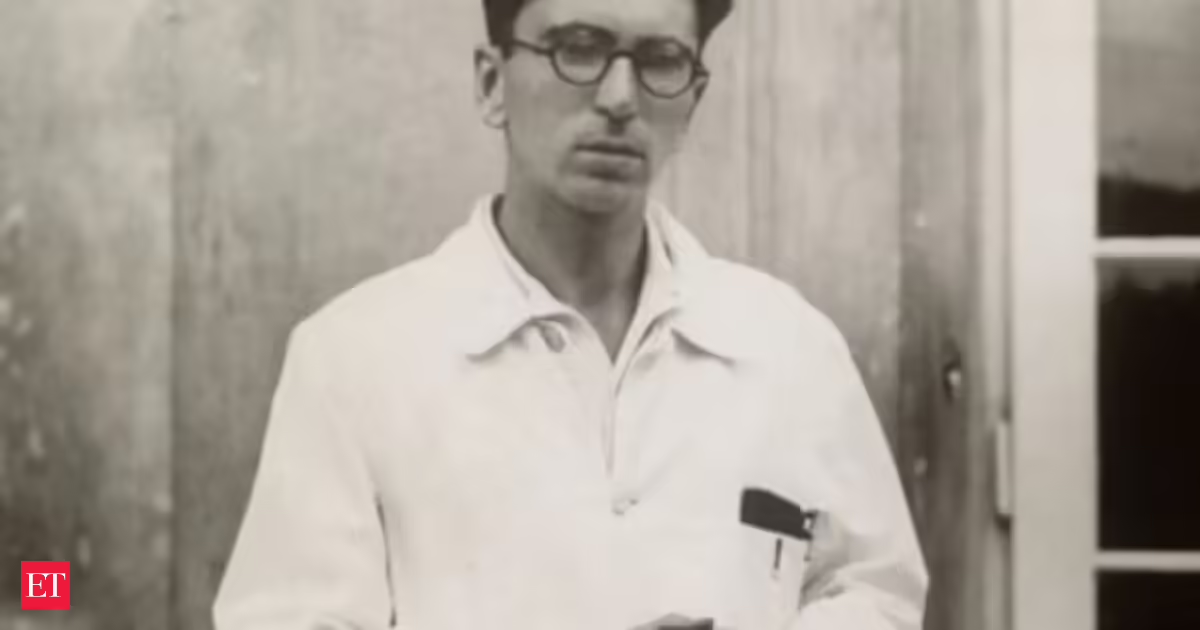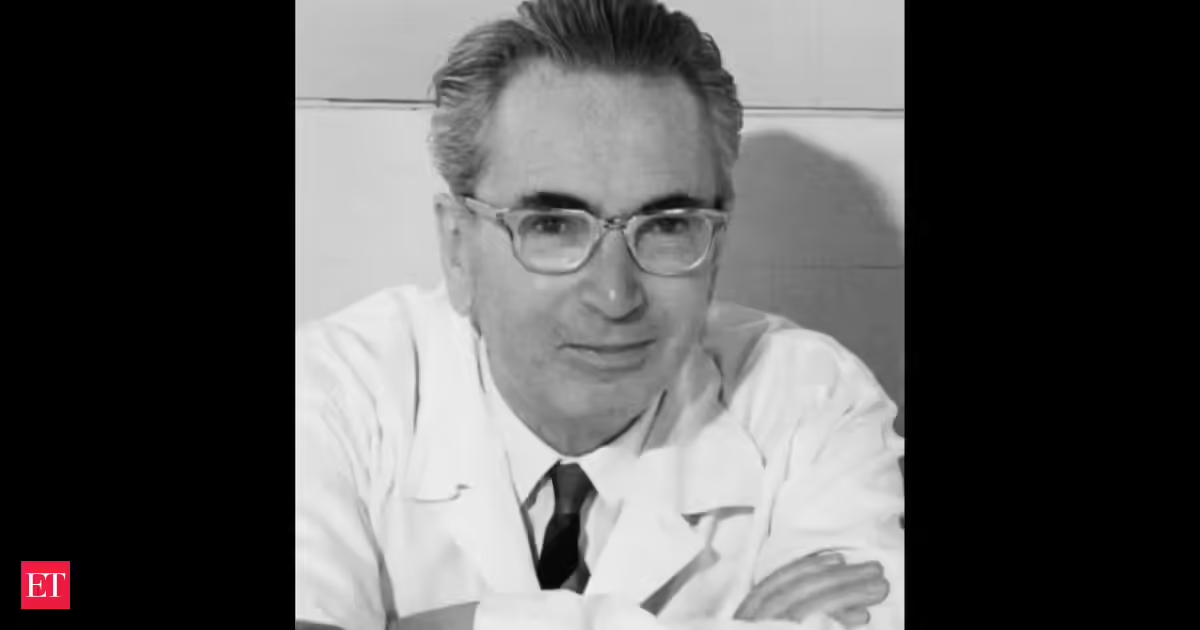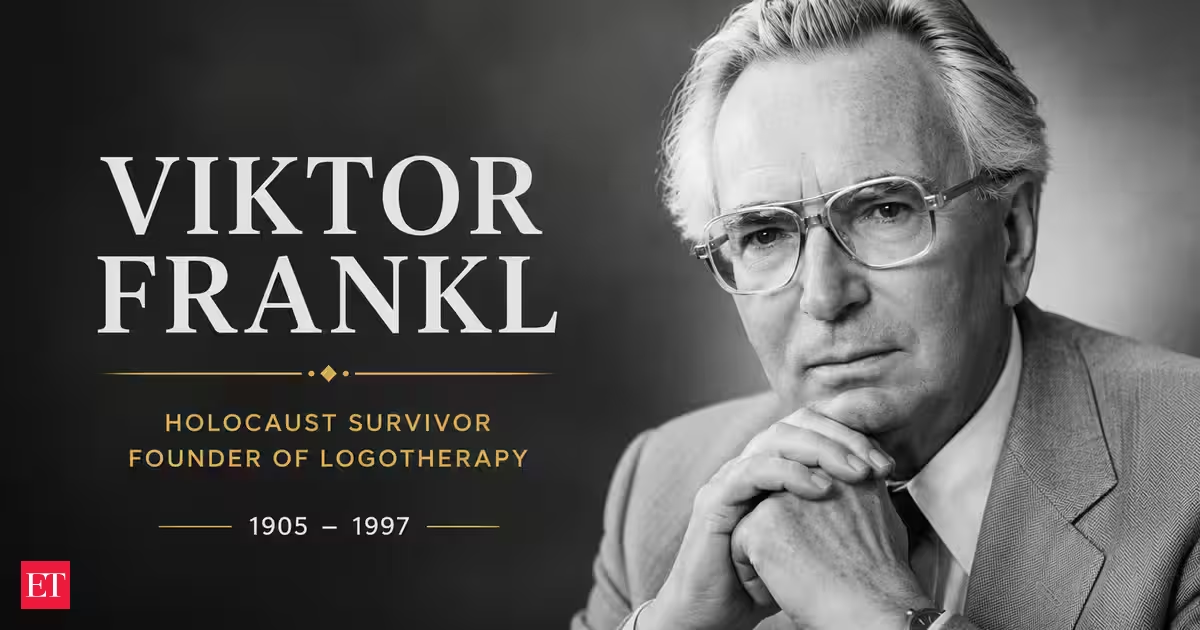
Quote of the Day by Viktor Frankl: Some mornings, one sentence can quietly rearrange how you see your entire week. Today's quote of the day comes from Viktor Frankl, a Holocaust survivor who turned unimaginable suffering into one of the most studied ideas in modern psychology.Frankl once said that success cannot be pursued directly, because the harder you chase it, the further it tends to slip away. He believed real success arrives only as a side effect of living for something bigger than yourself. That idea sounds simple on the surface, yet it challenges almost everything modern hustle culture teaches us. This quote of the day is not just inspirational filler for your morning scroll. It is a lesson forged in a concentration camp, tested against real loss, and still relevant for anyone burning out while chasing goals today.Quote Of The Day Today: What Viktor Frankl Actually SaidQuote of the Day by Viktor Frankl: "Don’t aim at success — the more you aim at it and make it a target, the more you are going to miss it. For success, like happiness, cannot be pursued; it must ensue, and it only does so as the unintended side-effect of one’s dedication to a cause greater than oneself or as the by-product of one’s surrender to a person other than oneself."Frankl explained that success, much like happiness, cannot be aimed at directly, and turning it into a target only guarantees you will miss it. Instead, he argued, success shows up unannounced, as a natural byproduct of dedicating yourself to a cause larger than your own ego.Quote of the Day by Viktor Frankl: "Don’t aim at success — the more you aim at it and make it a target, the more..." - Life-changing lessons on purpose, meaningful work, resilience, and why chasing success often fails — from the Holocaust survivor who changed modern psychologyWhat makes this quote of the day stand apart from typical motivational one-liners is who spoke it. Frankl was not a self-help influencer chasing engagement metrics. He was a neurologist and psychiatrist who survived four concentration camps, including Auschwitz, and lost his father, mother, brother, and wife to the Holocaust. When someone who endured that speaks about meaning over outcome, the words carry a different kind of authority entirely.Deeper Meaning Behind Today's Quote Of The DayPeel back the surface of this quote of the day, and you find a radical rejection of outcome-obsessed living. Frankl was warning against what he later called the existential vacuum, that hollow feeling people get when life becomes only about ticking boxes and hitting targets. He noticed this emptiness especially in students and young professionals, people who had every material comfort yet felt strangely lost.His logotherapy framework, which literally means healing through meaning, rested on one core belief. Purpose, not pleasure and not achievement, is what actually sustains a human being through hardship. That is precisely why this quote of the day insists success should ensue, not be pursued, almost like sunlight falling on you while you are busy building something worthwhile instead of staring directly at the sun. Frankl also pushed back hard against America's obsession with the pursuit of happiness, arguing that psychotherapy's real job was never to manufacture happiness on demand. Its job, he believed, was to help people find the courage to face real life, with all its unavoidable difficulty and disappointment intact.There is also a quiet warning tucked inside today's quote of the day about modern systems. Frankl felt that governments, schools, and corporations increasingly reduced people to outputs and metrics, stripping away personal responsibility along the way. Once you outsource your sense of meaning to an institution or a follower count, he suggested, the existential vacuum only grows wider and harder to escape.Life Lessons Hidden Inside This Quote Of The Day1. The Paradox of Hyper-IntentionThe moment you turn happiness into a target, you guarantee that you will miss it. Frankl called this "hyper-intention"—the act of focusing so fiercely on a desired outcome that you actually frighten it away. Think of it like trying to fall asleep; the harder you consciously try to force your brain to sleep, the more awake you become.Happiness is exactly the same. It is a shy, elusive emotion. If you look it right in the eye and demand it appear, it hides. Frankl teaches us that we need to look past it, focusing instead on the task at hand, and let joy slip in through the back door unnoticed.2. Success Must "Ensue," Not Be PursuedThere is a massive grammatical and philosophical difference between pursuing and ensuing.Pursuing implies a chase. It puts you in a mindset of lack, running after something that is constantly fleeing from you.Ensuing means to follow as a natural consequence.Frankl is telling us to stop chasing the shadow (success) and start focusing on the object casting the shadow (our actions). When you bring absolute excellence, care, and love into what you do, success becomes an inevitable byproduct. It follows you; you do not follow it.3. The Power of Self-Transcendence"...the unintended side-effect of one’s dedication to a cause greater than oneself or as the by-product of one’s surrender to a person other than oneself."This is the core of Frankl’s philosophy, known as self-transcendence. Human beings are not meant to be closed loops. True satisfaction does not come from self-actualization or staring into the mirror trying to "find ourselves."We find ourselves out in the world. We find meaning by forgetting our ego and dedicating our time to a massive project, a beautiful art piece, a social cause, or simply loving another human being unconditionally. The less you care about your own happiness, and the more you care about something outside of yourself, the more fulfilled you naturally become.4. The Antidote to the "Existential Vacuum"We live in an era of unprecedented comfort, yet rates of anxiety and depression are sky-high. Frankl identified this decades ago as the "existential vacuum"—a total feeling of inner emptiness.People try to fill this void with money, fame, social media validation, and cheap pleasures. But these are just attempts to target happiness directly. The hidden lesson here is that the existential vacuum cannot be filled by consuming things; it can only be filled by committing to things. Responsibility is the weight that anchors the human spirit.5. Flipping the Ultimate Question of LifeMost people spend their lives asking, "What does life owe me? What is the meaning of my life?"Frankl’s quote implicitly flips this on its head. You are not the reader asking the universe a question. You are the book being written, and the universe is asking you. Life asks us questions every single day through our circumstances, our struggles, and our relationships. We don't answer with words; we answer with our choices and our dedication.The Takeaway for Today: If you are feeling stuck, burnt out, or empty while chasing your goals, take your hands off the steering wheel of expectation. Stop asking how today can make you successful. Instead, ask: What cause can I serve today? Who can I support?Let go of the target, and let the success ensue.All About Viktor Frankl: The Life Behind The QuoteLong before this quote of the day made headlines, young Viktor Frankl was already unusual. Born in Vienna in 1905, he was studying philosophy and learning hypnosis by age fifteen, and lecturing publicly on the meaning of life by twenty-two. By twenty-five, he had launched free youth counseling centers that drove Vienna's teen suicide rate to zero within a single year, a staggering achievement almost nobody talks about today.He corresponded with Sigmund Freud as a teenager and later studied under Alfred Adler, yet Frankl eventually broke from both to found his own school of thought. Logotherapy became known as the Third School of Viennese Psychology, built on the idea that meaning, not pleasure or power, drives human behavior. Before the war, he ran the so-called pavilion for suicidal women at Steinhof Psychiatric Hospital, treating roughly three thousand patients every year for four straight years.Then came the camps. Frankl survived Theresienstadt, Auschwitz, Kaufering III, and Türkheim, losing nearly his entire family along the way, and returning home in 1945 to find nothing left of his old life. Rather than collapse, he wrote his most famous book, Man's Search for Meaning, in just nine days, originally publishing it anonymously because he wanted total honesty. The book later sold over ten million copies worldwide and was named one of the ten most influential books in America by the Library of Congress in 1991.After the war, Frankl taught at the University of Vienna and held visiting posts at Harvard, Stanford, and Duquesne University. He wrote thirty-nine books, married twice, remained an avid mountain climber well into old age, and even took up flying lessons late in life. He died in 1997, leaving behind a body of work that continues shaping therapy rooms, classrooms, and yes, daily quote of the day feeds, decades after his passing.That is really the point of returning to this quote of the day now. Frankl did not theorize about resilience from comfort. He lived it, lost almost everything, and still chose meaning over despair, which is exactly why his words refuse to fade.
Quote of the Day by Viktor Frankl: "Don’t aim at success — the more you aim at it and make it a target, the more..." - Life-changing lessons on purpose, meaningful work, resilience, and why chasing success often fails — from the Holocaust survivor who changed modern psychology
Quote of the Day by Viktor Frankl reminds us of a truth that feels surprisingly relevant in a world obsessed with achievement. His famous words, “Dont aim at success…”, challenge the modern belief that happiness and success come from relentless pursuit. Instead, Frankl argues that the harder we chase them, the more they slip away. Real success appears when we dedicate ourselves to something larger than personal gain.
1,529 words~7 min read