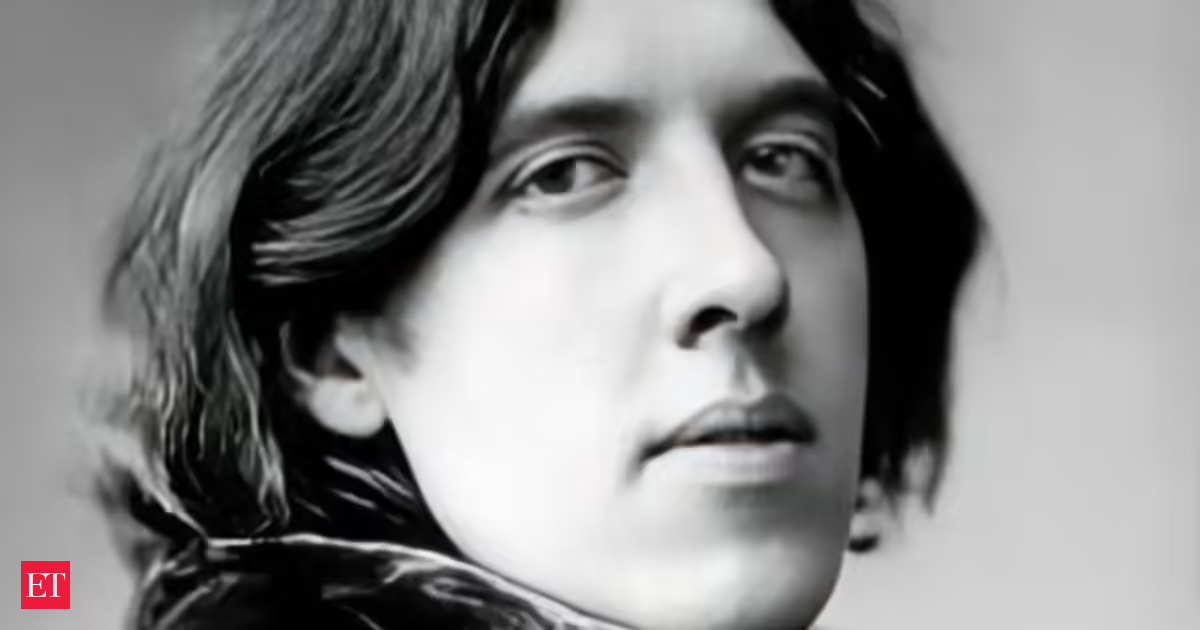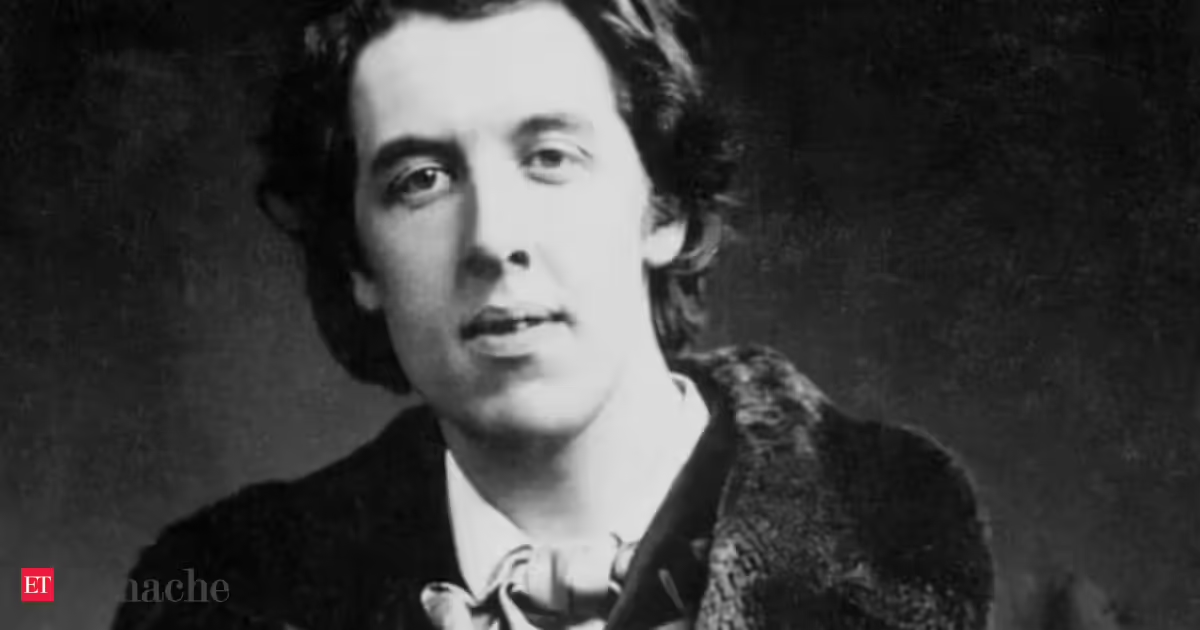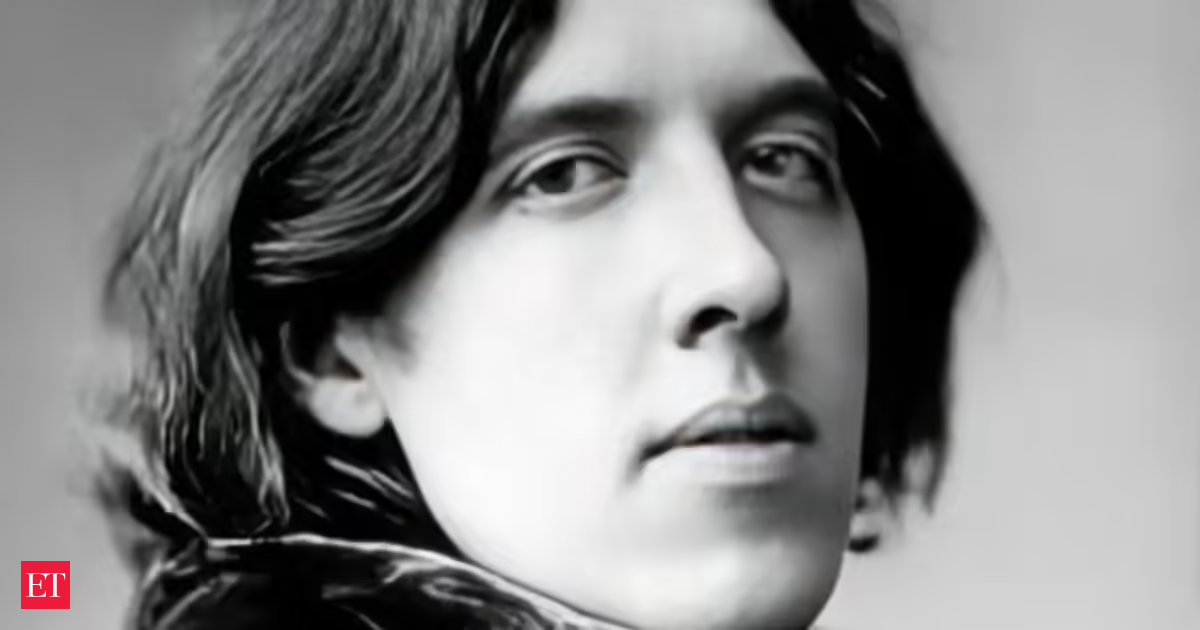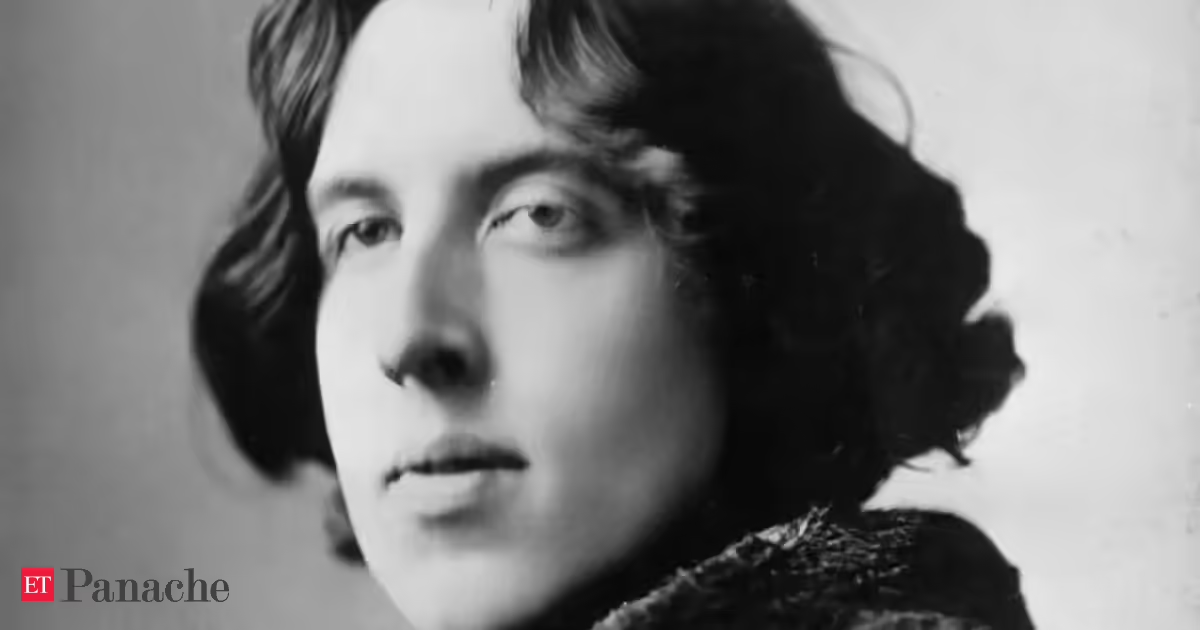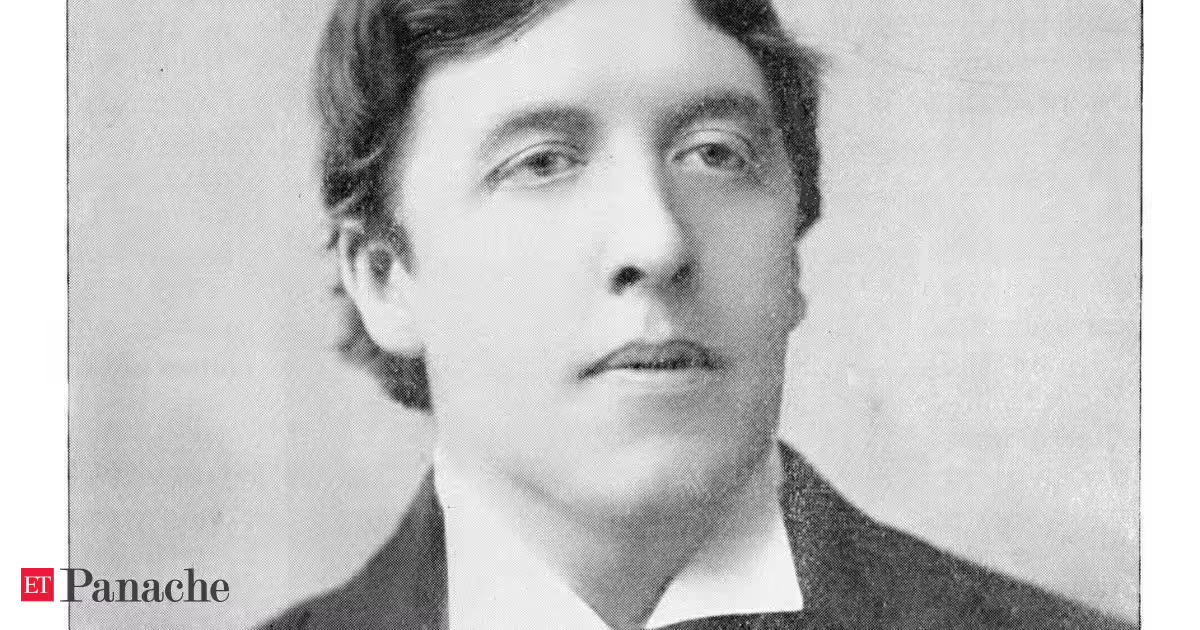
We spend years chasing goals, convinced that happiness is waiting on the other side of achievement. A dream job, a promotion, a relationship, a house, recognition, or success often becomes the destination we imagine will finally make everything feel complete. Yet life has a strange way of challenging that belief. Sometimes the disappointment comes from not getting what we want. Other times, it comes from getting exactly what we wanted and realising it did not transform our lives the way we expected. Few quotes capture this paradox as sharply as Oscar Wilde’s famous observation.Irish author, poet, and playwright Oscar Wilde once said, “There are only two tragedies in life: one is not getting what one wants, and the other is getting it.” At first glance, the statement sounds witty, even contradictory. How can getting what you want possibly be a tragedy? But beneath its simplicity lies a profound reflection on human nature, expectations, and contentment.Meaning of Oscar Wilde's quote on desireWilde's words suggest that people often attach enormous emotional value to future achievements. We imagine that reaching a particular goal will permanently change how we feel. When that goal remains out of reach, frustration and disappointment naturally follow. That is the first tragedy Wilde refers to: the pain of desire and failing to obtain it.The second tragedy is more subtle. When people finally achieve what they have spent years pursuing, they often discover that the excitement fades. The dream job becomes routine. The promotion becomes a new baseline. The luxury purchase loses its novelty. The success that once seemed life-changing slowly becomes ordinary. In that moment, many realise that the object of their desire was never the complete answer they imagined it would be. This idea remains remarkably relevant in modern life.Wilde's quote does not argue against ambition. Instead, it serves as a warning about placing all of one's happiness in future outcomes. Goals can provide direction and motivation, but they cannot carry the entire weight of a meaningful life. The quote also encourages self-awareness. It asks readers to examine whether they are chasing something because they genuinely value it or because they expect it to deliver lasting happiness. Often, the anticipation of achievement creates a fantasy that reality struggles to match.About Oscar WildeOscar Fingal O'Flahertie Wills Wilde remains one of the most celebrated literary figures of the Victorian era. A leading voice in the Aestheticism movement, he became known for his sharp wit, memorable epigrams, and enduring works.After graduating from the University of Oxford, Oscar Wilde moved to London with ambitions of building a literary career. According to Poets.org, he published his first full-length poetry collection, Poems, in 1881 and soon established himself as one of the most distinctive literary voices of his generation. In 1884, he married Constance Lloyd, and the couple later welcomed two sons, Cyril and Vyvyan. Four years later, he published The Happy Prince and Other Tales, a collection that earned praise for its imaginative storytelling and emotional depth.As per EBSCO, despite his growing fame, Wilde's personal life was not without challenges. Supporting a young family brought financial pressures, and although he was widely admired, he lacked a steady source of income. After undertaking lecture tours and contributing to literary journalism, he became editor of The Woman's World in 1887, a role he held until 1889. That period marked the beginning of an extraordinary creative run that would cement his place in literary history.Between 1888 and 1895, Wilde produced much of the work for which he is remembered today. EBSCO notes that this era began with The Happy Prince and Other Tales and continued with essays, short stories, and critical writings that showcased both his wit and intellectual depth. In 1890, readers were introduced to what would become his most famous novel, The Picture of Dorian Gray. First published in serial form and later as a book, the Gothic tale explored beauty, morality, vanity, and corruption. The story of the young Dorian Gray and his mysteriously aging portrait remains one of the most discussed works in English literature.His workWilde's success reached new heights on the stage. According to Poets.org, he became best known for his plays, while EBSCO describes the years from 1892 to 1895 as the zenith of his career. During this period, audiences embraced celebrated comedies such as Lady Windermere's Fan, A Woman of No Importance, An Ideal Husband, and his masterpiece, The Importance of Being Earnest. Known for their sparkling dialogue, sharp social observations, paradoxes, and unforgettable epigrams, these plays transformed Wilde into one of the most celebrated dramatists of the Victorian era.Wilde's influence extends far beyond his novels and plays. He was a central figure in the Aestheticism movement and became renowned for blending humour, philosophy, and social commentary in a way few writers could match. According to Poets.org, he died of acute meningitis in Paris on November 30, 1900, but his works, quotations, and ideas continue to captivate readers more than a century later.
Quote of the day by Oscar Wilde: 'There are only two tragedies in life: one is not getting what one wants, and the other is getting it...' The Irish author’s timeless lesson on expectations and contentment
Oscar Wilde's quote of the day explores a profound truth about human nature. It suggests that both failing to achieve our desires and succeeding in them can bring disappointment. The article delves into this paradox, examining how our expectations often outpace reality. Wilde's insights remain relevant today, prompting reflection on ambition and contentment.
824 words~4 min read