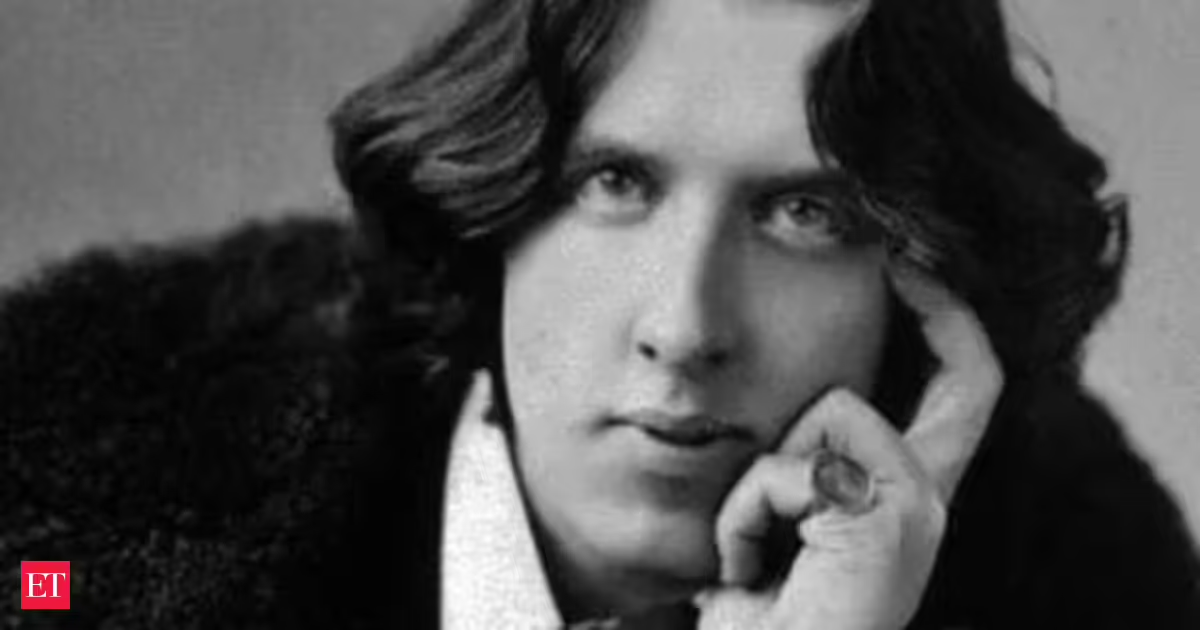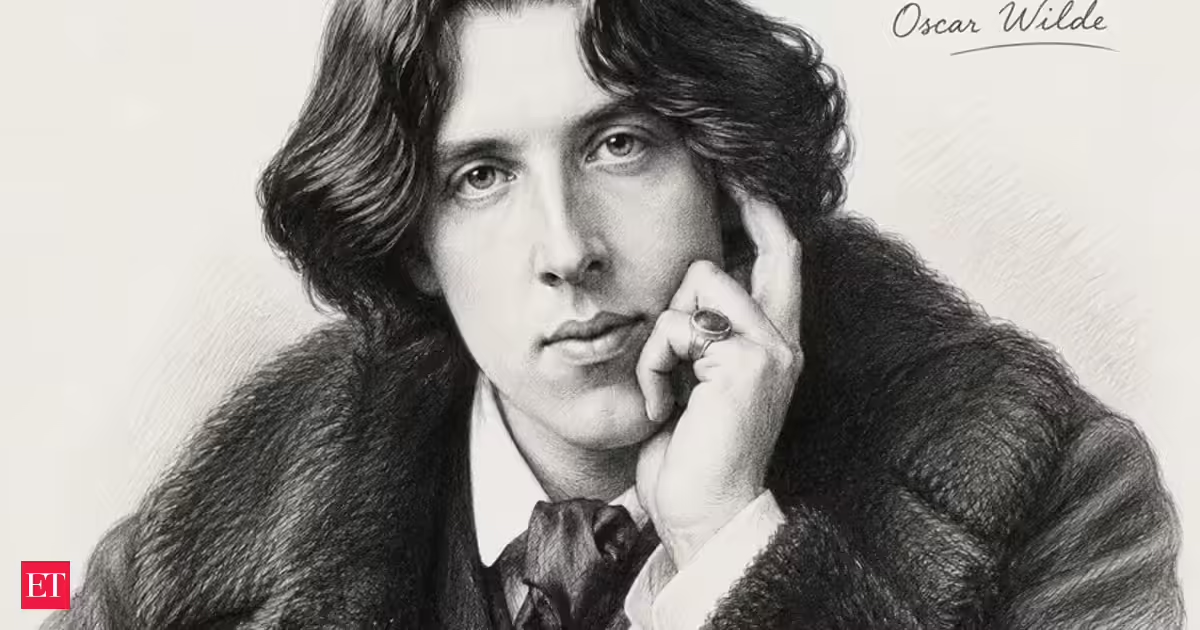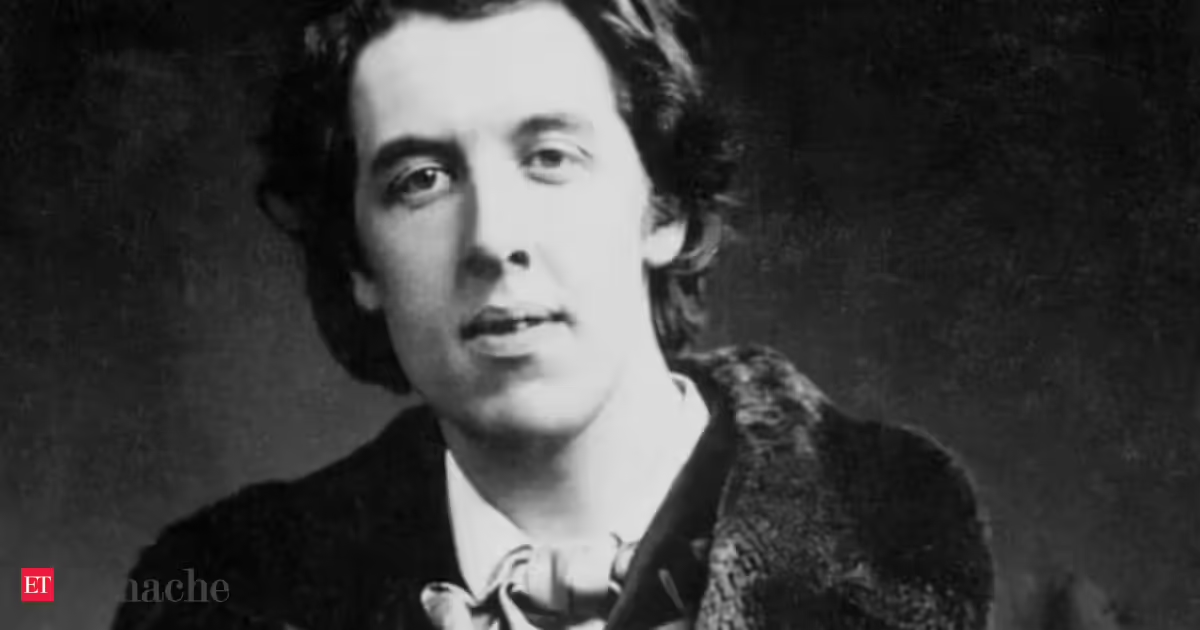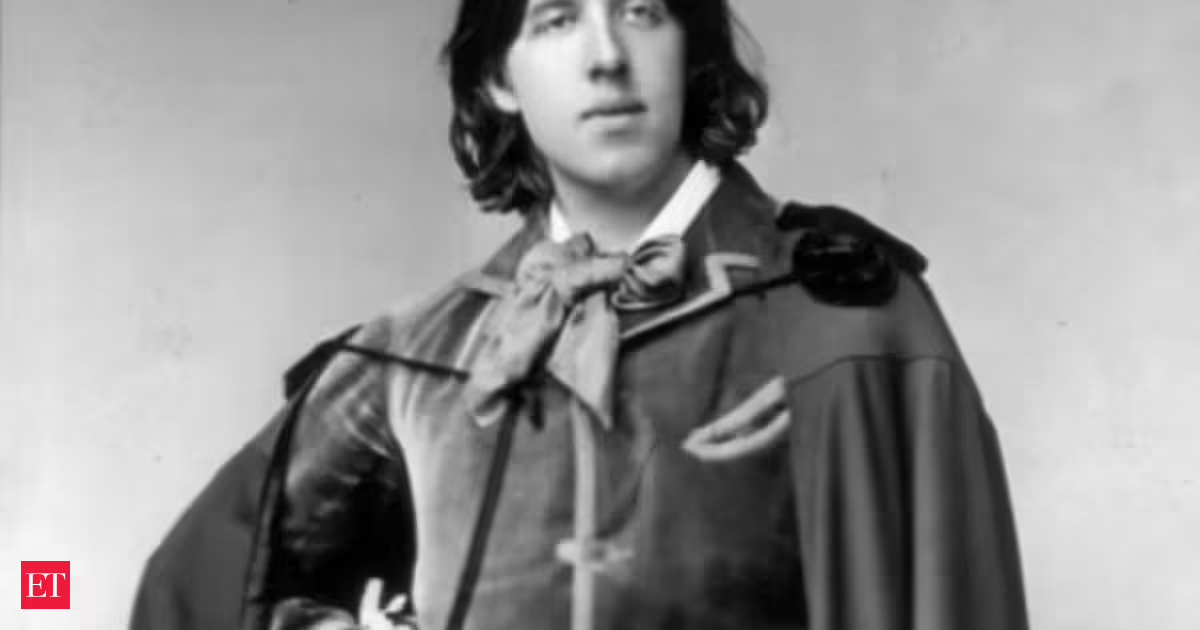
Oscar Wilde remains one of the most celebrated literary figures of the 19th century. Known for his sharp wit, memorable one-liners, and brilliant works of literature, the Irish poet, playwright, and novelist often captured complex human emotions in surprisingly simple words. Many of his observations on love, society, and relationships continue to be discussed even today because they reflect experiences that people still relate to. One such remark offers a thought-provoking view of how romantic feelings can change over time.“When a man has once loved a woman, he will do anything for her except continue to love her.”The quote is one of Wilde’s most widely discussed observations on love and relationships. At first glance, it sounds humorous and cynical, but it also points to a reality that many people have experienced. Wilde suggests that someone may continue to care for a person they once loved, remain willing to help them, or even make sacrifices for them, yet find it difficult to maintain the same romantic feelings forever. The line reflects his tendency to challenge idealized views of love and expose the contradictions often found in human relationships.The quote can also be interpreted as a commentary on the difference between affection and lasting romance. Feelings change, circumstances evolve, and relationships often take forms that people never expected at the beginning. Rather than presenting love as something permanent and unchanging, Wilde highlights how emotions can shift even when respect or concern for another person remains. It is this mixture of truth, irony, and humor that has helped the quote endure across generations.Oscar Wilde’s early life and educationOscar Fingal O’Flahertie Wills Wilde was born in Dublin, Ireland, on October 16, 1854. He came from a well-known and educated family. His father, Sir William Wilde, was a respected surgeon and scholar, while his mother, Jane Francesca Wilde, was a poet and nationalist writer who published under the pen name “Speranza.”You Might Also Like:From an early age, Wilde displayed exceptional academic ability. He studied at Trinity College in Dublin, where he excelled in classical studies and won several academic honors. His achievements earned him a scholarship to Magdalen College, Oxford. During his years at Oxford, Wilde developed many of the ideas that would later shape his literary career.He was influenced by important thinkers such as John Ruskin and Walter Pater. Their ideas about beauty, art, and culture played a significant role in shaping Wilde’s outlook. At Oxford, he also developed the distinctive public persona that would later make him one of the most recognizable literary figures of his era.Rise as a writer and public figureAfter completing his studies, Wilde moved to London and began building a career as a writer, critic, and lecturer. His first collection, Poems, was published in 1881. While reviews were mixed, the book helped establish his reputation in literary circles.His fame expanded further when he embarked on a lecture tour of the United States. Wilde quickly became known not only for his writing but also for his wit, confidence, and ability to captivate audiences. His lectures on art and aesthetics attracted considerable attention, helping him become one of the most talked-about cultural figures of the time.You Might Also Like:Throughout the 1880s, Wilde continued writing essays, reviews, and stories. He also worked as editor of The Woman’s World, where he contributed to discussions on literature, fashion, and culture.Literary works that defined his legacyOscar Wilde’s lasting reputation rests largely on the remarkable range of his literary achievements. His only novel, The Picture of Dorian Gray (1891), remains one of the most discussed works in English literature. The story explores beauty, morality, temptation, and the consequences of a life devoted entirely to pleasure.At the same time, Wilde demonstrated his talent in shorter forms. Collections such as The Happy Prince and Other Tales and A House of Pomegranates showcased his gift for storytelling. Though often presented as fairy tales, these stories dealt with themes such as sacrifice, compassion, beauty, and human weakness.However, it was on the stage that Wilde achieved his greatest success. Plays such as Lady Windermere’s Fan, A Woman of No Importance, An Ideal Husband, and The Importance of Being Earnest established him as one of the leading dramatists of his generation.His comedies were celebrated for their clever dialogue and sharp observations about society. Wilde had a rare ability to expose hypocrisy while entertaining audiences, a combination that helped his plays remain popular long after their original productions.Personal struggles and downfallDespite his professional success, Wilde’s personal life eventually became the subject of public controversy. In the 1890s, his relationship with Lord Alfred Douglas drew increasing attention. At a time when homosexual relationships were criminalized in Britain, Wilde became involved in legal battles that would dramatically alter his life.In 1895, he was convicted of “gross indecency” and sentenced to two years of imprisonment with hard labor. The conviction effectively ended the remarkable public success he had enjoyed during the previous decade.Following his release, Wilde spent much of his remaining life in exile in France. Financial difficulties and declining health added to his struggles. Nevertheless, he continued to write, producing works that reflected on suffering, identity, and personal experience.Oscar Wilde died in Paris on November 30, 1900, at the age of 46. Yet more than a century later, his influence remains strong. His plays are still performed around the world, his novels continue to be studied, and his observations on life, love, art, and society are quoted across generations.
Quote of the day by Oscar Wilde: 'When a man has once loved a woman he will do anything for her except continue to love her...' The Irish writer's timeless lesson on how love and relationships change with time
Oscar Wildes quote of the day offers a witty yet thought-provoking reflection on how romantic feelings can change over time. The celebrated Irish writer, known for his sharp observations on human nature, suggests that while affection, care, and loyalty may remain, lasting romantic love is not always permanent. The quote highlights the complexities and contradictions of relationships, a theme that appears throughout Wildes work.
904 words~4 min read