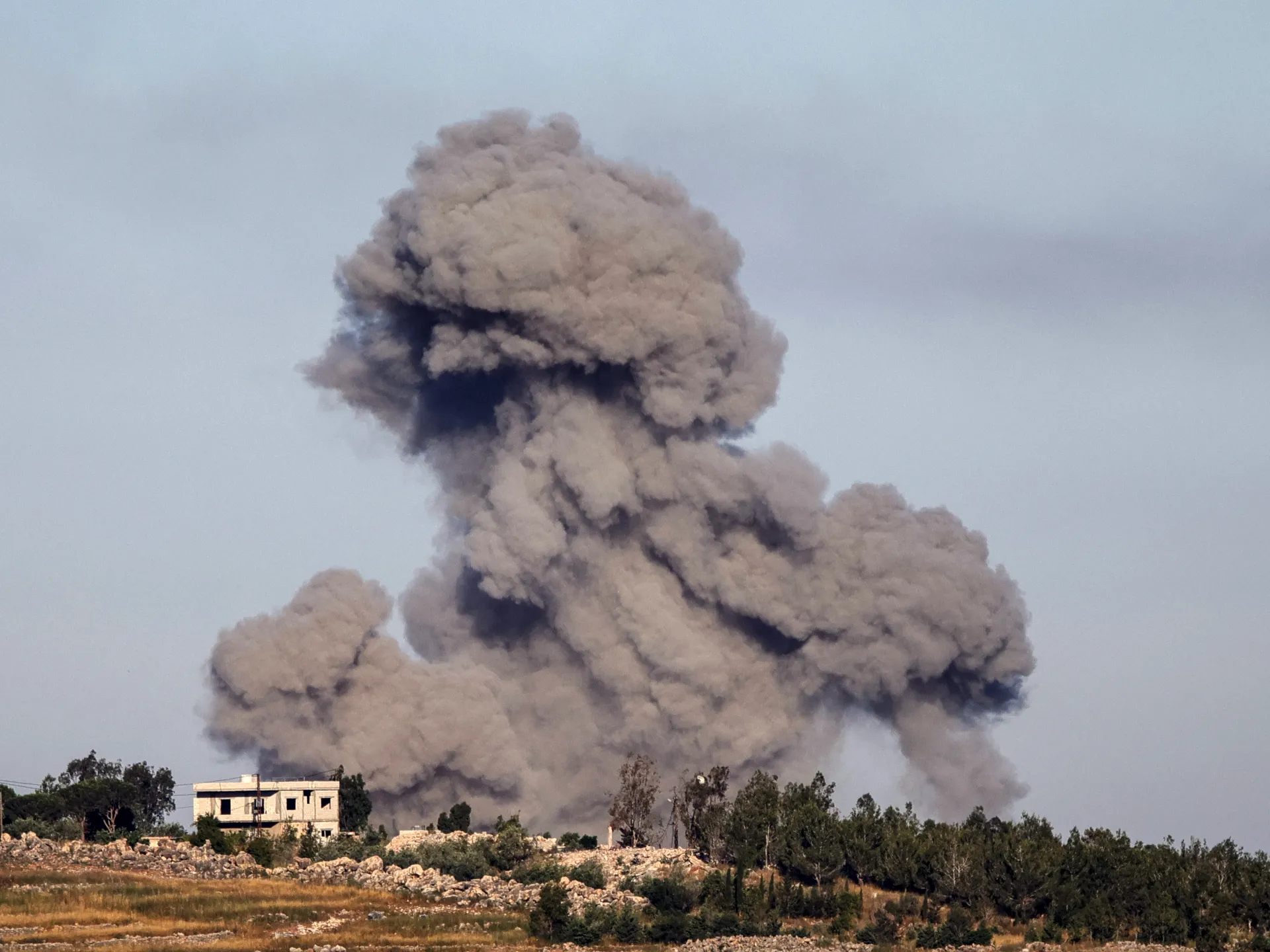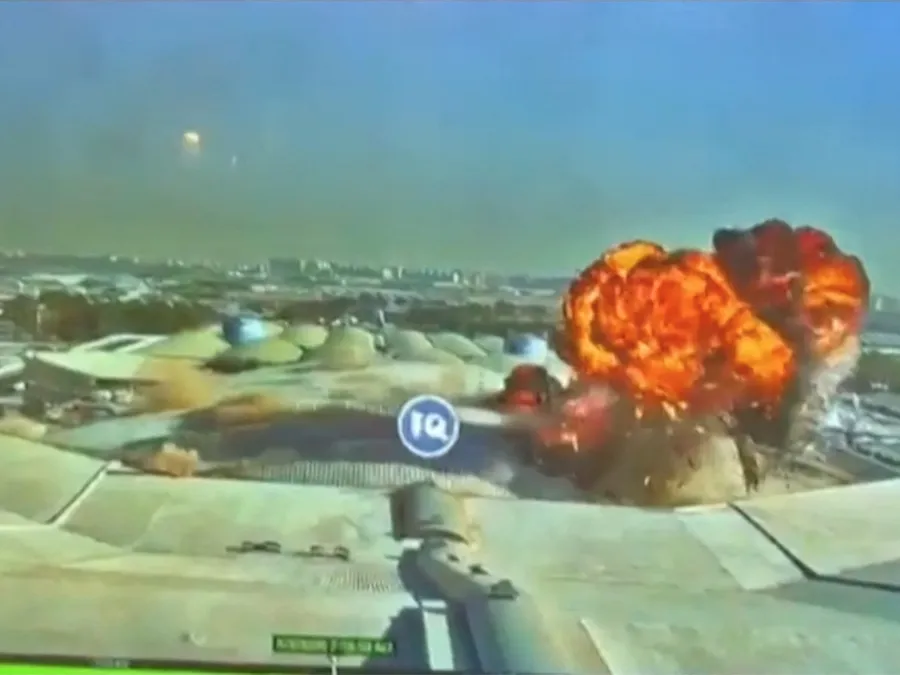
Skip to Content Subscribe Our Offers My Account Manage My Subscriptions FAQ Newsletters Canada Canadian True Crime Canadian Politics Health World Israel & Middle East Financial Post NP Comment Longreads Puzzmo Diversions Comics NP News Quiz New York Times Crossword Horoscopes Life Eating & Drinking Style Sponsored Play for Ontario Travel Travel Canada Travel USA Travel International Cruises Travel Essentials Culture Books Celebrity Movies Music Theatre Television Business Essentials Advice Lives Told Tails Told Shopping Buy Canadian Home Living Outdoor Living Tech Style & Beauty Kitchen & Dining Personal Care Entertainment & Hobbies Gift Guide Travel Guide Deals Savings National Post Store More Sports Hockey Baseball Basketball Football Soccer Golf Tennis Driving Vehicle Research Reviews News Gear Guide Obituaries Place an Obituary Place an In Memoriam Classifieds Place an Ad Celebrations Working Business Ads Archives Healthing Epaper Manage Print Subscription Profile Settings My Subscriptions Saved Articles My Offers Newsletters Customer Service FAQ Newsletters Canada World Financial Post NP Comment Longreads Puzzmo Diversions Life Shopping Epaper Manage Print Subscription HomeNP CommentMohamed Fahmy: Iran’s brazen attack on Kuwait airport shows the war is far from overIran also reportedly insists that negotiations only advance once hostilities between Israel and Hezbollah in Lebanon come to a halt You can save this article by registering for free here. Or sign-in if you have an account.This grab taken from the CCTV images released by Kuwait's Directorate General of Civil Aviation (DGCA) shows an explosion following a drone strike at Terminal 1 (T1) of Kuwait International Airport on June 3, 2026. A Iranian drone strike on a passenger terminal in Kuwait's international airport killed one person and wounded 63 more, Kuwaiti officials said, as conflict escalated between Tehran and US forces in the Gulf. (Photo by Directorate General of Civil Aviation (DGCA) Kuwait / AFP via Getty Images) Iran’s cowardly overnight attack on Wednesday on a civilian airport in Kuwait, which left dozens of people critically injured and claimed one life, is a stark reminder that the war is far from over.Enjoy the latest local, national and international news.Exclusive articles by Conrad Black, Barbara Kay and others. Plus, special edition NP Platformed and First Reading newsletters and virtual events.Unlimited online access to National Post.National Post ePaper, an electronic replica of the print edition to view on any device, share and comment on.Daily puzzles including the New York Times Crossword.Support local journalism.Enjoy the latest local, national and international news.Exclusive articles by Conrad Black, Barbara Kay and others. Plus, special edition NP Platformed and First Reading newsletters and virtual events.Unlimited online access to National Post.National Post ePaper, an electronic replica of the print edition to view on any device, share and comment on.Daily puzzles including the New York Times Crossword.Support local journalism.Create an account or sign in to continue with your reading experience.Access articles from across Canada with one account.Share your thoughts and join the conversation in the comments.Enjoy additional articles per month.Get email updates from your favourite authors.Create an account or sign in to continue with your reading experience.Access articles from across Canada with one accountShare your thoughts and join the conversation in the commentsEnjoy additional articles per monthGet email updates from your favourite authorsSign In or Create an AccountorWhen I entered Kuwait at the start of the war in March, I had to drive four hours through the desert from Saudi Arabia because the airport had been repeatedly targeted by Iranian drones and missiles. When I left for Canada, it was still closed. My family and many Kuwaitis had only just celebrated its reopening two days earlier, before this brazen attack that left an Indian worker dead and injured 63 civilians and sent several into critical condition. Some are now fighting for their lives in hospitals, while others have undergone complex surgeries, including amputations.Iran defended its cowardly attack with 13 ballistic missiles and 17 drones as retaliation for a U.S. strike earlier that day on an Iranian oil tanker and targets on an Iranian control center in Qeshm Island, after the vessel allegedly ignored repeated warnings and violated the U.S. naval blockade of the Strait of Hormuz imposed on April 13. The Islamic Revolutionary Guard Corps (IRGC) vowed revenge, declaring that “disrupting the security of the Strait of Hormuz will carry a heavy price for the aggressive U.S. military.”This newsletter from NP Comment tackles the topics you care about. (Subscriber-exclusive edition on Fridays)By signing up you consent to receive the above newsletter from Postmedia Network Inc.We encountered an issue signing you up. Please try againWhy Kuwait? Some may ask. For those just tuning in — or understandably exhausted by months of war fatigue and conflicting signals from Washington during the fragile ceasefire that began on April 8 — the answer is neither simple nor straightforward.In 1991, the United States led the coalition that liberated Kuwait after Iraq under Saddam Hussein, and occupied the country for seven months. In the aftermath of that rupture, Kuwait entered into a formal 10-year Defense Cooperation Agreement (DCA) with Washington. The agreement granted the U.S. military access to Kuwaiti facilities and enabled the long-term stationing of American troops and equipment on its soil. Renewed repeatedly since then, the DCA remains in force today — entrenching Kuwait as one of the most heavily embedded U.S. military footprints in the Gulf region.Caught between the need to protect their sovereignty and a war launched by the United States and Israel against Iran, Kuwait and its Gulf neighbors have little choice but to continue hosting and protecting U.S. forces on their soil. In doing so, they have become targets in a conflict they neither sought nor wanted, while bearing the human, economic, and security consequences of a confrontation not of their making.Tuesday, U.S. Secretary of State Marco Rubio declared during back-to-back congressional hearings that “the war is over.” Yet the reality on the ground suggests something far more uncertain. The conflict remains far from resolved, and the global economic shockwaves are already being felt.Consumers worldwide will continue to pay the price as fuel costs surge and supply chains strain under the continued disruption in the Strait of Hormuz — an unfolding economic crisis that is also reaching Canada, driving up gasoline, diesel, and food prices for Canadian consumers, while simultaneously generating a financial windfall for Canada’s energy sector.From the outset of the U.S.-Israeli attack on Iran on Feb. 28, Tehran, as many experts expected, responded with thousands of missiles and drones targeting U.S. bases and civilian sites across six Gulf states, including Kuwait, Oman, Saudi Arabia, Qatar, and Bahrain. While most were intercepted by the advanced air defense systems of these oil-rich countries, the region was nonetheless pulled directly into a war it had sought to avoid.During my three months covering the conflict in Kuwait, Saudi Arabia, and the United Arab Emirates at the height of the escalation, one question kept resurfacing among local populations: Are we paying the price for hosting U.S. bases on our soil?Indeed, each time air raid sirens sounded during the war, people grew increasingly accustomed to the distant thuds and explosions that followed. It was understandable to see others, including many anxious fellow Canadians evacuating the country altogether, unable to endure the sight of their children watching missiles and drones being intercepted in the night sky just outside their homes, as debris from intercepted strikes began falling onto residential neighborhoods.Many of the targets included at least 15 to 20 U.S. military sites across the Gulf region. Some of these outposts were rendered uninhabitable, though none were completely destroyed, and they continue to be attacked today. Perhaps, those claiming a U.S. victory should see the visual forensics investigation published by The Washington Post, which revealed that at least 228 structures and pieces of heavy military equipment have been damaged or destroyed across these installations — more than the United States lost in the theatre of war in Iraq and Afghanistan.Wednesday, Iran also targeted a U.S. air base in Bahrain, where the U.S. Fifth Fleet is headquartered in Manama. However, U.S. Central Command stated that all incoming missiles and drones were intercepted and that no U.S. facilities were struck.So what has the United States been doing during this ceasefire, beyond amplifying President Trump’s unverified claims that Iran’s military has been obliterated, its missile program decapitated, and the war effectively won?During the recent ceasefire in the war with Iran, the United States moved with unusual urgency to fast-track more than $34 billion in emergency weapons and missile defense systems for Gulf countries — sidestepping the usual congressional review process in the name of “urgent national security needs,” as states such as the UAE, Kuwait, and Qatar continued to grapple with Iranian missile strikes.Kuwait emerged as the largest contributor in this tranche, committing approximately $9.3 billion for interceptor missiles alone.Since the ceasefire in April, the U.S. president has announced at least a dozen times that a deal with Iran had been reached, often in sweeping and hyperbolic terms. On May 23, for instance, he described the agreement as “largely negotiated,” and even claimed on social media that Iran had agreed to reopen the Strait of Hormuz. At various points, he has further insisted that Iran had “agreed to everything.” Yet U.S. and Iranian officials have repeatedly clarified that negotiations remain ongoing and no final agreement has been reached.The 80-year-old U.S. president also drew the moniker “TACO,” an acronym for “Trump Always Chickens Out.”So far, both warring countries have been using military force as leverage to negotiate, calibrate escalation, and exert pressure on the parties at the negotiating table.The reality is that there was no formal deal — only a fragile memorandum of understanding, reportedly brokered in large part by Pakistan and Qatar, pending further negotiations in Washington this morning after days of escalation following the Kuwait attack and sustained hostilities between the two countries.Despite the deep-seated mistrust between the two nations, early signals emerging from Washington today suggest that a deal may be inching into view.Washington and Tehran have reportedly reached a preliminary, four-stage framework. The first step of the mechanism centers on a complete end of the war covering all parties and all fronts. The second phase would be to establish tangible measures and regulations, including arrangements related to the Strait of Hormuz, the lifting of the blockade, the removal of oil restrictions and sanctions, and the release of part of Iran’s blocked assets and resources. Subsequent phases would involve discussions on Iran’s nuclear file and capping its uranium enrichment for a minimum number of years contingent on verified adherence to the agreed terms.In my view, one factor that could significantly complicate efforts to reach a final agreement — and potentially trigger a new round of escalation — is Iran’s reported insistence that negotiations cannot advance until hostilities between Israel and Hezbollah in Lebanon cease.This demand comes at an especially volatile moment. The Iranian-backed Hezbollah leadership has formally rejected U.S.-backed ceasefire and disarmament proposals, while Israeli Prime Minister Benjamin Netanyahu recently warned that unless Hezbollah halts its rocket and drone attacks on Israeli cities, Israel will strike what it identifies as terrorist targets in Beirut.Amid this escalating cycle of demands, rejections, and threats, diplomacy risks becoming hostage to events on the battlefield, leaving the prospect of a lasting regional settlement increasingly uncertain.National PostMohamed Fahmy is an award-winning journalist who has covered the Middle East for numerous outlets, including CNN, Al-Jazeera, the Los Angeles Times and Foreign Policy. Join the Conversation This website uses cookies to personalize your content (including ads), and allows us to analyze our traffic. Read more about cookies here. By continuing to use our site, you agree to our Terms of Use and Privacy Policy.
Mohamed Fahmy: Iran’s brazen attack on Kuwait airport shows the war is far from over
Iran also reportedly insists that negotiations only advance once hostilities between Israel and Hezbollah in Lebanon come to a halt
1,934 words~9 min read