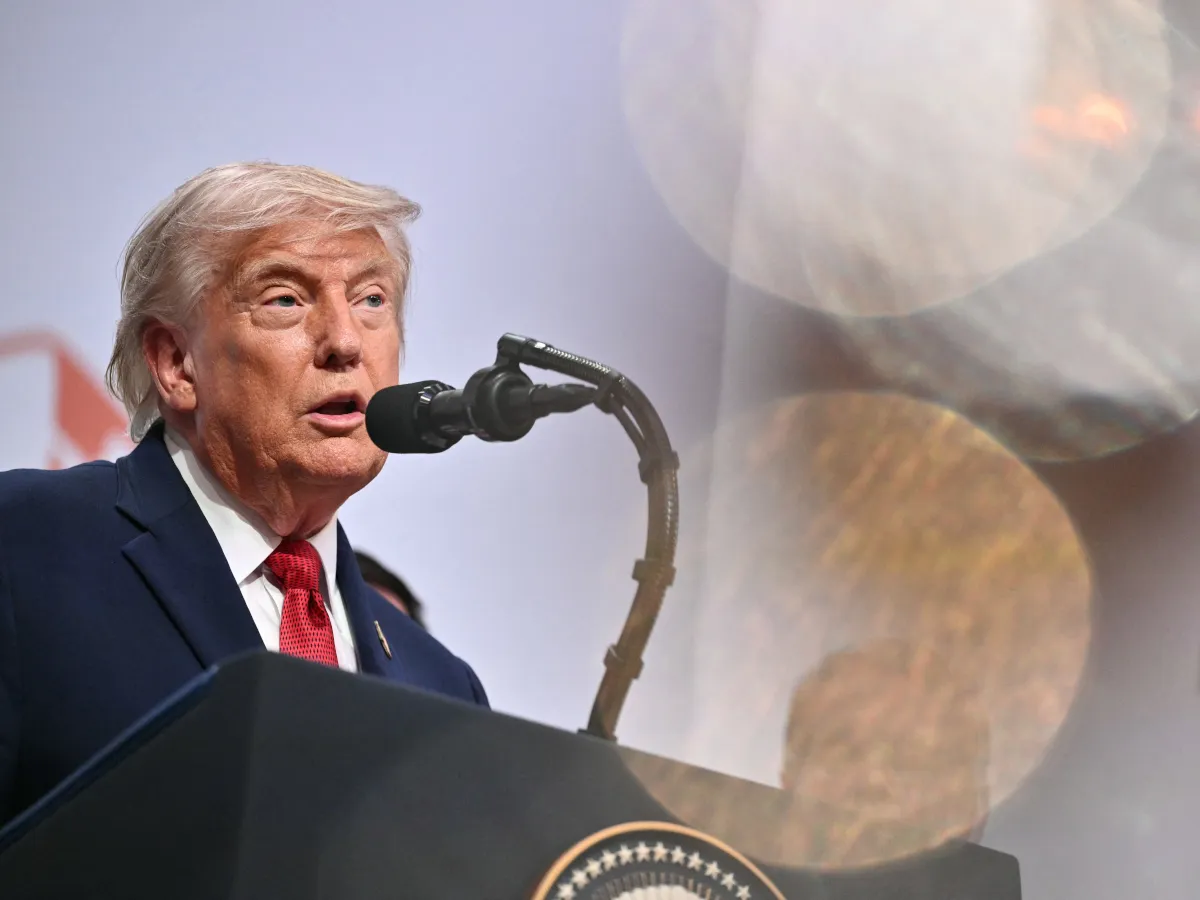
Skip to Content Subscribe Our Offers My Account Manage My Subscriptions FAQ Newsletters Canada Canadian True Crime Canadian Politics Health World Israel & Middle East Financial Post NP Comment Longreads Puzzmo Diversions Comics NP News Quiz New York Times Crossword Horoscopes Life Eating & Drinking Style Sponsored Play for Ontario Travel Travel Canada Travel USA Travel International Cruises Travel Essentials Culture Books Celebrity Movies Music Theatre Television Business Essentials Advice Lives Told Tails Told Shopping Buy Canadian Home Living Outdoor Living Kitchen & Dining Tech Style & Beauty Personal Care Entertainment & Hobbies Gift Guide Travel Guide Amazon Prime Day Deals Savings National Post Store More Sports Hockey Baseball Basketball Football Soccer Golf Tennis Driving Vehicle Research Reviews News Gear Guide Obituaries Place an Obituary Place an In Memoriam Classifieds Place an Ad Celebrations Working Business Ads Archives Healthing Epaper Manage Print Subscription Profile Settings My Subscriptions Saved Articles My Offers Newsletters Customer Service FAQ Newsletters Canada World Financial Post NP Comment Longreads Puzzmo Diversions Life Shopping Epaper Manage Print Subscription HomeNP CommentJesse Kline: Iran's terrorist regime emerges victoriousThe Iranians have come out of this war better off than when they went inLast updated 33 minutes ago You can save this article by registering for free here. Or sign-in if you have an account.U.S. President Donald Trump addresses the media during a press conference at the G7 summit in Evian, France, on Wednesday. Photo by Mandel NGAN/AFP via Getty ImagesFollowing the initial signing of the memorandum of understanding (MOU) to end the conflict in Iran on Sunday, Iranian officials described it as a complete and total victory. After the document was finally made public on Wednesday … well, let’s just say that it’s hard to argue with that assessment.Enjoy the latest local, national and international news.Exclusive articles by Conrad Black, Barbara Kay and others. Plus, special edition NP Platformed and First Reading newsletters and virtual events.Unlimited online access to National Post.National Post ePaper, an electronic replica of the print edition to view on any device, share and comment on.Daily puzzles including the New York Times Crossword.Support local journalism.Enjoy the latest local, national and international news.Exclusive articles by Conrad Black, Barbara Kay and others. Plus, special edition NP Platformed and First Reading newsletters and virtual events.Unlimited online access to National Post.National Post ePaper, an electronic replica of the print edition to view on any device, share and comment on.Daily puzzles including the New York Times Crossword.Support local journalism.Create an account or sign in to continue with your reading experience.Access articles from across Canada with one account.Share your thoughts and join the conversation in the comments.Enjoy additional articles per month.Get email updates from your favourite authors.Create an account or sign in to continue with your reading experience.Access articles from across Canada with one accountShare your thoughts and join the conversation in the commentsEnjoy additional articles per monthGet email updates from your favourite authorsSign In or Create an AccountorThe United States and Israel went into the war stressing the need to prevent Iran from developing nuclear weapons, degrade its ballistic missile capabilities, halt its support for its terrorist proxies and perhaps even create “the conditions” for regime change.Before the MOU was made public, Israeli Prime Minister Benjamin Netanyahu said he hoped the deal would facilitate the removal of enriched uranium, limit Iran’s missile production and dismantle the so-called Axis of Resistance.This newsletter from NP Comment tackles the topics you care about. (Subscriber-exclusive edition on Fridays)By signing up you consent to receive the above newsletter from Postmedia Network Inc.We encountered an issue signing you up. Please try againYet the fate of the Iranian nuclear program is still up in the air, as Iran merely reiterated that it “shall not procure or develop nuclear weapons,” a stance it has long held in public as it enriched uranium to near-weapons grade, while a final agreement is negotiated over the next two month, likely longer.The extraction of Iran’s highly enriched uranium also seems unlikely, as the deal only says that the “minimum” requirement will be to have it down-blended “on site under the supervision” of the International Atomic Energy Agency. And at a press conference on Wednesday, U.S. President Donald Trump did his best to downplay the significance of the nuclear material, referring to it as “nuclear dust” and claiming that “it’s actually not valuable.”The president further claimed that all the enriched uranium is now buried under mountains, and that only the U.S., and perhaps China, have the ability to recover it. It has not, however, been publicly confirmed that Iran’s stockpile is located at the sites Trump referred to, and the country is widely believed to be holding caches of enriched uranium at other locations.Noticeably absent from the MOU is any discussion of Iran’s ballistic missile program and support for terrorism, and the document explicitly states that the upcoming negotiations will focus “exclusively” on the issues contained within it.In attempting to defend this clear retreat from his initial war goals, Trump claimed on Wednesday that, “Missiles aren’t the problem … they hurt a little location, but they don’t blow up the planet.” (Unless, of course, nuclear warheads are strapped to the end of them.)“If other countries have them, it’s a little bit unfair for (the Iranians) not to have some,” Trump said, parroting the argument my children make when one gets candy and the other does not. This is a message that’s sure to be heard in the Gulf capitals that spent the month-long war getting pummelled by Iranian rockets.Many were already troubled by the fact that Washington didn’t do more to protect them. Trump’s claim that the Iranians should have missiles because the Saudis and Qataris have them, along with his tacit admission that the U.S. would have “run out” of ammunition within “about four weeks,” will only serve to degrade America’s regional alliances and embolden its foes.Perhaps the biggest threat is what this all means for Washington’s relationship with Jerusalem. The war was touted for its unprecedented co-ordination between the Israel Defence Forces and the U.S. Army. But while the two countries entered the conflict as a team, they emerged from it separately.Israel is not a party to the agreement, yet it explicitly limits Jerusalem’s freedom of action by declaring “the immediate and permanent termination of military operations on all fronts, including in Lebanon.”There should be little doubt that the U.S. and Iran can put enough pressure on Israel and Hezbollah to bring the current round of violence to an end. And indeed, on Friday, Iran called off the opening round of negotiations on a nuclear deal citing the continued fighting in Lebanon.Later in the day, Israel and Hezbollah announced they had agreed to a ceasefire, but Netanyahu is refusing to give up the buffer zone in southern Lebanon designed to protect northern Israeli communities from terrorist rockets, which could still scuttle the Iranian deal.And unless another means of disarming Hezbollah can be found — Beirut has already proven that it is incapable of doing so — the terror group will use this as an opportunity to rearm and further entrench itself on Israel’s border.If all this weren’t bad enough for the Jewish state, the MOU will begin dismantling the sanctions regime that has brought the Islamic Republic to the brink of economic collapse. The MOU states that the U.S. will “immediately … issue waivers for the export of Iranian crude oil, petroleum products, and derivatives, and all associated services, including banking transactions, insurances, transportation, etc.”Before the war, Iranian oil was shipped in a clandestine manner and typically purchased by Chinese firms at a steep discount, with the proceeds often blocked from reaching the Iranian treasury. Iran will now be free to sell its oil to other buyers at market rates, which could earn the Islamic Republic an estimated $60 billion a year.In all likelihood, Iran will also gain access to the funds from past energy sales that are held in offshore accounts. And if it concludes a final agreement, it will be rewarded with a promised $300-billion investment fund, further sanctions relief and unfrozen assets.This is the carrot being offered to the regime to come to some sort of nuclear deal. The upfront cash is a bet that infusing the regime with money will cause it to play nice. Yet it’s more likely that it will use the money to rebuild its economy, its air defences and its proxy network, in order to deter future domestic unrest and foreign aggression.Ironically, Trump justified giving the Iranians access to funds held in offshore bank accounts by saying, “It’s their own money and we froze it … we’re going to have to give it back.”This is a similar argument to the one former U.S. president Barack Obama made when he loaded $400 million in cash onto a plane and sent it to Iran in 2016, to reimburse the country for military equipment that was purchased, but never delivered, prior to the 1979 Iranian Revolution — a transaction Trump harshly criticized at the time.Much will hinge on the terms of whatever sort of deal the two parties can come to, if they can agree to one at all. The MOU says a final agreement must be reached within a “maximum” of 60 days, but goes on to say that the deadline is “extendable with mutual consent.”Given that Iran could generate upwards of $8 billion in energy revenue within that initial time frame, it has every incentive to drag out the negotiations for as long as possible. Trump said that if the Iranians don’t live up to their end of the bargain or negotiate in bad faith, he’s “gonna bomb the hell out of them.” But he’s already made that bluff more than once, and it has been called every time.Sixty days from now will be two months closer to the midterm elections, which will make Trump even more hesitant to risk having the Strait of Hormuz shut down once again. And if the negotiations can be dragged out until January, there’s the potential that a Democratically controlled Congress could further constrain the president’s freedom of action.Meanwhile, the Iranian regime has consolidated power within the Islamic Revolutionary Guard Corps, withstood a direct assault from two of the world’s most powerful militaries, tamped down internal dissent, showed the world that it can bring the global economy to a halt at will, retained control over its ballistic missile program and proxy network, regained the ability to sell oil on international markets and is now attempting to dictate how Israel can defend itself against terrorist threats.The Iranians see this as a victory because, by many measures, they have come out of this war better off than when they went in. We can expect them to continue negotiating as if they have the upper hand.National Post jkline@postmedia.comTwitter.com/accessdThis column was originally published in the Channel Israel newsletter. Sign up now. Join the Conversation This website uses cookies to personalize your content (including ads), and allows us to analyze our traffic. Read more about cookies here. By continuing to use our site, you agree to our Terms of Use and Privacy Policy.
Jesse Kline: Iran's terrorist regime emerges victorious
The Iranians have come out of this war better off than when they went in
1,848 words~8 min read