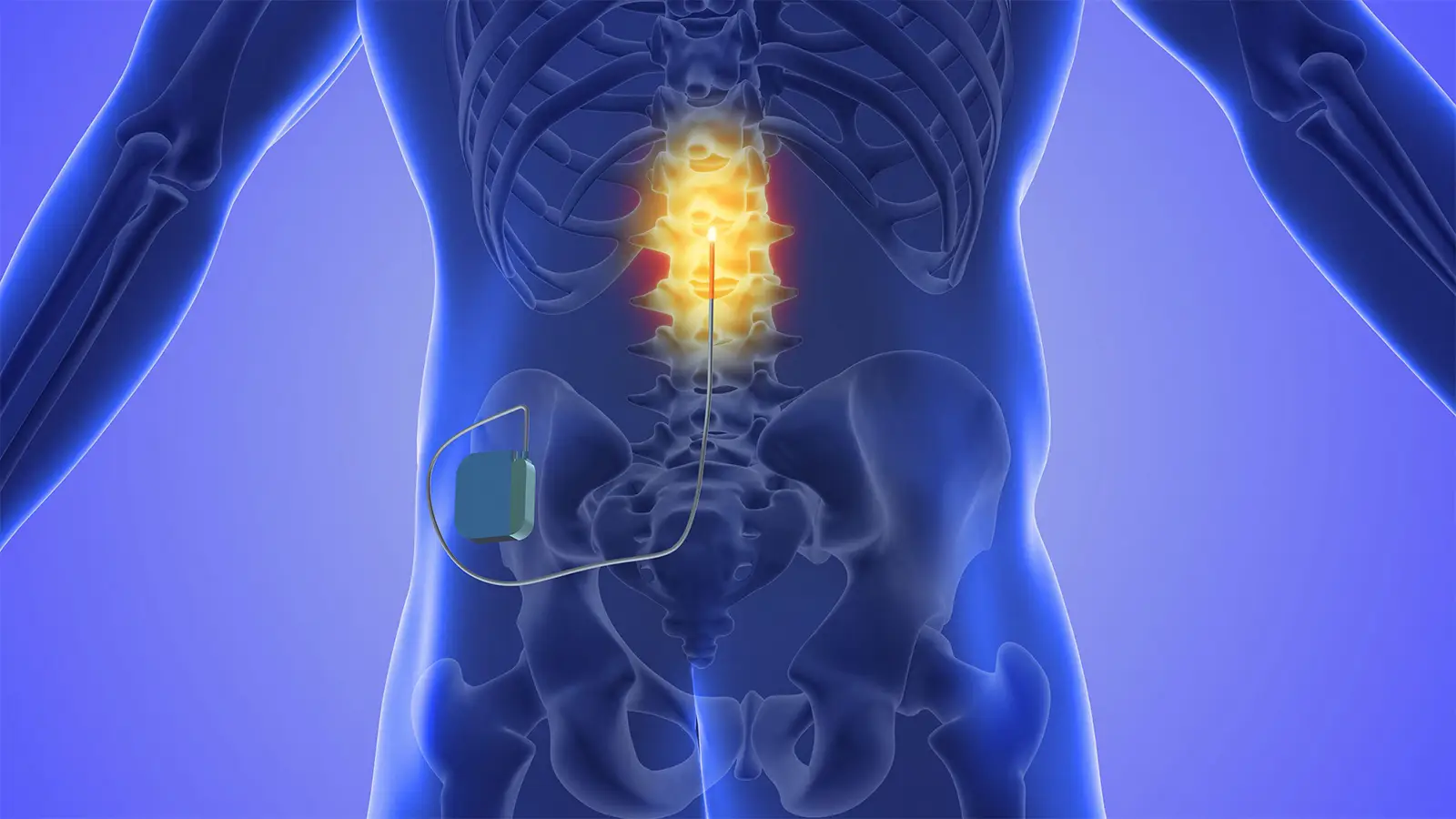
Investigators tested cervical spinal cord stimulation (SCS) as a temporary therapy for chronic post-stroke in seven patients with upper limb hemiparesis.The preliminary evidence suggested safety, feasibility, and efficacy of this neuroprosthetic approach in assisting upper limb function in daily living.Developers envision SCS therapy as a permanent implant that ultimately can go 10 to 20 years between battery changes, but more rigorous studies are required beforehand.
Cervical epidural spinal cord stimulation (SCS) accrued more evidence backing its safety and feasibility as a treatment for chronic upper-limb paresis in stroke survivors.
In a pilot study, seven people got SCS neuroprosthetic implants and showed improvements in motor function immediately upon SCS being turned on (average +32% strength and +5.6 Fugl-Meyer Assessment [FMA] points), according to Marco Capogrosso, PhD, a biomedical engineer at the University of Pittsburgh, and colleagues.
Motor function remained significantly improved at the end of the study (4 weeks; +6.6 FMA points), after the patients had logged modest, periodic motor activity (8.6 hours, 5.5 hours with SCS on). Notably, three of seven participants with residual corticospinal connectivity to finger muscles improved hand and/or finger movement with SCS, Capogrosso's group reported in Nature Medicine.