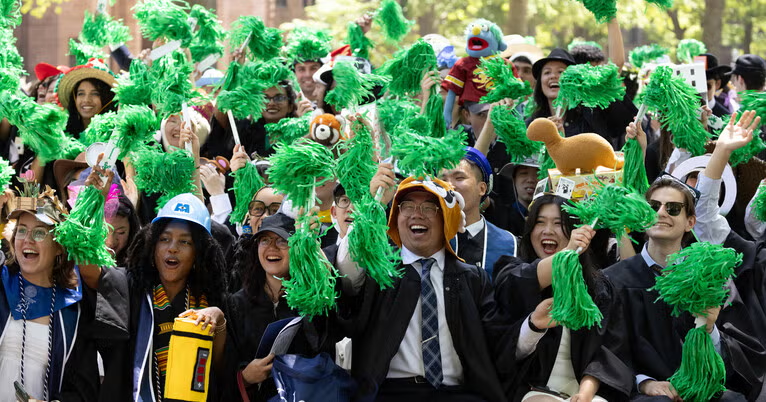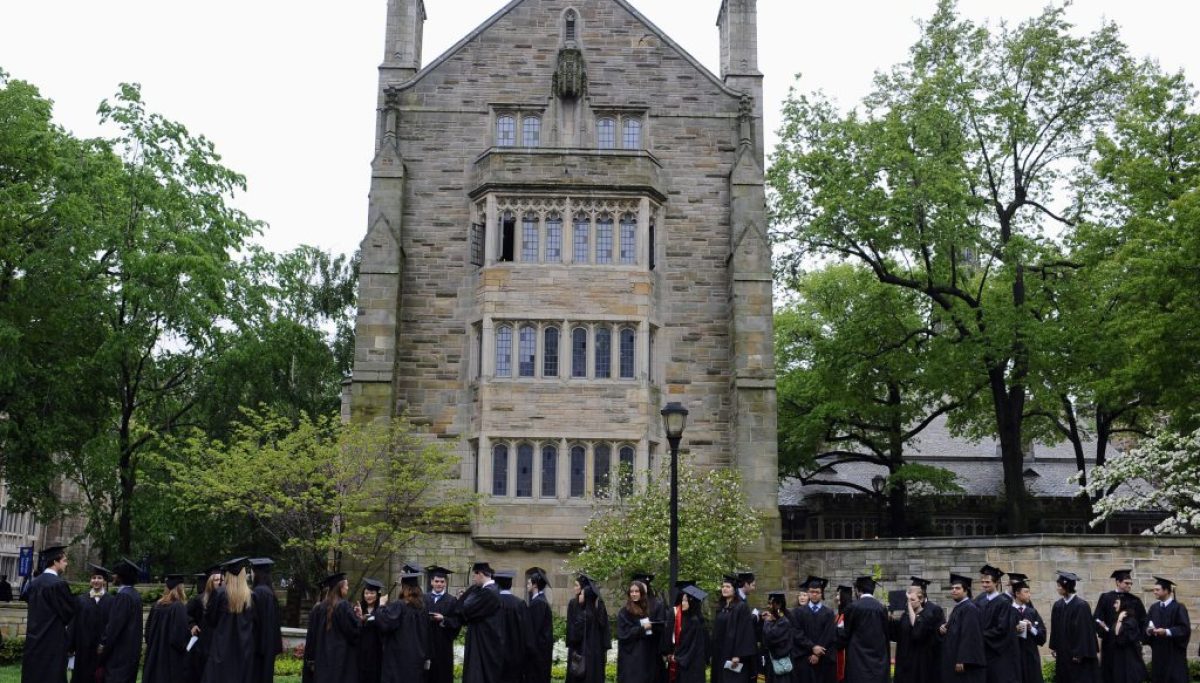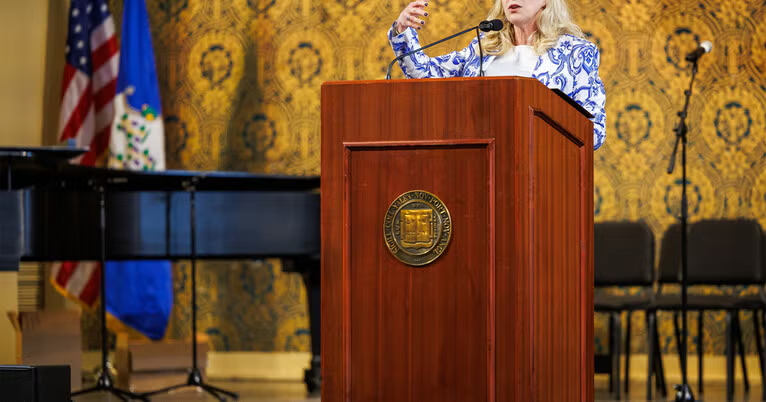
Yale College reunions ripple with possibility — of striking a pose at the Peabody museum with friends and a favorite fossil, of sidling up to classmate authors, of exploring the world of AI or what a mid-life pivot might look like.Some alumni even find their future spouses.Nearly every year there’s also a chance for alumni to hear directly from the university president, a tradition embraced by Maurie McInnis ’96 Ph.D.In separate addresses during May’s reunion weekends — which drew about 7,400 Yalies and guests to New Haven from around the world — Yale’s 24th president stressed a theme: universities like Yale matter for America and for humanity everywhere.McInnis hailed the far-reaching effects of institutions committed to the pursuit of knowledge “unfettered by the limitations of current human understanding,” and she celebrated Yale’s remarkable endurance and adaptability.
Photo by Tony Fiorini
“Yale turns 325 this year,” she said in remarks at Woolsey Hall. “That’s 75 years older than the country itself. One hundred and seventy-eight years older than the lightbulb. Old enough to see America through every war, every crisis, every revolution and reinvention.“Which may be why it’s both fun and meaningful to come back for reunion. Around here, it’s easy to feel young again.”Befitting a historian, McInnis, a professor of the history of art as well as the university’s president, drew heavily on Yale’s past to make a point about its future and enduring purpose.“During the American Revolution, Yale supplied both the minds that supported independence and the men who fought for it. Their names — and the names of so many others who served our country — are carved into the walls of the rotunda just outside this hall.“During the Industrial Revolution, Yale began awarding the nation’s first Ph.D.s, including the first in engineering.“During World War II, Yale pioneered the delivery of penicillin, which saved thousands of soldiers from bacterial infection.“In each of these moments, and countless others, Yale did what great universities must always do: We brought the power of knowledge to bear on the most pressing problems of our age.”The survey of Yale’s centuries of service to society was part celebration, part pledge: As ever, McInnis said, Yale’s people remain focused on the pressing problems of the present day. Among them is diminished public trust in universities.“Today, universities nationwide are facing a historic wave of calls for change,” the president said. “Trust in institutions has been waning over the past decade, and that’s not a problem we can brush aside. Nor can we absolve ourselves of any role in it.“For higher education to serve the public good, we need the public’s trust. We need the American people to believe fully in the power and purpose of higher education.”Earning it has been a priority for McInnis, who last year established a Committee on Trust in Higher Education composed of 10 faculty members to “undertake a project of thorough self-examination.” In April, after a year of intensive work, the group issued its report, along with 20 recommendations for how Yale might foster trust.“I have accepted their assessment,” McInnis told alumni, “and we have already begun implementing their recommendations” — reaffirming Yale’s core mission, redoubling its commitment to free expression, and making Yale more affordable for more students and families, for example.The president also outlined four priorities “that will help us strengthen Yale for another 325 years”:Advancing Yale’s core mission to create, disseminate, and preserve knowledge through research and teachingBroadening intellectual lifeInvesting in education, scholarship, and research, including through greater financial aidStrengthening community partnerships in and with the City of New Haven“These four priorities are a clear signal that we’re not resting on our laurels,” she said. “We’re showing our community and the American people that Yale’s work ripples far beyond our campus.”And they’re but the start, she said.“The endless promise of a university is that there is always another question to ponder, always another idea to debate, always another bold undertaking to support,” she continued.“The fruits of these efforts are the knowledge we will continue to discover, disseminate, and preserve for humanity.”To do it, “we need you — our alumni — more than ever,” she said.“For 325 years, students like you have streamed through these halls yearning for knowledge and walked back out ready to shape the future with it. You are our greatest ambassadors. You are the promise of a Yale education made real, the proof that shows every critic the true value and purpose of places like this.”