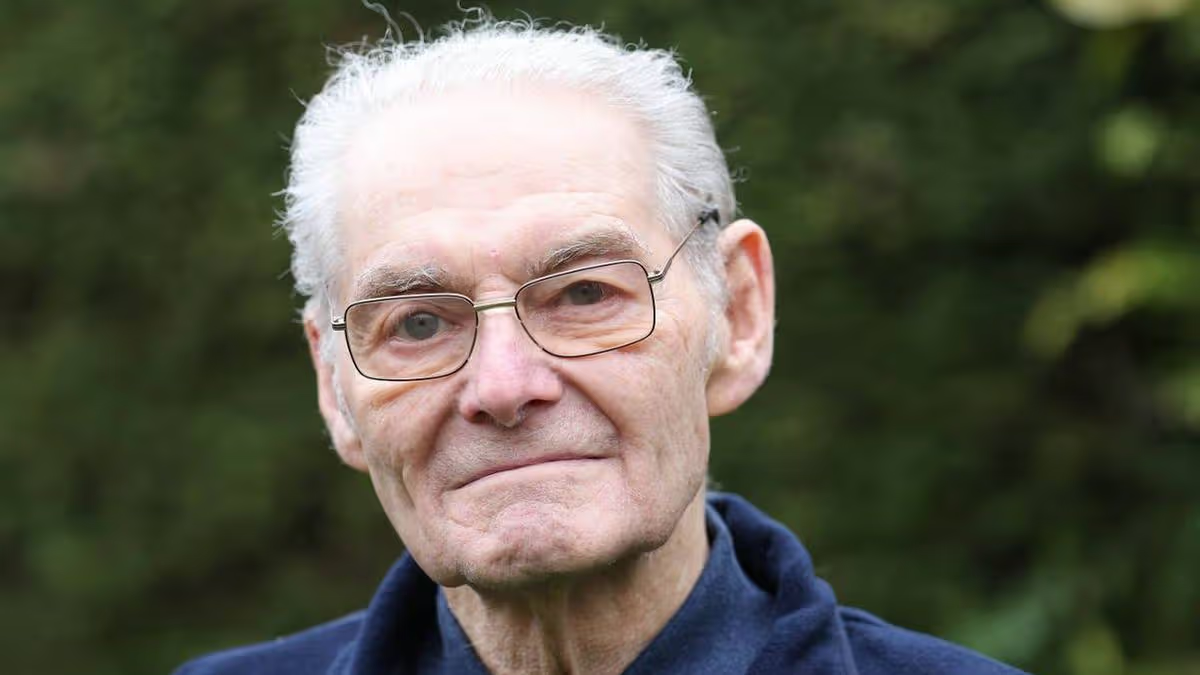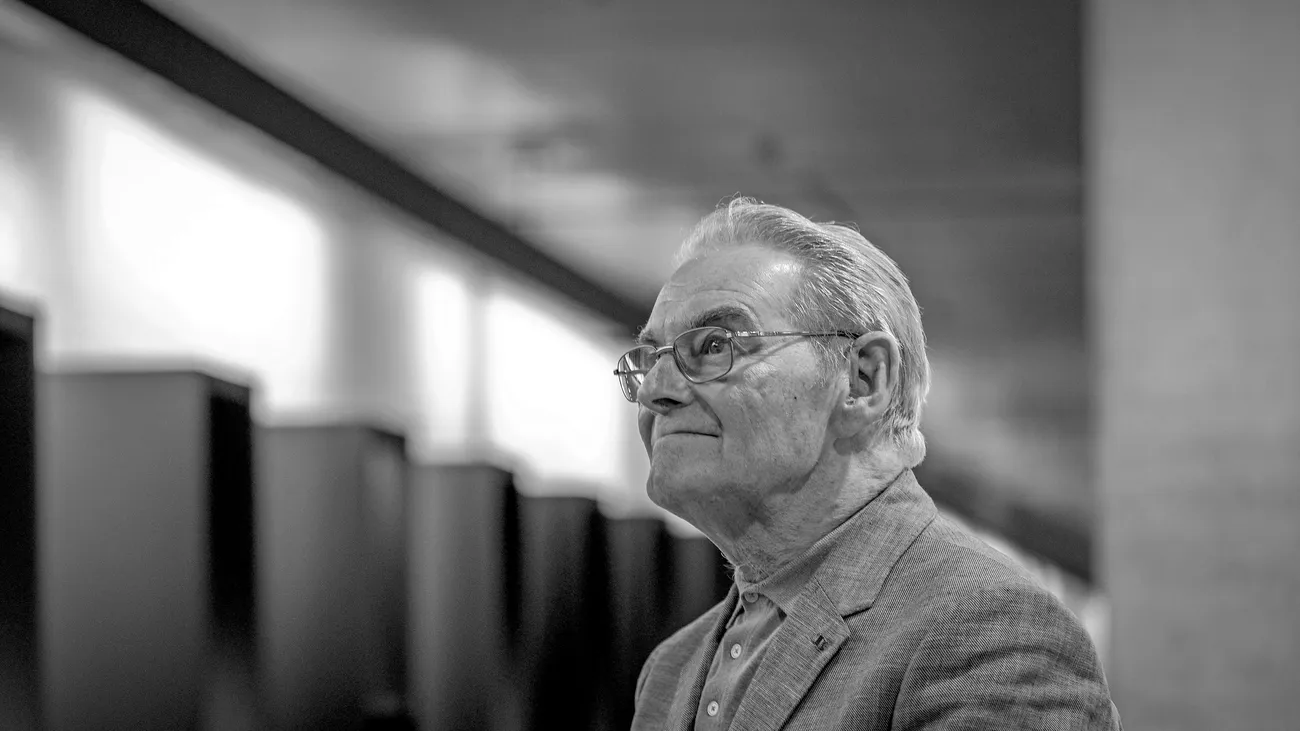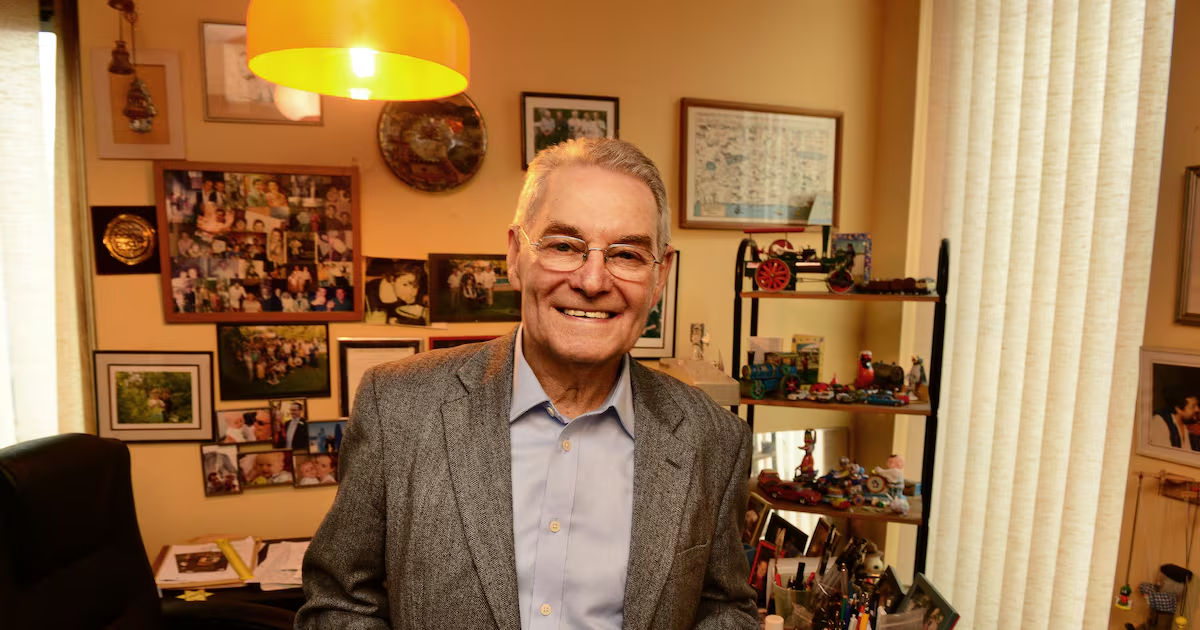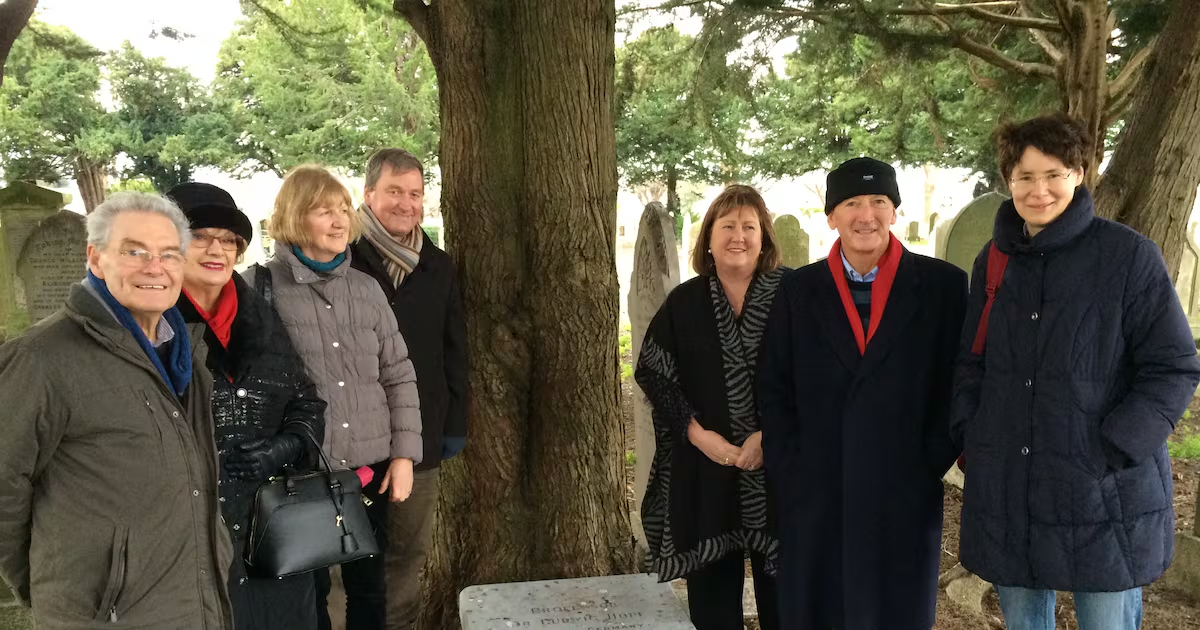
Ireland is a small country where, according to legend, everyone knows everyone else. But I might never have met the late, great Tomi Reichental, Belsen survivor and a resident of Dublin for more than 60 years, were it not for a random chain of events that began in Kenya in 1992.The catalyst was the funeral of a German expatriate named Arnold Hopf, who had once spent several months in Buchenwald concentration camp before escaping and starting a new life in Africa, working with the British colonial service and marrying a Kenyan native.She was Catholic, so when Arnold (who was not himself religious) died, she asked her local priest to perform the funeral rites. Fr Willie Walshe, a missionary from Wicklow, obliged. Then he learned of an Irish connection to the Hopf story.Hopf had never talked about the war. But it emerged that his father, Ludwig, fleeing the Nazis in a different direction, had ended up in Dublin and was buried there somewhere. A theoretical physicist, Ludwig had worked with Albert Einstein in Zurich and Prague (they also collaborated on musical duets, him on piano, Einstein on violin). Then, forced out of a professorship in Aachen, Ludwig had to escape Germany, first to Cambridge and, in autumn 1939, to a job at Trinity College Dublin. Alas, his time here didn’t last long. He died of thyroid failure, aged 55, on the winter solstice of the year the second World War descended.Tasked with finding Ludwig’s grave, Fr Walshe’s sister, Kay, at first assumed it must be in one of Dublin’s Jewish cemeteries, searching these in vain. In fact, it was in Mount Jerome, where another Irish-resident genius of the war years – Erwin Schrödinger, headhunted by Éamon de Valera for a job at the Dublin Institute for Advanced Studies – gave the funeral oration.The grave soon also received the remains of Ludwig’s daughter Liselore, who died aged 18 in 1942. But after her widowed mother moved to England to join other members of the family, it became forgotten and overgrown.When the Walshes finally found it, it was a forlorn sight. So they set about cleaning it and, with family friend John Halligan, a Carlow undertaker, restoring the tombstone.This was sometime around 2012, which was when another friend, Frank Cullen (founder of the communications company and father of Leo), wrote to me suggesting there might be an Irishman’s Diary in the story.Which indeed there was. But in writing it, I became part of what is now a small, annual commemoration at the grave by a group of disparate strangers, most of whom knew nothing of the Hopfs, or each other, before it started.This is where Tomi Reichental and his wife Joyce came in. The Mount Jerome gathering always involves Fr Willie reading something from the Old Testament, typically the Book of Psalms. Another stalwart is the University of Limerick’s Prof Gisela Holfter, who has written a history of German wartime refugees in Ireland and delivers a short reflection on Hopf’s life and times.But someone also has to say Kaddish, the Jewish prayer for the dead. And until now, that was usually Tomi.It’s possible that I had passed him and Joyce unknowingly in Rathgar in Dublin over the years. We had never spoken before the Hopf thing, however. Now not only did I learn in person the extraordinary story of Tomi’s life (told quietly in the Slovakian accent that more than half a century in Dublin couldn’t erase), but I also had the honour of being invited back to his house a few times for tea and Joyce’s excellent cakes. As many others have attested, he was a gentle, affable man, who despite losing more than 30 members of his family to the Holocaust, seemed devoid of bitterness and had made it a mission of his later life to educate young people about the dangers of hatred. I brought my own children to the commemoration, once or twice, to meet one of the last living links to a terrible time that might otherwise seem to them like ancient history. Over the years I’ve introduced other friends to the gathering. On the Christmas just gone, for example, the latest recruit was Vincent Altman O’Connor, descendant of “Altman the Saltman”, a plausible real-life model for James Joyce’s Leopold Bloom. The circle must have extended to at least 30 people over the years, although it’s rarely more than a dozen on any given occasion.Sad to say, illness prevented Tomi attending the last two events. I emailed him a few weeks ago, with best wishes, but ominously did not hear back. I have no idea what Ludwig Hopf would make of the motley Irish gathering in his honour every December. No doubt anyway, like all things, it will peter out eventually. But it seemed, and still seems, a nice thing to do. And it introduced me to Tomi Reichental; knowing him, however briefly, was one of the privileges of my life.
A Plot Thickened – Frank McNally on his friendship with the late Tomi Reichental
Holocaust survivor was resident of Dublin for more than 60 years
823 words~4 min read