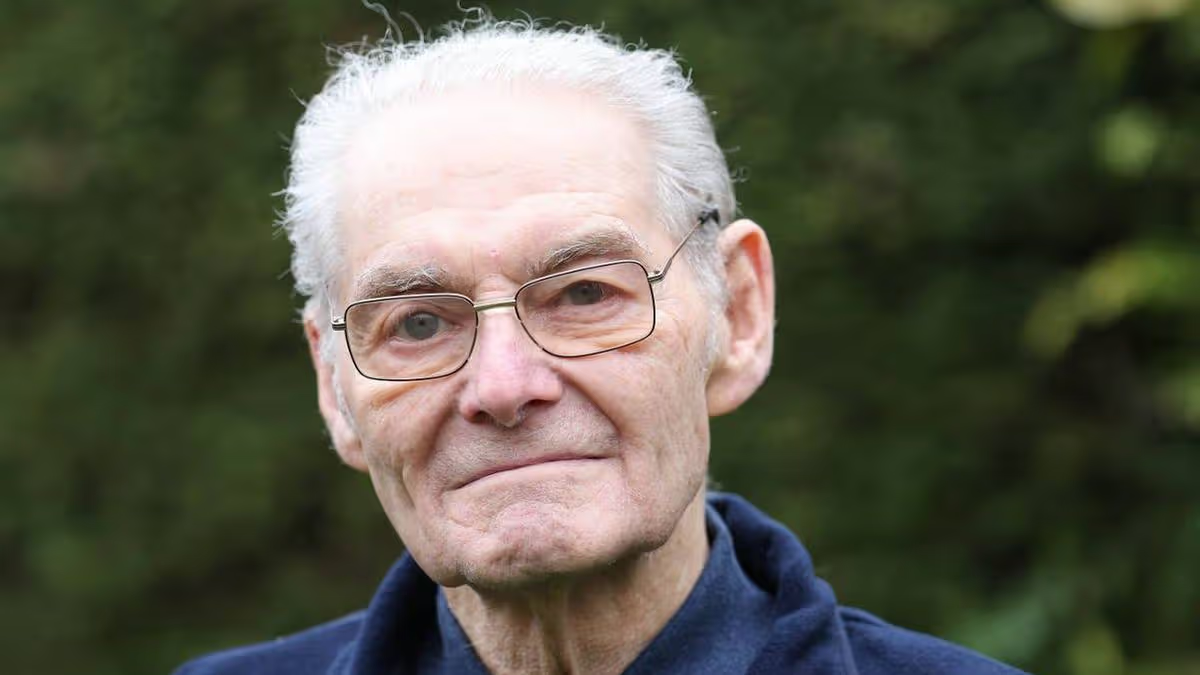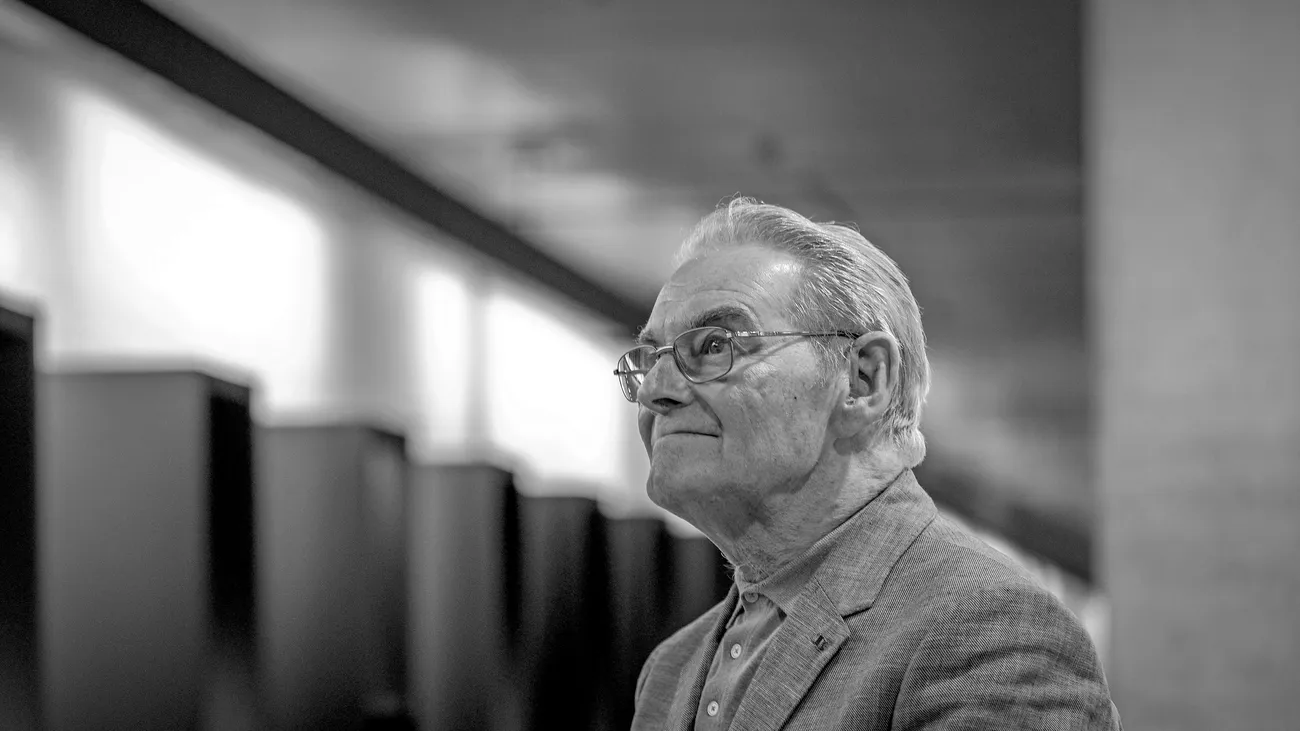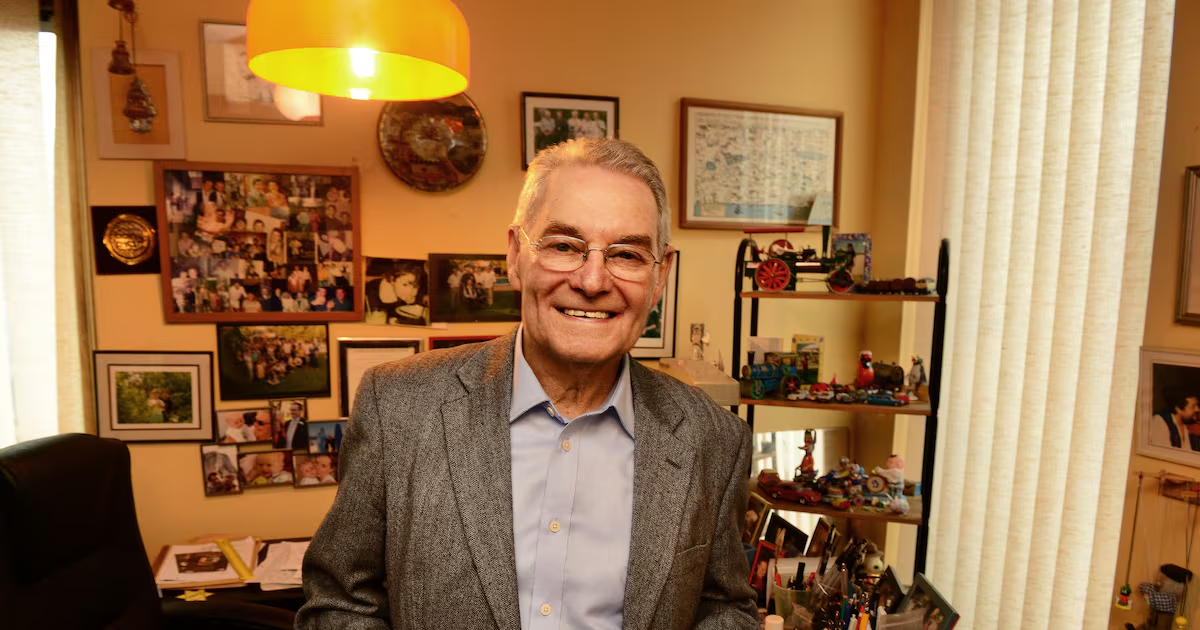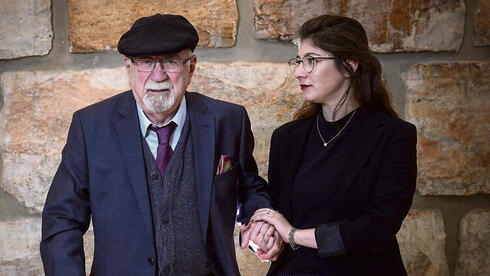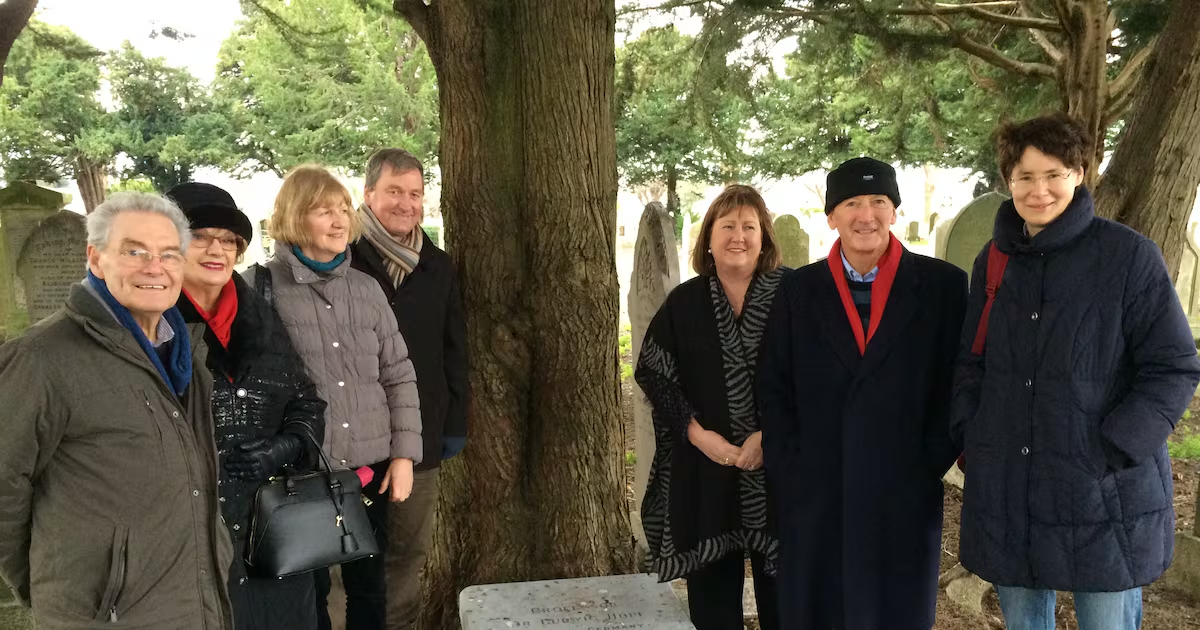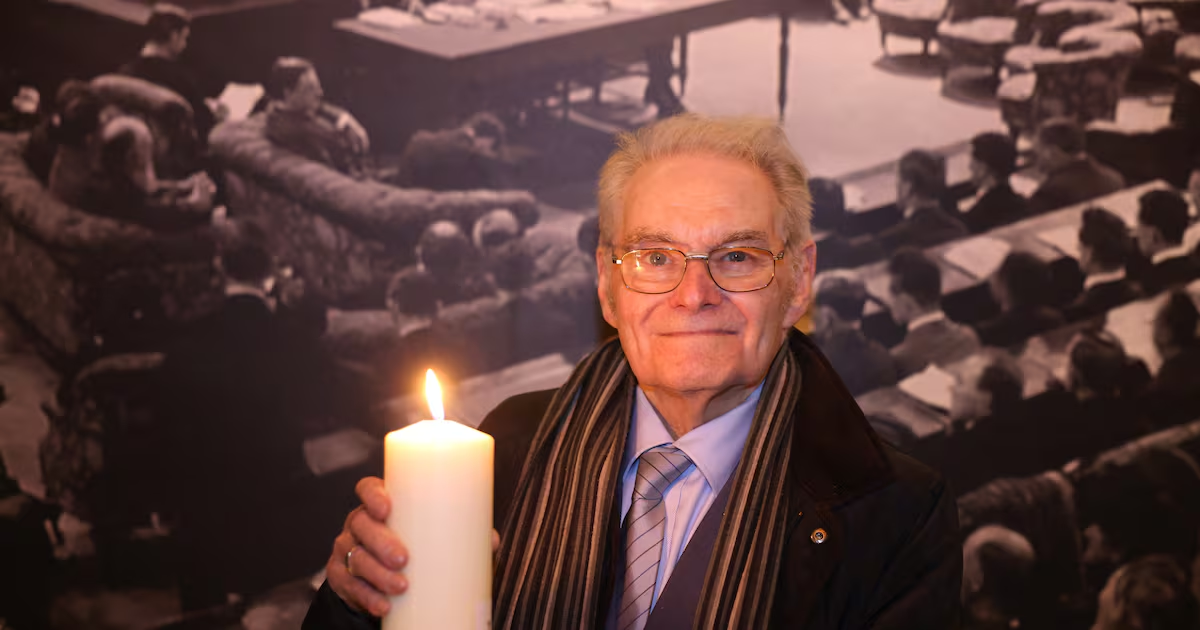
Tomi Reichental, who has died at age of 90, made the Holocaust real for Ireland in a way no textbook or documentary ever could. For many people in this country, especially for many Irish schoolchildren, Reichental was the first person they had ever met who could say in the most direct and devastating sense: “I was there.” Here was a gentle, unassuming man, someone who seemed to carry warmth and goodness so naturally, who brought them face to face with the boy he had once been in Bergen-Belsen, the Nazi concentration camp where tens of thousands died from starvation and barbarity. Reichental described how he had been torn from the life any child should know and thrown into a world deliberately built to destroy him.The murder of six million Jews is almost too vast to comprehend. In town after town across Europe, entire worlds were wiped out. Families were murdered, communities extinguished and centuries of history reduced to total absence, sometimes overnight. Reichental made something of such unimaginable scale comprehensible through the experiences of one small boy who had lived through it and bore its scars for a lifetime.But he did not only make the Holocaust emotionally real. He also made it historically and morally clear. He helped many thousands of students understand that the Holocaust was not a series of spontaneous atrocities or a brutal byproduct of the second World War – it was something far more calculated and far more terrifying. Reichental explained how the Nazis turned civilisation towards the destruction of an entire people: how trains crossed Europe on tight schedules; how selections were conducted within minutes; how death camps such as Auschwitz-Birkenau were designed to murder human beings and dispose of their bodies on an industrial scale. Those who heard him speak came to see the Holocaust for what it truly was: a state-driven programme with the single aim of murdering Jews as Jews and to do so as comprehensively and as efficiently as possible.Tomi Reichental with his mother and brother; they survived the Bergen-Belsen concentration camp. Photograph: Family collection Reichental’s death marks the fading of an era. It comes a few months after Ireland lost Joe Veselsky, another valiant survivor. For me personally, it follows the death last year of my grandfather, who as a 13-year-old somehow came through the horrors of Auschwitz and Bergen-Belsen. One by one, the people who could look us in the eye and say “this happened to me” are leaving us.This means that Holocaust remembrance is changing. The age of living witnesses is ending and the age of moral responsibility is deepening.That responsibility is not fulfilled simply by remembering people like Reichental or by commemorating the Holocaust once a year, however solemnly and sincerely. What matters now is that their message helps shape the way we see the world and the people around us, so we become more sensitive to hatred long before it reaches its most violent forms.This is something Reichental himself spoke about often and it is one of the things that makes his story matter so deeply. “The Holocaust didn’t start with cattle wagons and gas chambers,” he said, “but with whispers.” It started with everyday rumours and insinuations through which ordinary people came to look at Jews differently – not as neighbours, colleagues, fellow citizens and friends, but as outsiders less worthy of individual dignity. Steadily, the whispers paved the way for daubing, boycotts and discriminatory laws. By the time the killing began, much of the moral collapse had already taken place.It feels almost inconceivable for a regime to round up people from across a Continent and slaughter them in their millions simply because of who they are, but that is what happened. Listening to some Holocaust survivors, it was clear they felt that some of the early patterns of hatred are still very much with us, that we do not need to look far to find instances where people readily see other groups as “others” and neglect to see them as human beings. Those patterns can be seen even now in our own society. They are seen when we reduce others to labels rather than try encounter them as individuals. They are seen when we choose not to engage seriously with those who might disagree with us, assuming in advance what they must think and condemning them accordingly. There seems to be less room to care about the suffering of people who are seen as belonging on the wrong side of our sympathies.Tomi Reichental at the coat dresser he recovered from his childhood home in what was Czechoslovakia. Photograph: Cyril Byrne The danger is what all this does to us. We become less curious about people. We stop asking who they are, what they have lived through or how the world looks from where they stand. Instead of being open to new perspectives and ways of looking at things, we retreat into spaces where our assumptions are simply repeated back to us. We decide in advance what others must stand for and how much compassion they deserve. Once we do that, it can start to seem okay to tune out to their distress and we can even start to feel they are deserving of contempt.This is what carrying the lessons of the Holocaust must mean now. As the survivor generation reaches the end of their lives, their testimony must make us more willing to recognise and confront these trends while they are still subtle enough to be excused and easy enough to be ignored.Reichental was a hero who turned the unbearable atrocities he endured as a child into a lasting and unique contribution to this country. He showed us not only what hatred can lead to but also how insidiously it can begin. The question now is whether we will honour him only by mourning his loss – or by also heeding his warning.Yoni Wieder is chief rabbi of Ireland. He officiated at Reichental’s funeral in Dolphin’s Barn Jewish cemetery in Dublin on Monday
Rabbi Yoni Wieder: One by one, we are losing those who could say ‘the Holocaust happened to me’
The age of living witnesses to the Holocaust is ending. But their warning must live on
999 words~5 min read