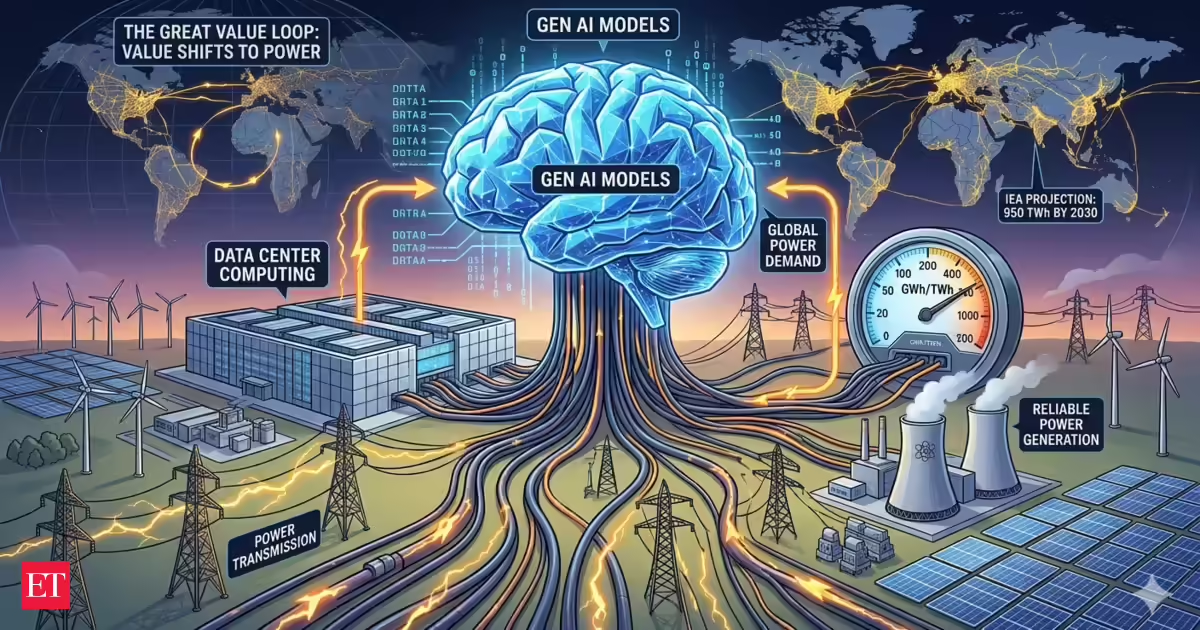
Harvard Business Review LogoJune 4, 2026Illustration by Andrea CobbAt the start of the gen AI boom, the scarcest asset seemed obvious: access to the frontier model. Companies rushed to license models such as GPT-4, Claude, and Gemini, hired prompt engineers, and built proprietary copilots. Then a different constraint emerged: access to GPUs, cloud capacity, and data-center space. Now, beneath all of that, a new constraint is emerging: electricity. The new scarcity is not intelligence but the energy-intensive infrastructure required to produce and deliver it.
Your Company Needs an Energy Strategy for AI’s Next Phase
As AI adoption accelerates, the key competitive bottleneck is shifting from models and GPUs to electricity itself. AI’s economics are becoming increasingly industrial: Competitive advantage now depends not just on access to intelligence but on access to the physical infrastructure required to produce it, including power, cooling, land, and grid connections. This shift can be understood through a broader historical pattern called the “Great Value Loop,” which shows how value repeatedly migrates downward in technology stacks toward whichever layer is hardest to scale. Today, that layer is energy. For incumbents, the implication is clear: AI strategy can no longer be separated from energy strategy. Companies must begin managing “intelligence per watt” through more efficient workloads, flexible procurement, strategic compute placement, and long-term energy optionality.
84 words~1 min read