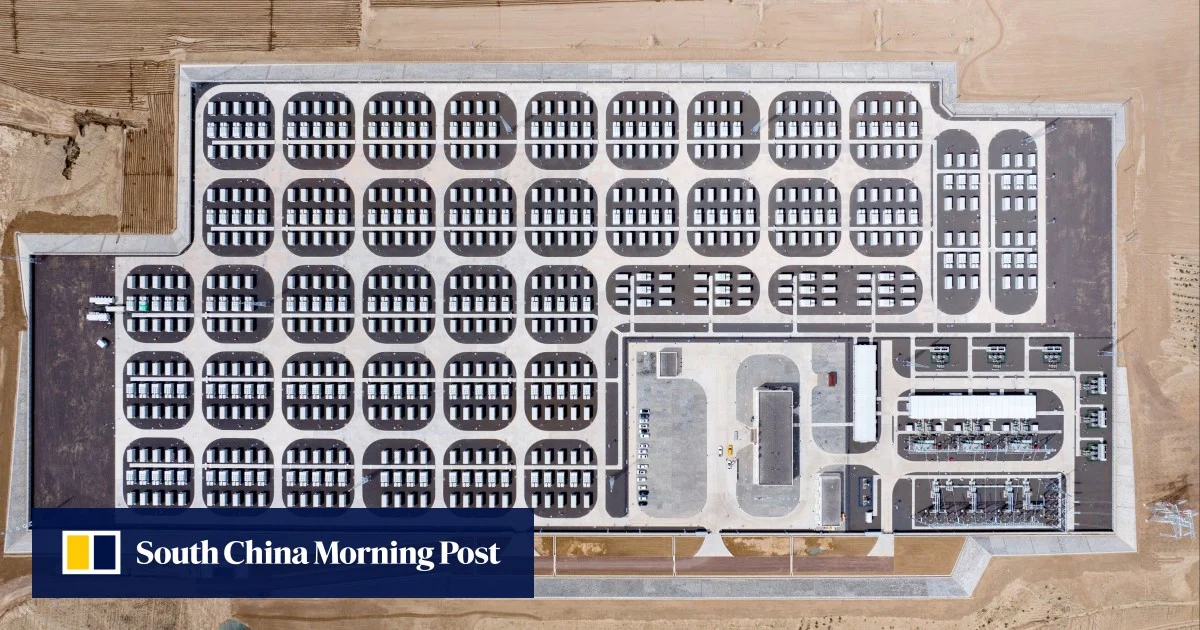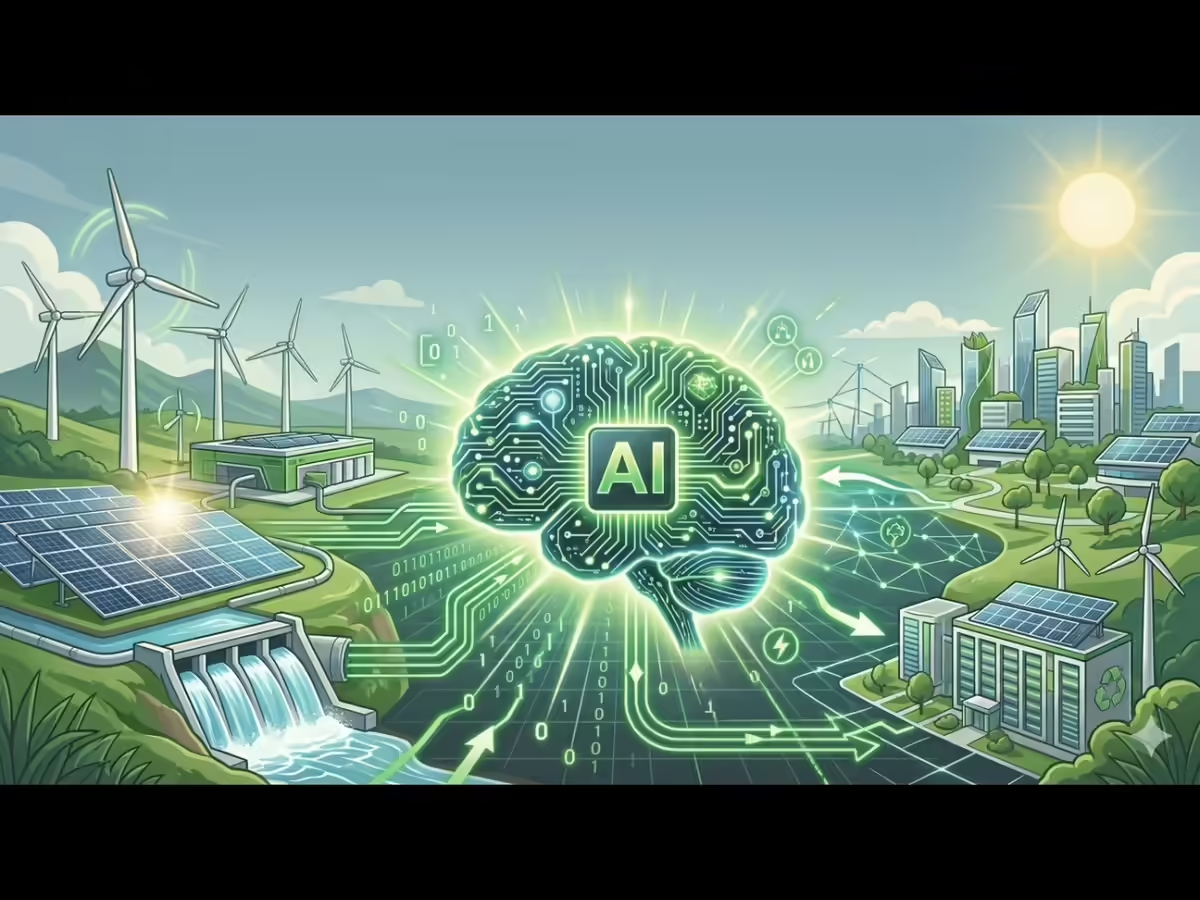
The global AI race is rapidly shifting from a battle over models to one over infrastructure, power, and sovereign technology ecosystems, said Matthew Oostveen, Japan and Asia Pacific (JAPAC) vice president and chief technology officer at Everpure, underlining that energy efficiency is emerging as a critical competitive advantage in the AI era.“There is a finite amount of power available to a facility and it’s all used,” Oostveen told ET. “Every watt saved” from inefficient infrastructure can now be redirected toward graphic processing units and AI workloads as enterprises race to build faster and more powerful AI systems, he said.The shift marks a deeper transition in the AI industry, he said, where concerns around access to uninterrupted electricity, water, storage, and cybersecurity are becoming as critical as the models themselves.“The AI tower hasn’t risen yet,” said Oostveen. “We need to galvanise security, build out infrastructure, fix storage problems and train far more AI talent globally.”Despite the hype around generative AI, enterprise adoption still remains at a very early stage, said Oostveen, with penetration rates inside organisations estimated at just 2-3% currently. That could however eventually rise to nearly 60% as companies build the underlying infrastructure needed to support large-scale deployment, he said.The rapid expansion of hyperscaler investments and data centre projects globally has also exposed growing concerns around electricity grids and water availability. Oostveen highlighted Singapore’s moratorium on data centre construction previously as an example of governments increasingly treating AI infrastructure as a strategic issue.“60% of Singapore’s water is imported from Malaysia,” he said. “Now it becomes a national security imperative if you are reliant on a foreign state to deliver you water.”Governments, he noted, are no longer focusing only on data centre construction but are also beginning to regulate the efficiency of infrastructure deployed inside facilities to reduce energy consumption.According to him, the AI ecosystem itself is also becoming more fragmented as enterprises move away from relying on a single frontier model provider.“Large organisations are using five or six different models depending on the problem they are trying to solve,” he said. “It’s not like they’ve chosen only Gemini or Claude or OpenAI.”He said Chinese AI models are also reshaping the economics of the industry by approaching frontier-level capabilities at significantly lower costs and with lesser infrastructure requirements.“Chinese models have only been weeks or months behind US models, but they’re doing it at a fraction of the cost,” he said.At the same time, Oostveen warned that governance and enterprise readiness are lagging behind the pace of AI deployment. Most organisations, he said, still don’t fully understand where their data resides, how it is being used, or which models are interacting with it.“Understanding and managing all of this data is a gargantuan task,” he said, adding that data discovery and governance remain among the biggest barriers to successful AI implementation.On India, Oostveen said the country is among the strongest-positioned markets globally due to its engineering scale and talent depth at a time when demand for AI researchers and specialists is surging worldwide.“There’s probably no better country on the planet, maybe China as well, that’s capable of helping solve the global AI talent shortage,” he said.Oostveen is of the view that the AI race is unlikely to remain concentrated among a handful of global firms as governments worldwide increasingly push for sovereign technology ecosystems and tighter control over citizen data.“The concentration is going to be forced open a little bit as legislative changes come in,” he said, pointing to frameworks such as India’s Digital Personal Data Protection Act (DPDP) and Europe’s General Data Protection Regulation (GDPR).
AI paints a pretty infra picture - The Economic Times
The global AI race is shifting focus from models to infrastructure, power, and sovereign ecosystems, with energy efficiency becoming a key competitive advantage. Enterprises are prioritising robust infrastructure, security, and talent to support AI adoption, which is still in its early stages but poised for significant growth.
TL;DRAI
AI race pivots to infrastructure; adoption 2-3%, 60% potential; Chinese models achieve near-parity at lower cost. Governments regulate infrastructure strategically; enterprises use 5-6 models; governance/data discovery critical; legislation decentralizes market.
594 words~3 min read