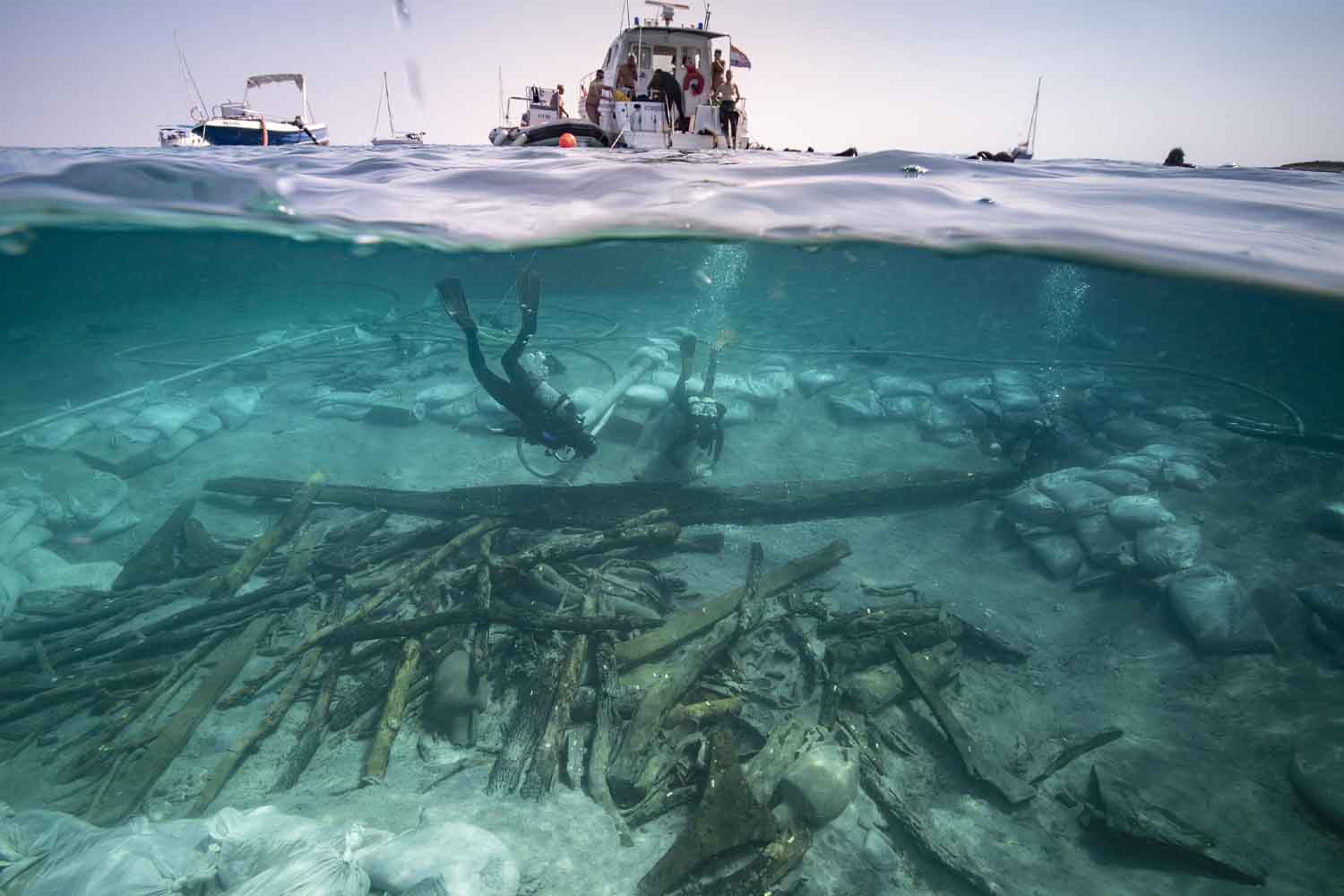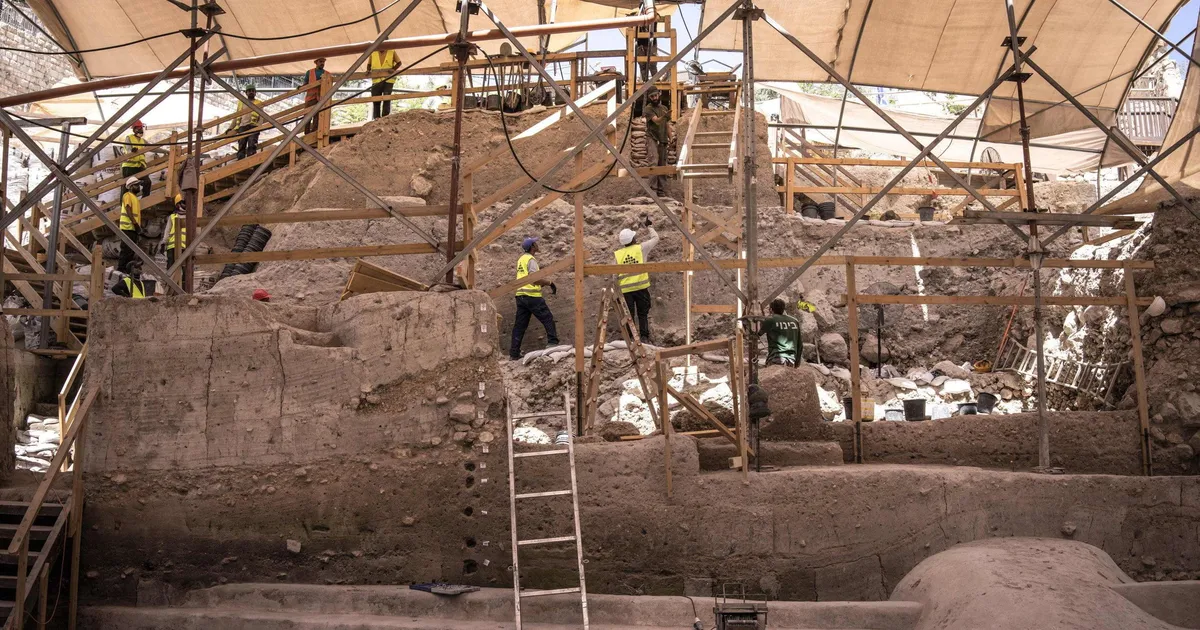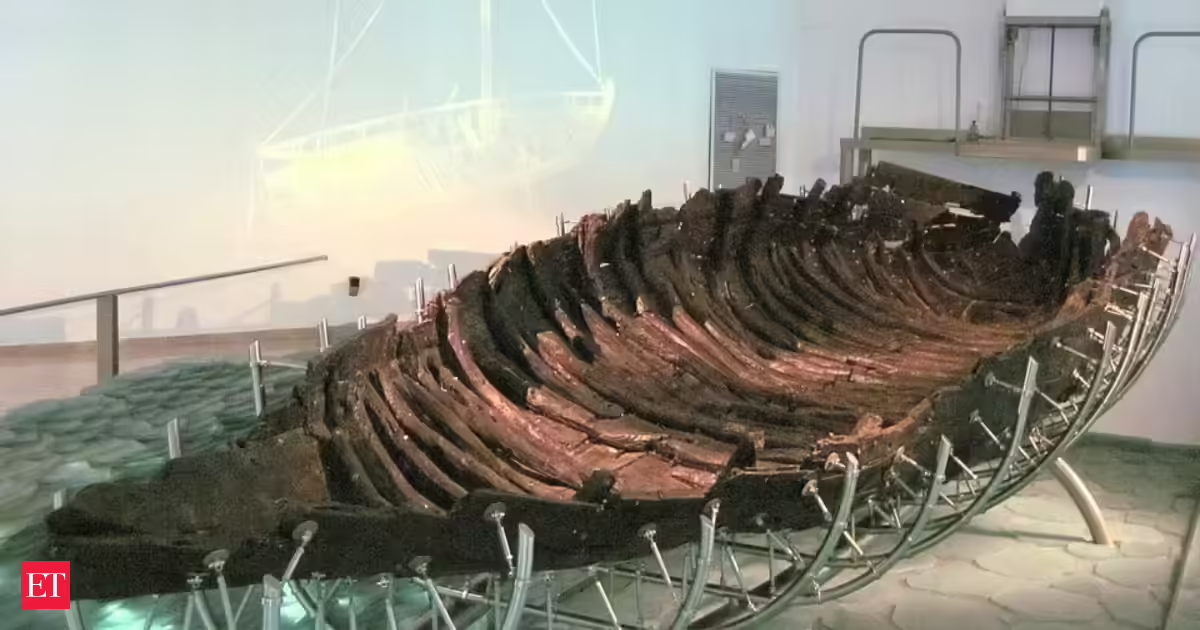
SynopsisIn 1986, a harsh drought caused the Sea of Galilee to recede, unveiling an incredibly well-preserved boat dating back to the first century AD. This extraordinary find offered captivating insights into the fishing techniques and everyday routines of ancient people. Yet, the exposure of this wooden relic to the elements posed a dire threat of deterioration.The 'Ancient Galilee Boat' housed in the Yigal Allon Museum in Kibbutz Ginosar | Wikimedia CommonsAncient artifacts are believed to have been discovered through systematic archaeological work. However, sometimes nature reveals discoveries hidden beneath its surface for hundreds of years. In 1986, there was very little rainfall, resulting in very low water levels in the Sea of Galilee.During those days when the water levels were very low, Moshe and Yuval Lufan noticed a wood-like substance protruding from the mud along the lake shore. These were not pieces of driftwood. What had risen from the bottom of the sea were pieces of a well-preserved ancient boat, later determined to have existed around the first century AD.Sea of Galilee | Wikimedia CommonsWhen a drought opened a window into the pastThis finding was possible due to changes in the shoreline, as a recent environmental investigation on water level changes in the Sea of Galilee found that the lake has undergone significant shifts depending on climatic conditions, precipitation, water removal, and hydrology. During periods when the lake's water level is very low, certain sections of the area that are normally underwater become accessible. The discoveries that could have been concealed for decades become visible.In studies of Ohalo II, the prehistoric lakeside settlement site near the Sea of Galilee, declining water levels have been found to expose archaeological deposits at the site. The same factors that led to Ohalo II's discovery also made the ancient boat discovered in 1986 visible. Falling water levels can serve as an archaeological window through which one can view artifacts concealed in the sea for a long time. Discovery through drought carries risks and threats, as organic materials that remain underwater for many years are preserved by their environment. Once such artifacts are exposed to sunlight, temperature fluctuations, and dryness, they begin to degrade.More than an ancient boatAnalysis of the vessel eventually revealed it to be a first-century fishing boat. According to Brigham Young University's survey on the study of religion, the importance of the boat lies not in its ability to connect directly to any biblical figure but rather in its role as a general description of vessels typical of the era of the events recounted in the New Testament. This is a crucial point. In other words, the boat has no direct connection to the actuality of events described in any Gospel. Good researchers refrain from drawing hasty conclusions, which might appear misleading. The value of the boat lies in a fact potentially more useful to history than anything else: it is a unique opportunity to glimpse what everyday life was like in first-century Galilee. As is well known, small wooden vessels were used primarily for fishing, transportation, and trade; however, they rarely survived due to their perishable nature.Its significance extended beyond archaeology, for obvious reasons, since the boat had originated in the New Testament environment.The 'Ancient Galilee Boat' housed in the Yigal Allon Museum in Kibbutz Ginosar | Wikimedia CommonsSaving a vessel before it disappearedFinding the boat was just the first step; the real work came when the archaeologists figured out how to preserve the discovery. Articles analyzing the conservation of waterlogged wood have been published by the National Library of Medicine. In these articles, it is explained that the process that preserves the wood underwater is due to its constant saturation. When the water dries up, the wooden structure is susceptible to shrinking, warping, cracking, or collapsing altogether. An article on the conservation of the Hanson Logboat examines the use of polyethylene glycol and other preservation methods to replace the water content in old wood. While the boat's preservation process was unique to this find, it followed the same basic scientific principles.That race against time became one of the most thrilling aspects of the narrative. It was not just the excavation of an archaeological artifact, but a race to save the very object the archaeologists sought to excavate. The Sea of Galilee boat remains fascinating because many narratives are intertwined with it. One can think of it as a historical artifact, a conservation puzzle, a consequence of climate change, and a unique surviving item from the 1st century AD. Had it not been for the drought, the boat would never have come out of its underground resting place, and had there been no rush to conserve it, the archaeologists would probably have lost it soon after it appeared.Read More News on(Catch all the US News, UK News, Canada News, International Breaking News Events, and Latest News Updates on The Economic Times.) Download The Economic Times News App to get Daily International News Updates....moreless
In 1986, a drought lowered the Sea of Galilee, and two brothers saw old wood in the mud. It was no driftwood, and it changed Biblical history
In 1986, a harsh drought caused the Sea of Galilee to recede, unveiling an incredibly well-preserved boat dating back to the first century AD. This extraordinary find offered captivating insights into the fishing techniques and everyday routines of ancient people. Yet, the exposure of this wooden relic to the elements posed a dire threat of deterioration.
822 words~4 min read