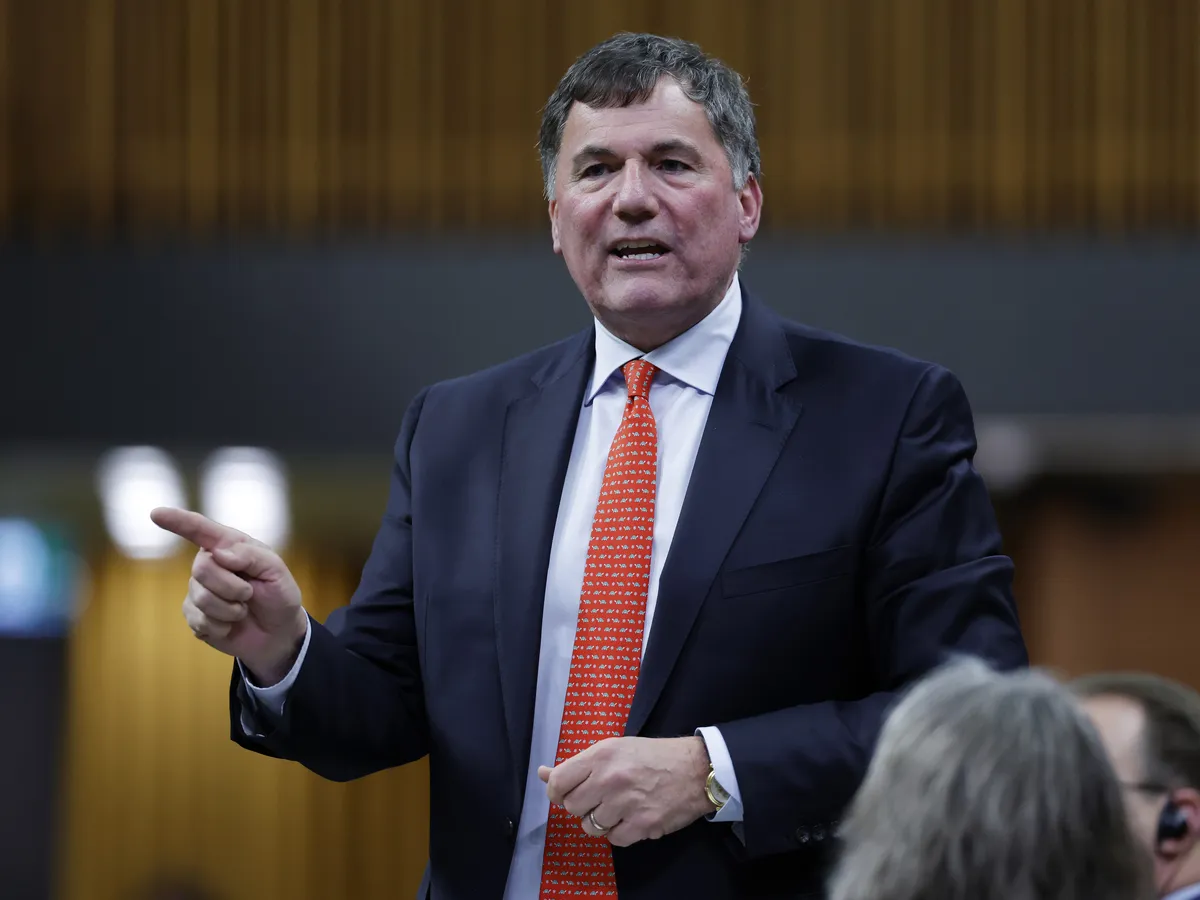
Skip to Content News Archives Economy Energy Oil & Gas Renewables Electric Vehicles Mining Commodities Agriculture Real Estate Mortgages Mortgage Rates Finance Banking Insurance Fintech Cryptocurrency Work Wealth Smart Money Wealth Management Investor Personal Finance Family Finance Retirement Taxes High Net Worth FP Comment Executive Women Puzzmo Newsletters Financial Times Business Essentials More Innovation Information Technology FP500 Podcasts Small Business Lives Told Tails Told Shopping Financial Post Store Obituaries Place a Notice Advertising Advertising With Us Advertising Solutions Postmedia Ad Manager Sponsorship Requests Classifieds Place a Classifieds ad Working Profile Settings My Subscriptions Saved Articles My Offers Newsletters Customer Service FAQ News Economy Energy Mining Real Estate Finance Work Wealth Investor FP Comment Executive Women Puzzmo Newsletters Financial Times Business Essentials HomeEnergyCanadian energy leaders back diversification, but U.S. remains key customerChris Varcoe: A key question heading into trade talks with the U.S. is how to safeguard the integrated nature of energy flows, while also looking to expand exports into other marketsLast updated 2 hours ago You can save this article by registering for free here. Or sign-in if you have an account.Gitane De Silva, founder and president of GDStrategic, and Carlo Dade, Director of International Policy at the School of Public Policy, University of Calgary take part in a panel discussion at the Calgary Economic Development 2026 Report to the Community on Wednesday, April 8, 2026. Brent Calver/PostmediaBefore travelling to the United States to discuss the future of the North American trade deal, federal cabinet minister Dominic LeBlanc sat down for nearly two hours with oil and gas industry officials, including Cenovus Energy executive vice-president Jeff Lawson.Subscribe now to read the latest news in your city and across Canada.Exclusive articles from Barbara Shecter, Joe O'Connor, Gabriel Friedman, and others.Daily content from Financial Times, the world's leading global business publication.Unlimited online access to read articles from Financial Post, National Post and 15 news sites across Canada with one account.National Post ePaper, an electronic replica of the print edition to view on any device, share and comment on.Daily puzzles, including the New York Times Crossword.Subscribe now to read the latest news in your city and across Canada.Exclusive articles from Barbara Shecter, Joe O'Connor, Gabriel Friedman and others.Daily content from Financial Times, the world's leading global business publication.Unlimited online access to read articles from Financial Post, National Post and 15 news sites across Canada with one account.National Post ePaper, an electronic replica of the print edition to view on any device, share and comment on.Daily puzzles, including the New York Times Crossword.Create an account or sign in to continue with your reading experience.Access articles from across Canada with one account.Share your thoughts and join the conversation in the comments.Enjoy additional articles per month.Get email updates from your favourite authors.Create an account or sign in to continue with your reading experience.Access articles from across Canada with one accountShare your thoughts and join the conversation in the commentsEnjoy additional articles per monthGet email updates from your favourite authorsSign In or Create an AccountorThe session, which included federal Natural Resources Minister Tim Hodgson, delved into the role of energy ahead of an upcoming review of the Canada-U.S.-Mexico (CUSMA) trade agreement.And coming out of Monday’s meeting in Ottawa, the industry and the Carney government appeared to be firmly on the same wavelength.Get the latest headlines, breaking news and columns.By signing up you consent to receive the above newsletter from Postmedia Network Inc.A welcome email is on its way. If you don't see it, please check your junk folder.The next issue of Top Stories will soon be in your inbox.We encountered an issue signing you up. Please try again“We’re perfectly aligned with the federal government,” Lawson said in an interview.“The energy trade is so important to both countries, and it’s been such a long-standing, mutually beneficial relationship, where both sides are benefiting . . . We want to do everything we can to preserve that, and I think that we can.”The meeting also included AltaGas CEO Vern Yu, South Bow CEO Bevin Wirzba and executives from six other companies.Before his trip to Washington on Tuesday, LeBlanc sent a note to his counterparts in the United States and Mexico, with the Canadian government recommending the trade agreement be renewed for another 16 years.Energy remains Canada’s largest export product to the United States. Canada is the top foreign supplier of oil and gas to the country, while the U.S. is the largest international supplier of energy to Canada.After some early concerns last year, oil and natural gas exports have almost entirely avoided U.S. tariffs under the existing CUSMA agreement, which is up for renewal next month. President of the King’s Privy Council for Canada and Minister responsible for Canada-U.S. Trade, Intergovernmental Affairs and One Canadian Economy Dominic LeBlanc arrives to a Liberal caucus meeting on Parliament Hill on June 3, 2026. Blair Gable/PostmediaA key question heading into the next round of trade discussions with the U.S. is how to safeguard the integrated nature of energy flows, while also looking to expand exports into other markets.“I want our energy and natural resources sector to play the strategically important role it should be playing, as Canada’s strongest cards in the CUSMA renegotiation,” Hodgson said in a speech in Toronto in April.A recent report from the Canada Energy Regulator (CER) highlights the importance of trade between the two countries.Canadian sales of oil, gas, refined petroleum products and natural gas liquids to the U.S. totalled $158 billion last year. These energy products made up 20 per cent of Canada’s total goods exported globally, it noted.With the startup of the Trans Mountain expansion and LNG Canada in the past two years, Canada exported 6.5 million barrels of oil equivalent per day of hydrocarbons in 2025 to more than 100 countries, with the U.S. receiving nearly 91 per cent of the total.Overt attempts to use energy as leverage during the CUSMA review would be “totally foolish,” said Robert Skinner, former director of policy at the International Energy Agency and an executive fellow at the University of Calgary’s School of Public Policy.“I don’t think Canada should come up with any kind of notion . . . that we can use Alberta’s energy or Newfoundland and Labrador’s electricity as a negotiating card,” he said.“What are we going to do with it if we don’t sell it to the United States?”Lawson said the energy discussions should focus on the long-term upside of trade for both sides.“The card we’re playing is that we’ve got a 30-year, long-term relationship where both countries have benefited,” he said. The LNG tanker GasLog Glasgow arrived at LNG Canada’s shipping terminal in Kitimat on June 28, 2025, to begin loading the first ever export cargo of super-cooled liquefied natural gas for delivery to Asia. Handout courtesy of LNG CanadaThis doesn’t mean that Canada can’t also look to promote trade diversification.Canada has one LNG facility operating on the B.C. coast and two more under construction.As part of the new energy MOU between Ottawa and Alberta, the province is proposing a greenfield bitumen pipeline that can transport up to one million barrels per day to the Pacific Coast for export to international markets.A note this week by the Business Council of Alberta said crude oil is Canada’s biggest export diversification opportunity.With the Carney government striving to double exports outside of the U.S. within a decade, a new oil export pipeline to the Pacific Coast could help reach 13 per cent of the prime minister’s diversification goals in one step, it noted.“I don’t think we should be pitting potential growth in U.S. energy exports against international, non-U.S. energy exports,” said council president Adam Legge.“Frankly, there is enough energy in Canada and Alberta — oil and natural gas — to satisfy all markets.” Business Council of Alberta president Adam Legge. Gavin Young/PostmediaCarlo Dade, director of international policy at the University of Calgary’s School of Public Policy, said Canada is going to increase energy exports south, and “the fact that we’re going to other markets does not mean we’re leaving the U.S.”“We need to increase the rate of growth to other markets faster than the rate of growth to the U.S.,” he added.It’s a tricky time in the trade relationship, as Canada seeks to boost energy sales to the United States and the rest of the world, added Gitane De Silva, who previously served as Alberta’s senior representative to the U.S. and is the former head of the CER.“It is an important moment for Canada to figure out this balance,” she said.“It’s an all-of-the-above — every form of energy and every market.”Chris Varcoe is a Calgary Herald columnist. Join the Conversation This website uses cookies to personalize your content (including ads), and allows us to analyze our traffic. Read more about cookies here. By continuing to use our site, you agree to our Terms of Use and Privacy Policy.
Canadian energy leaders back diversification, but U.S. remains key customer
It’s a tricky time in the trade relationship, as Canada seeks to boost energy exports to the United States and the rest of the world.
1,469 words~7 min read