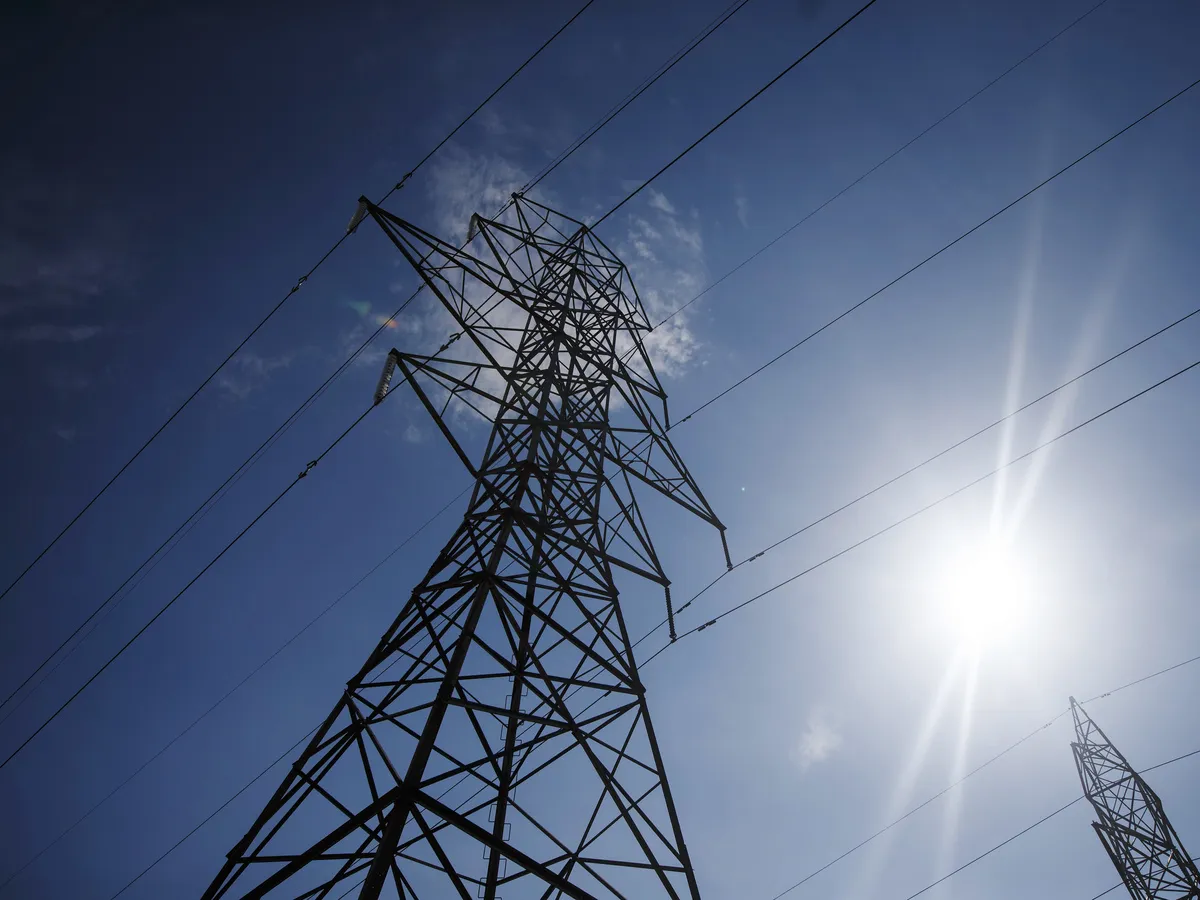
Skip to Content News Archives Economy Energy Oil & Gas Renewables Electric Vehicles Mining Commodities Agriculture Real Estate Mortgages Mortgage Rates Finance Banking Insurance Fintech Cryptocurrency Work Wealth Smart Money Wealth Management Investor Personal Finance Family Finance Retirement Taxes High Net Worth FP Comment Executive Women Puzzmo Newsletters Financial Times Business Essentials More Innovation Information Technology FP500 Podcasts Small Business Lives Told Tails Told Shopping Financial Post Store Obituaries Place a Notice Advertising Advertising With Us Advertising Solutions Postmedia Ad Manager Sponsorship Requests Classifieds Place a Classifieds ad Working Profile Settings My Subscriptions Saved Articles My Offers Newsletters Customer Service FAQ News Economy Energy Mining Real Estate Finance Work Wealth Investor FP Comment Executive Women Puzzmo Newsletters Financial Times Business Essentials HomeCommoditiesEnergyTaking advantage of Canada’s untapped energy sourceThe countries that emerge strongest from the current energy crisis will be those that can use their energy more wiselyLast updated 46 minutes ago You can save this article by registering for free here. Or sign-in if you have an account.Energy efficiency delivers a rare triple dividend: stronger energy security, lower costs and greater economic competitiveness, all while supporting local jobs. Photo by Cole Burston/BloombergOne of Canada’s energy advantages may be hiding in plain sight.Subscribe now to read the latest news in your city and across Canada.Exclusive articles from Barbara Shecter, Joe O'Connor, Gabriel Friedman, and others.Daily content from Financial Times, the world's leading global business publication.Unlimited online access to read articles from Financial Post, National Post and 15 news sites across Canada with one account.National Post ePaper, an electronic replica of the print edition to view on any device, share and comment on.Daily puzzles, including the New York Times Crossword.Subscribe now to read the latest news in your city and across Canada.Exclusive articles from Barbara Shecter, Joe O'Connor, Gabriel Friedman and others.Daily content from Financial Times, the world's leading global business publication.Unlimited online access to read articles from Financial Post, National Post and 15 news sites across Canada with one account.National Post ePaper, an electronic replica of the print edition to view on any device, share and comment on.Daily puzzles, including the New York Times Crossword.Create an account or sign in to continue with your reading experience.Access articles from across Canada with one account.Share your thoughts and join the conversation in the comments.Enjoy additional articles per month.Get email updates from your favourite authors.Create an account or sign in to continue with your reading experience.Access articles from across Canada with one accountShare your thoughts and join the conversation in the commentsEnjoy additional articles per monthGet email updates from your favourite authorsSign In or Create an AccountorThe conflict in the Middle East has sent a fresh wave of uncertainty through global fuel markets and reliable energy partners are taking on renewed importance. Canada has a vital role to play in this changing energy landscape, from conventional energy supplies to clean energy technologies and the critical minerals that will underpin the industries of the future.Yet today’s crisis has also laid bare a deeper vulnerability: countries remain highly exposed to energy shocks when they consume more energy than they need to deliver economic growth and prosperity.At a time when countries are racing to secure more energy in all its forms, they should not overlook the one resource that every nation — and every province and territory in Canada — has in abundance: the opportunity to use energy more efficiently.The International Energy Agency (IEA) has long called energy efficiency the world’s “first fuel” because the most affordable and secure energy is the energy we never have to produce or pay for in the first place.Governments have been taking serious actions to limit the near-term economic impacts of the Middle East crisis on businesses and households over the past few months. More than 110 governments have introduced measures to conserve energy or support consumers. In Canada, this included suspending the federal fuel excise tax and introducing targeted measures to support the airline sector.These were immediate responses to an extraordinary disruption. But they also underscore the importance of making energy systems more resilient, including by reducing the amount of energy they require.History has already shown that opportunity can emerge from crisis. Following the oil shocks of the 1970s, governments around the world, including in Canada, transformed how energy was used across their economies. Stronger building energy codes, appliance standards and vehicle efficiency requirements delivered remarkable progress. For example, major household items such as refrigerators and cars had become nearly twice as efficient within roughly a decade.The result was not sacrifice, but prosperity. Higher efficiency helped raise living standards, lower energy bills and strengthen economic resilience.Today, the global economy requires roughly half the energy to produce the same level of economic output as it did in the 1970s, a transformation that has supported decades of growth and made economies more resilient to the major energy supply shock they have experienced this year.A key advantage today is that governments are not starting from scratch. Many of the policy tools required to improve energy efficiency are already in place. The challenge for countries now is to scale them up with greater ambition and speed.This is becoming even more critical as electricity demand accelerates around the world — due to rising use for data centres, air conditioning, industrial activities and electric vehicles — making it more important than ever that modern electricity grids are built with efficiency and flexibility in mind.There are encouraging signs that this shift is already underway.Canada is moving forward, with significant recent investments in energy efficiency in provinces such as Ontario, Quebec and British Columbia. At the federal level, energy efficiency continues to be supported strongly through a range of initiatives — notably to address affordability — and was recently reflected in the government’s new electrification strategy.Globally, momentum is also building. In recent weeks, amid the global energy crisis, more than 20 governments have introduced new structural measures to accelerate energy efficiency and electrification.The trend is also visible beyond government policy. Around the world, consumers are increasingly turning to technologies such as heat pumps and EVs that offer greater control over their energy bills and reduce exposure to volatile fuel markets.Energy efficiency delivers a rare triple dividend: stronger energy security, lower costs and greater economic competitiveness, all while supporting local jobs. Few investments offer such broad benefits for households, industry and national economies.For Canada, this also represents a strategic opportunity. As a country renowned worldwide for its natural resources, I believe it can also become a global leader in energy productivity. Treating efficiency as a core feature of its energy strategy — backed by clear goals, stable policy frameworks and long-term investment — can strengthen Canadian industry, support households and reinforce the country’s position in an increasingly unpredictable global energy landscape.Next week, ministers and business leaders from all continents will gather in Montreal for the IEA Global Conference on Energy Efficiency, co-hosted with the Government of Canada, marking the first time the annual event is being held in the Americas.As governments navigate this new period of unprecedented energy uncertainty, the challenge will be not to simply manage today’s crisis, but to ensure it leaves behind an energy system that is stronger, more competitive and more resilient.Energy crises leave lasting legacies. The oil shocks of the 1970s transformed how the world uses energy, delivering decades of productivity gains. Today’s crisis could mark a similar turning point. The countries that emerge strongest will be those that can use their energy more wisely.Fatih Birol is executive director of the International Energy Agency. Join the Conversation This website uses cookies to personalize your content (including ads), and allows us to analyze our traffic. Read more about cookies here. By continuing to use our site, you agree to our Terms of Use and Privacy Policy.
Taking advantage of Canada’s untapped energy source
Taking advantage of Canada’s untapped energy source
1,291 words~6 min read