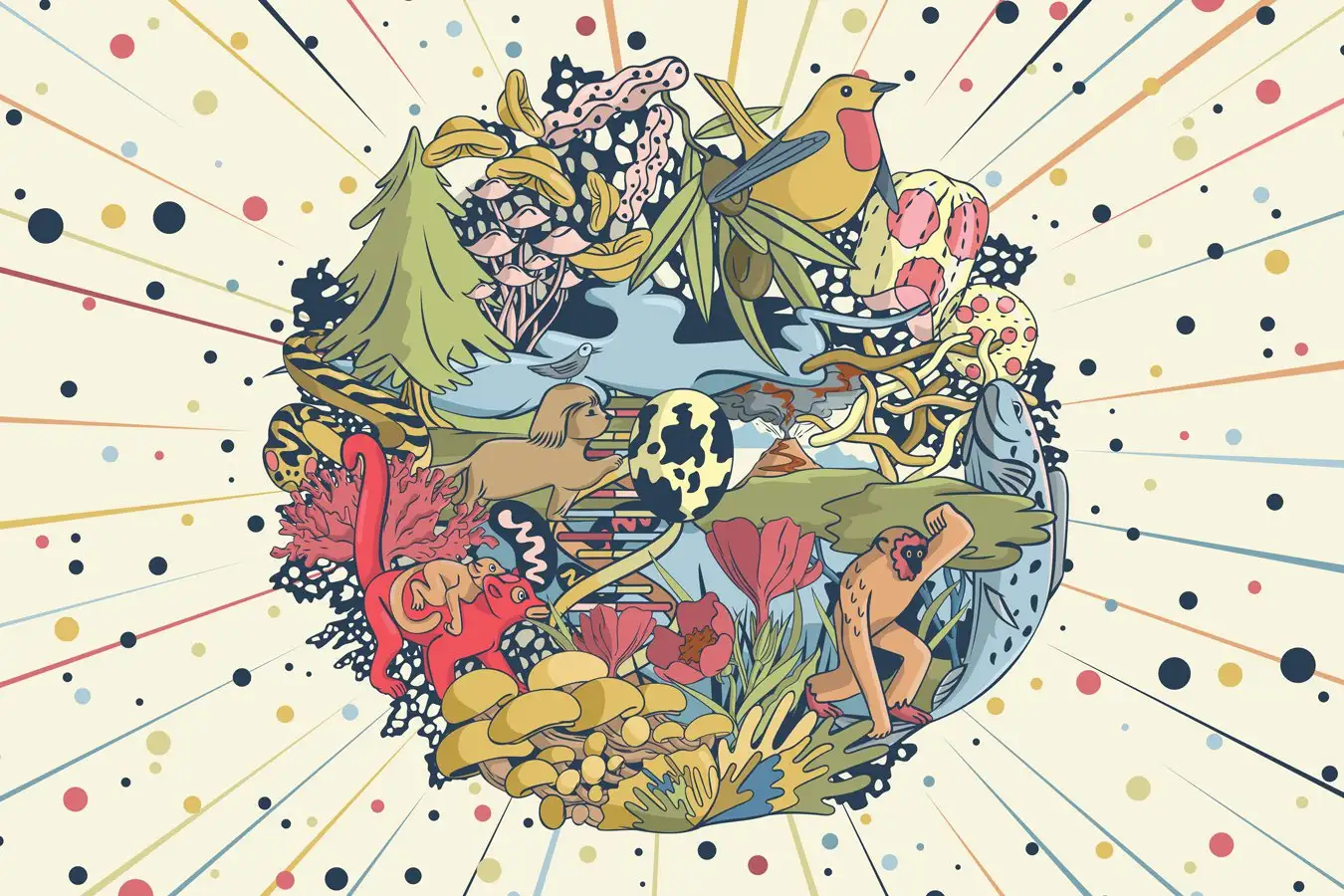
Nature’s Echo argues that feedback loops shape everything from the formation of stars and the spread of life to climate change, ecological recovery, and human behavior.Crowther is strongest when applying this framework to ecology, showing how forests, food webs, restoration, and resilience depend on the balance between reinforcing and stabilizing forces.The book moves from explanation to application, suggesting that restoration succeeds when nature recovery creates tangible benefits that people want to sustain.
Thomas Crowther begins his book with a snakebite that was not, in any conventional sense, dangerous. The danger came from interpretation. A misidentified species, a surge of fear, and a body that responded as if the threat were real: numbness spread, panic intensified, and the situation escalated until a second opinion dissolved it almost instantly. The episode is more than an anecdote. It sets the terms of Nature’s Echo, a book that treats cause and effect not as linear sequences so much as loops that can amplify themselves in either direction.
Thomas Crowther
That idea—feedback loops as the underlying architecture of the natural world—is the organizing principle of the book. Crowther traces it from cosmology to ecology to human psychology, moving across scales with considerable ambition. The early chapters move outward from the origin of matter, suggesting that the same reinforcing processes that allowed stars to form also underpin biological evolution and social behavior. It is an ambitious framing. At its best, it brings a sense of coherence to subjects that are often treated separately. At times, the scope of the framework requires readers to travel across very different domains and scales of thought.