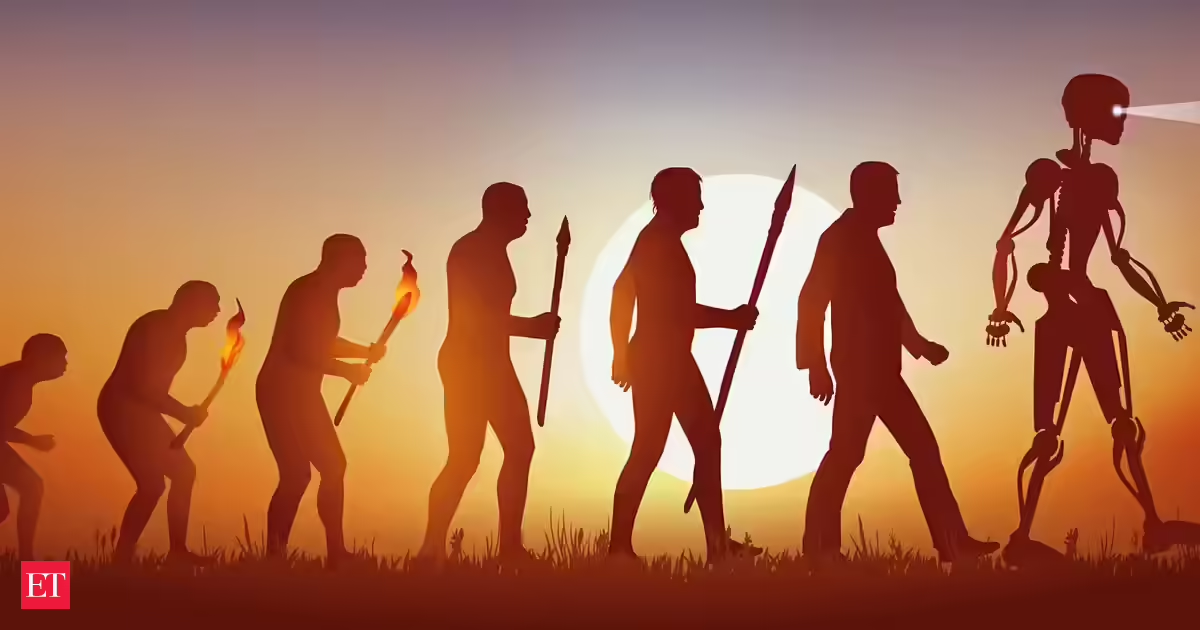
Over the long span of human existence, different cultures have held varying notions as to how responsible we are for our own thoughts and beliefs. Before the dawn of the Abrahamic religions, and in places untouched by these faiths, it tended to be the rule that individual members of the group could only be understood as parts of the whole, or in the grander cosmic scheme of things. The ascendence of Christianity in Europe, with its idea of the indivisible soul, tilted matters more towards a belief in individual agency and accountability. This concept, secularised by Descartes, who gave us the commanding rational ego, has proved resilient ever since, despite the best efforts of Freud, neuroscience and gene selection theory to dethrone it.
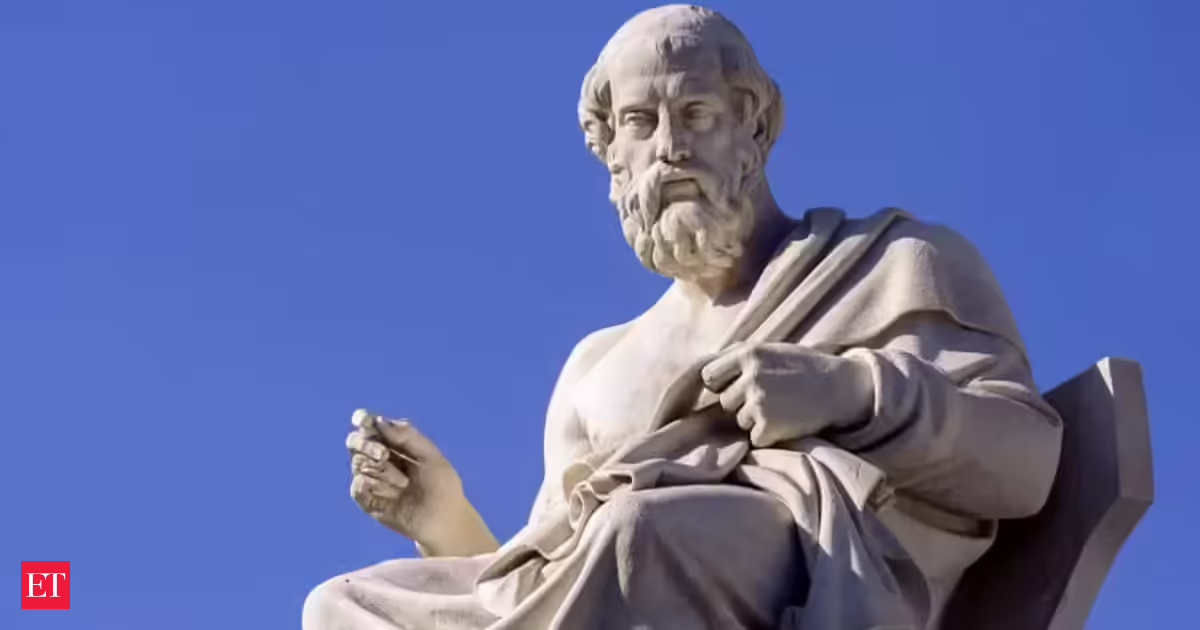
Ancient Greek culture was birthed in a rocky, arid, hard-scrabble environment that fostered self-reliance
In Why We Think What We Think, Turi Munthe writes that there still persists this alluring and flattering notion that we’re mental self-legislators, immune to factors that lie beyond our control – our genes, environment and subconscious desires. He says that we still overrate our capacity for rational deliberation: ‘Most of us think that we come to our opinions based on a mix of reasoning and environmental reason’; that we arrive at our views ‘on the basis of evidence and logic’. Yet, as he reminds us, how we think is as much determined by the vagaries of circumstance as of reason, formed by culture, history, psychology, physiology, social connectivity, peer pressure, weather and – perhaps most belittlingly of all for human pride – geography.