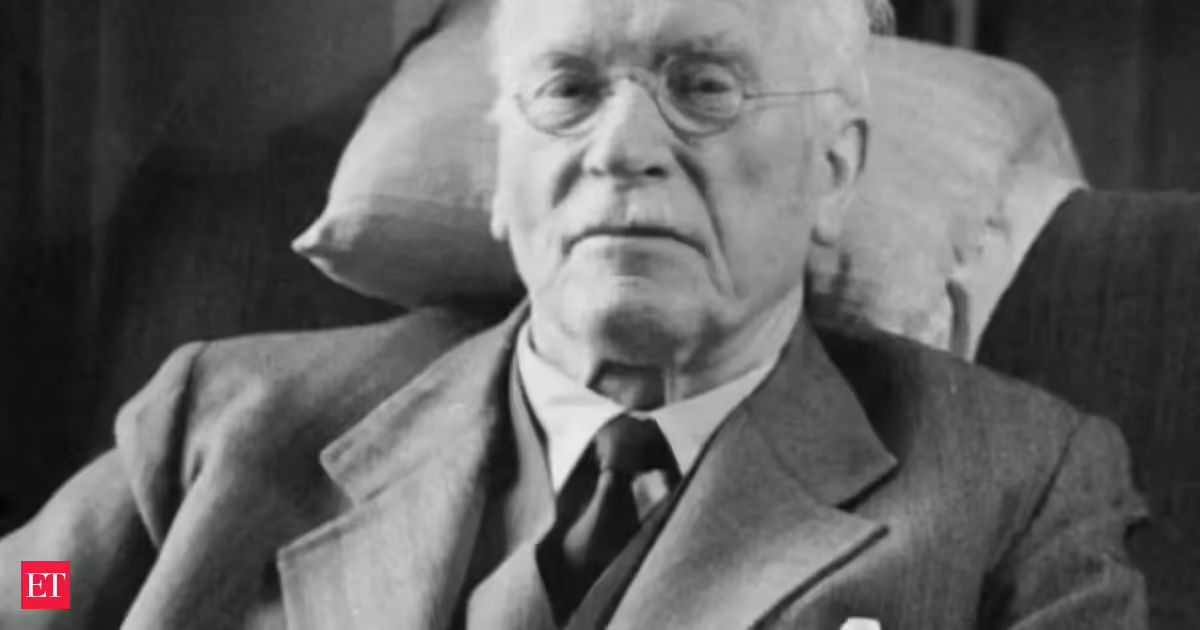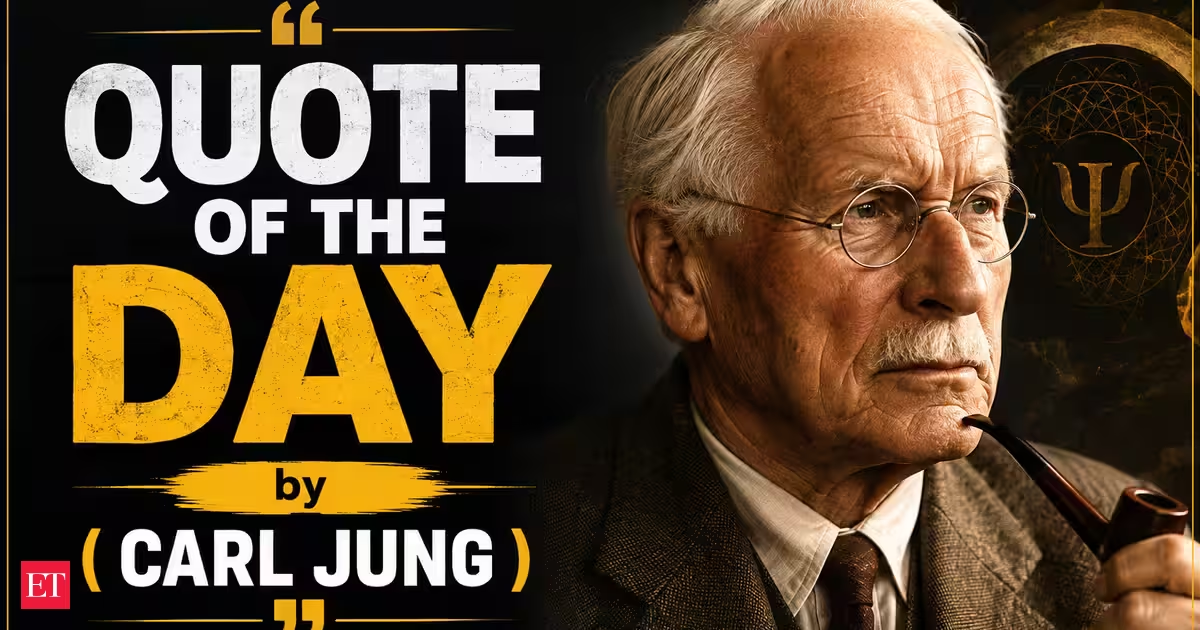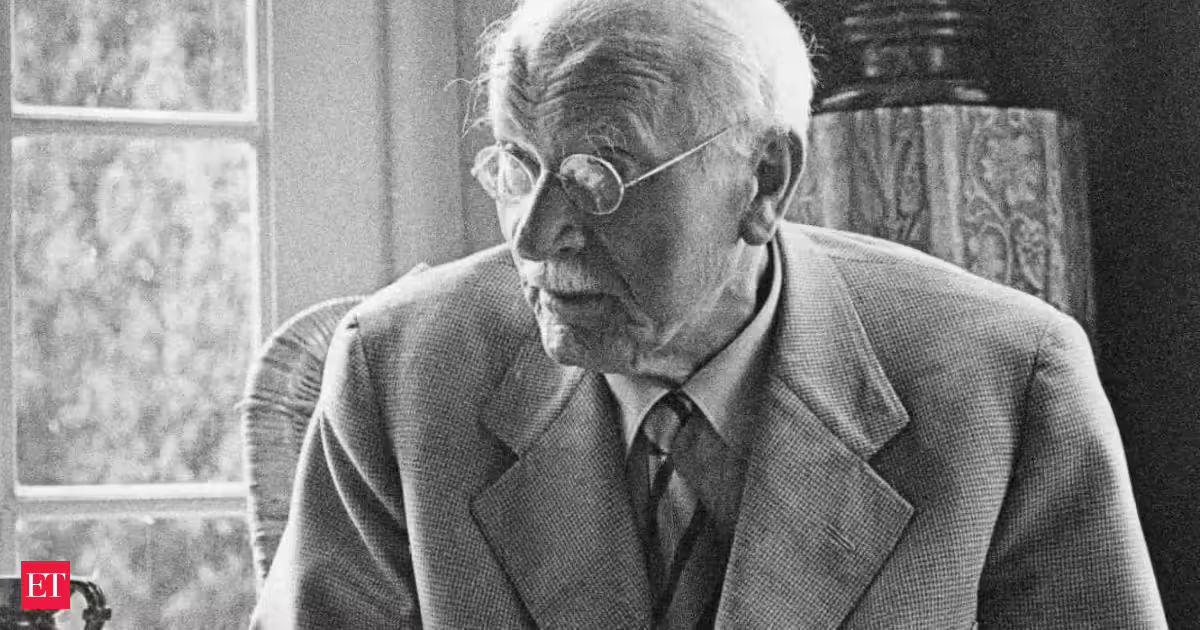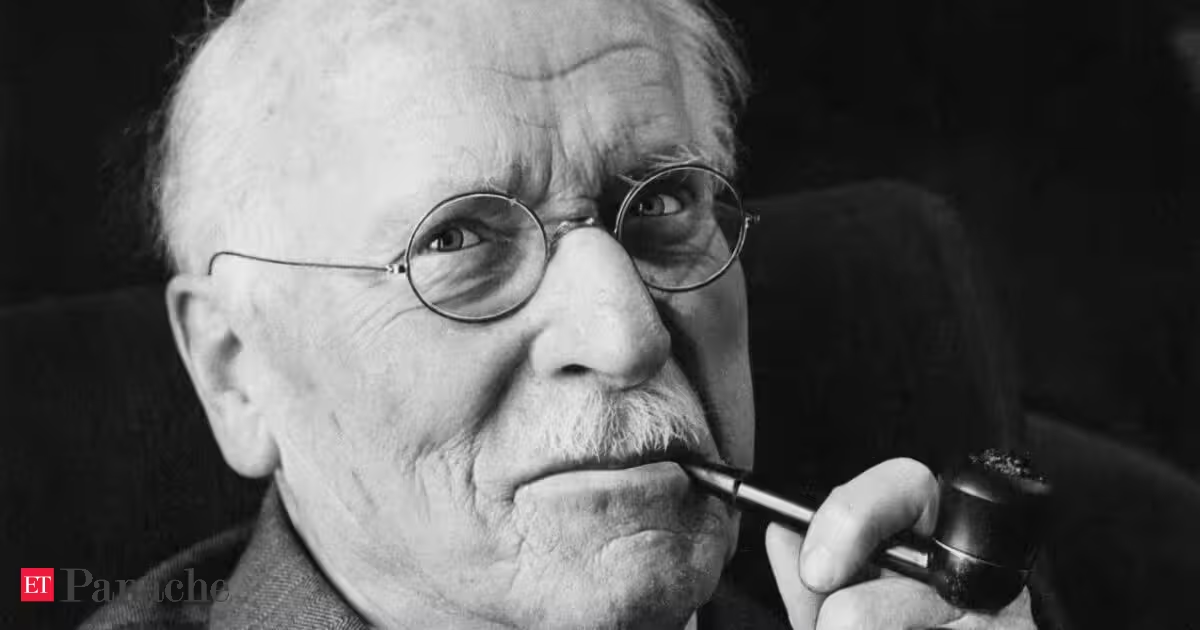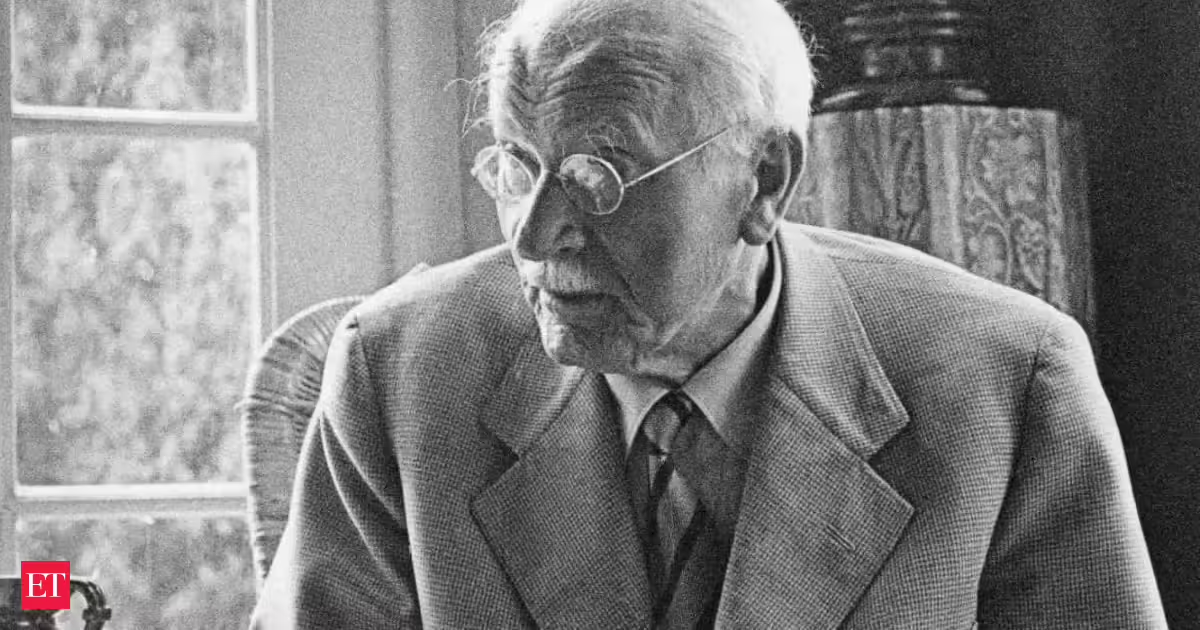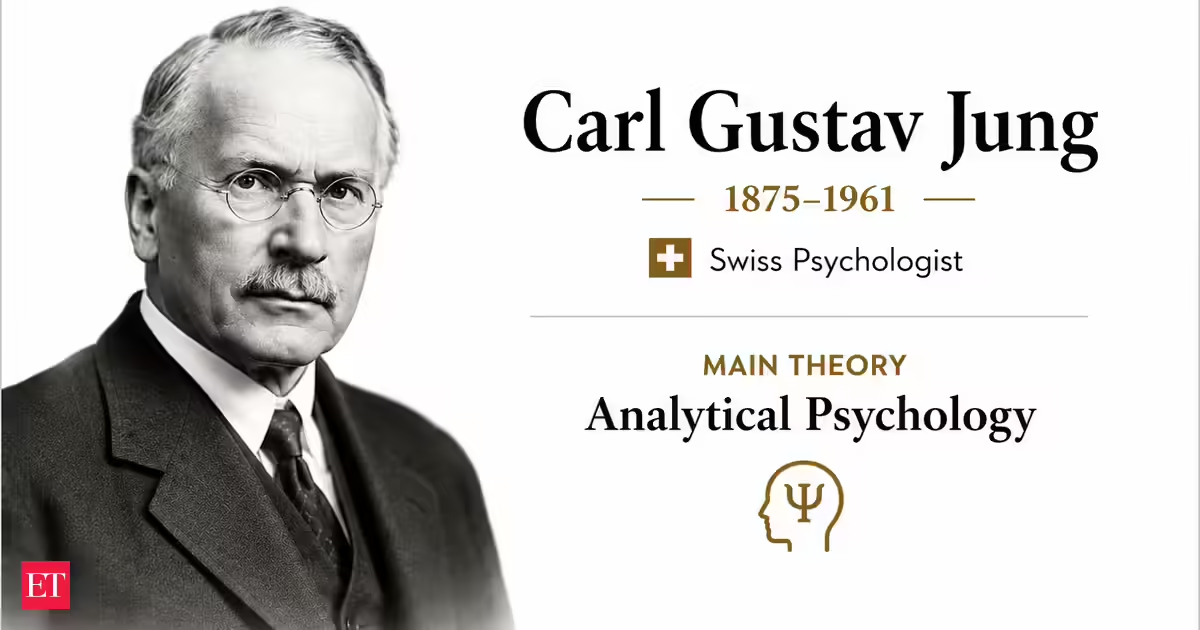
People often describe certain events as fate. They find themselves repeating the same relationship patterns, making similar mistakes, or encountering the same obstacles over and over again. It can feel as though an invisible force is shaping their lives behind the scenes.Swiss psychiatrist Carl Jung spent much of his career exploring that hidden force. His work focused on the unconscious mind, the vast part of human psychology that operates outside conscious awareness. Quote of the day: “Until you make the unconscious conscious, it will direct your life and you will call it fate.”The quote is both a warning and an invitation. It suggests that many of the forces shaping our decisions are not mysterious at all, they are simply parts of ourselves that we have not yet understood.Who was Carl Jung?Carl Jung was born on July 26, 1875, in Kesswil, Switzerland. He studied medicine at the University of Basel before specializing in psychiatry. Early in his career, Jung worked at the renowned Burghölzli Psychiatric Hospital in Zurich, where he conducted pioneering research on word association and mental disorders.Jung initially collaborated with Sigmund Freud, and for a time Freud viewed him as the leading successor to the psychoanalytic movement. However, significant theoretical disagreements led to a break between the two thinkers in the early 1910s.Following that split, Jung developed his own school of thought known as analytical psychology. He introduced influential concepts including the collective unconscious, archetypes, introversion and extraversion, the shadow self, and the process of individuation. Among his most important works are ‘Psychological Types’, ‘Modern Man in Search of a Soul’, ‘Man and His Symbols’, and ‘Memories, Dreams, Reflections’. His theories helped shape modern discussions about personality, dreams, symbolism, and self-discovery.Jung died in 1961 at the age of 85, but his ideas remain among the most widely discussed in the history of psychology.What the quote meansAt its core, the quote argues that many human decisions are influenced by thoughts, fears, desires, and beliefs that exist beneath conscious awareness.People often assume they are acting entirely rationally, yet unconscious motivations can quietly shape their choices. Childhood experiences, unresolved emotions, insecurities, and hidden assumptions may influence how they respond to relationships, opportunities, and challenges.When these patterns remain unexamined, they can appear to be fate. A person might repeatedly choose unhealthy relationships and conclude that they are simply unlucky. Another might sabotage opportunities and believe success was never meant for them.Jung suggests that what appears to be destiny is often psychology operating behind the curtain.The deeper meaning: Self-knowledge as freedomThe quote carries a profound lesson about personal responsibility and self-awareness.Jung believed that genuine freedom comes from understanding oneself. The unconscious is not inherently negative; it contains creativity, intuition, memories, instincts, and emotional truths. Problems arise when people remain unaware of its influence.The process of "making the unconscious conscious" involves honest self-reflection. It means examining fears, recognizing recurring patterns, questioning assumptions, and confronting uncomfortable truths about oneself.This can be difficult because people naturally prefer explanations that place responsibility outside themselves. It is often easier to blame circumstances, luck, or fate than to explore hidden motivations. Yet Jung argued that growth begins precisely where self-examination starts.Why Jung's message remains relevant todayIn an era of self-help books, therapy, mindfulness practices, and mental health awareness, Jung's observation feels remarkably modern.Many contemporary approaches to personal development focus on identifying unconscious habits, emotional triggers, and behavioral patterns. Whether through journaling, counseling, meditation, or introspection, people continue seeking ways to better understand themselves.The quote also speaks to a universal human tendency. When life becomes difficult, people often search for external explanations. Jung's insight encourages a different question: What part of this pattern might I not yet understand about myself?More quotes by Carl Jung“Who looks outside, dreams; who looks inside, awakes.”“Knowing your own darkness is the best method for dealing with the darkness of other people.”“The privilege of a lifetime is to become who you truly are.”“Everything that irritates us about others can lead us to an understanding of ourselves.”“Your visions will become clear only when you can look into your own heart.”
Quote of the day by Carl Jung: ‘Until you make the unconscious conscious, it will direct your…’ – Swiss psychotherapist on control of our lives
Swiss psychiatrist Carl Jung believed unconscious forces dictate our lives, leading us to repeat mistakes and call it fate. He argued that by making the unconscious conscious through self-reflection, we gain true freedom. This profound insight into self-knowledge remains highly relevant today, encouraging us to look inward for understanding and growth.
672 words~3 min read