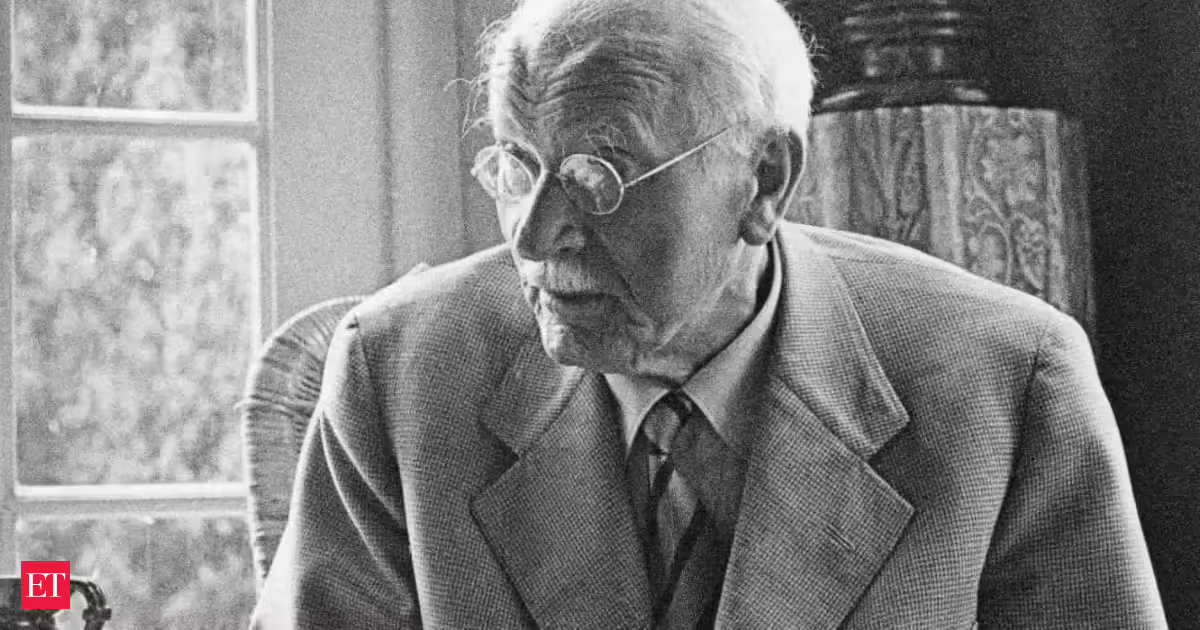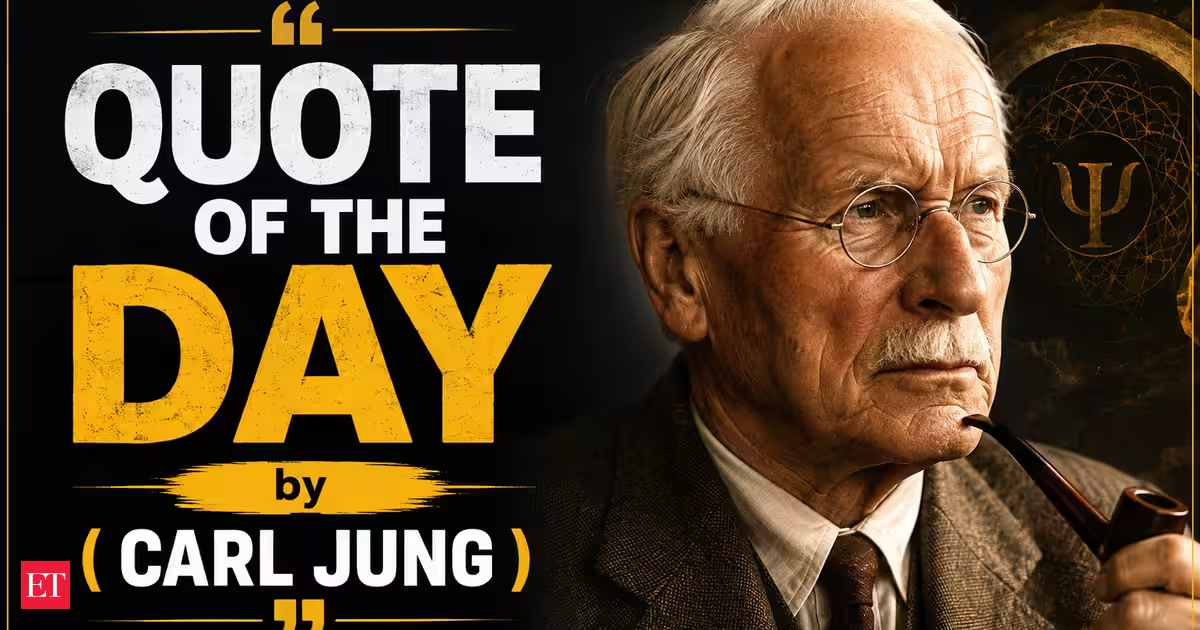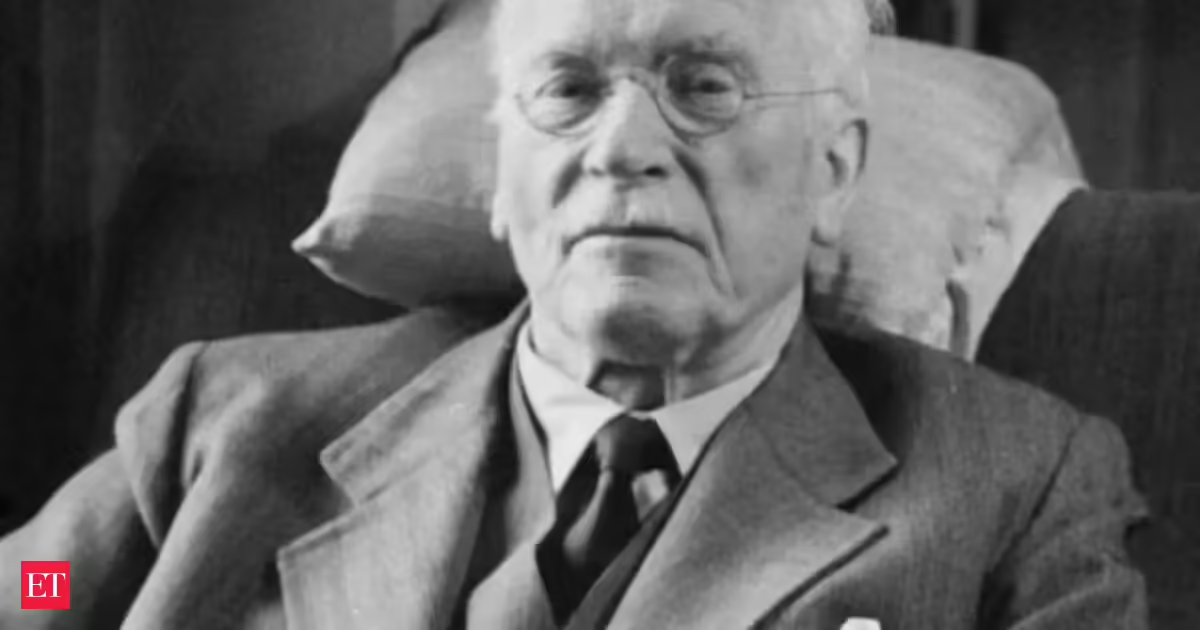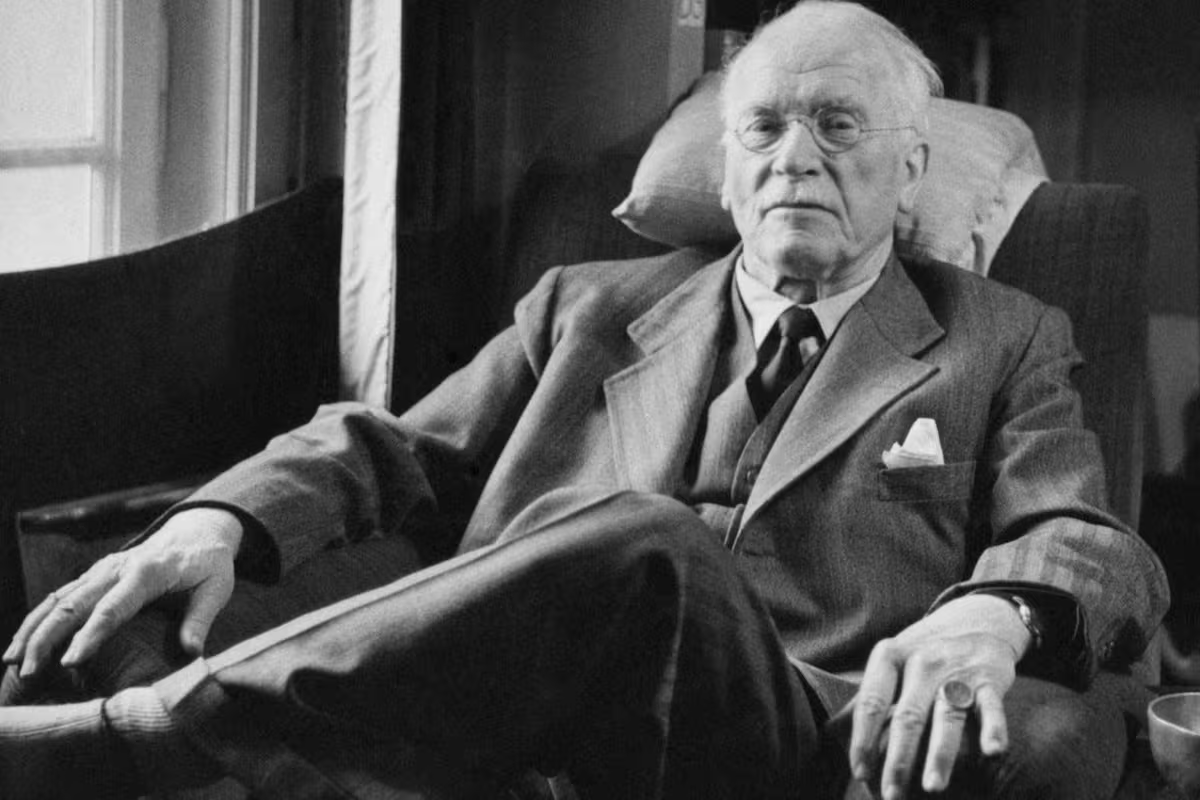
Carl Jung was one of the most influential thinkers in psychology, known for his ideas about the human mind, dreams and personality. The Swiss psychiatrist and psychoanalyst introduced concepts like the collective unconscious and archetypes, which continue to shape discussions around psychology and self-understanding even today. One of his most remembered quotes speaks about the importance of empathy and human connection.The quote of the day by Carl Jung goes: “Know all the theories, master all the techniques, but as you touch a human soul be just another human soul.”The quote highlights an idea that still feels relevant in everyday life. Jung believed that knowledge and technical skill are important, but they should never replace compassion. A person may become highly educated or professionally accomplished, yet when dealing with another human being, kindness and understanding matter just as much. The line speaks especially to people working in fields like medicine, psychology, teaching or counseling, where emotional connection can often be as important as professional training.At another level, the quote also reflects Jung’s larger philosophy about the human mind. He often argued that every individual carries emotions, fears, memories and experiences that cannot always be explained through simple theories. Because of this, he believed people should not approach others as “cases” or “subjects,” but as fellow human beings. The quote suggests that real understanding comes from humility, patience and the ability to genuinely listen.Early life of Carl JungCarl Gustav Jung was born in 1875 in Switzerland. He grew up in a family connected to religion and academics. His father, Paul Jung, was a pastor, while several members of his family were deeply involved in theology and intellectual work. Jung’s childhood was often described as lonely and introspective, something that later shaped many of his ideas about personality and the unconscious mind.You Might Also Like:As a child, Jung was deeply interested in dreams, symbols, myths and spirituality. He often wrote about unusual experiences from his early years and believed these moments pushed him toward exploring the hidden side of the human psyche. He later studied medicine at the University of Basel before moving toward psychiatry, a field that fascinated him because it combined science with the study of human emotions and behavior.Jung’s work in psychologyJung began his psychiatric career at the Burghölzli Psychiatric Hospital in Zurich under psychiatrist Eugen Bleuler. During this period, he worked on word-association tests, research that helped him explore how unconscious thoughts influence human reactions. His early work quickly gained attention in psychiatric circles.His professional relationship with Sigmund Freud became one of the most important phases of his life. Freud saw Jung as a possible successor in psychoanalysis, and the two shared a strong intellectual bond in the beginning. However, their ideas about the human mind gradually began to differ. While Freud focused heavily on sexuality as a driving force behind behavior, Jung believed the psyche was much broader and included spiritual, symbolic and cultural dimensions.You Might Also Like:The differences eventually led to a split between the two thinkers in 1913. After separating from Freud, Jung developed his own field called analytical psychology. This became one of his biggest contributions to modern psychological thought.The idea of the collective unconsciousAmong Jung’s best-known theories was the concept of the “collective unconscious.” He believed that beyond personal memories, human beings also share inherited psychological patterns and symbols that appear across cultures and generations. According to Jung, myths, dreams and religious imagery from different societies often carried similar themes because they emerged from this shared unconscious layer.He also introduced the idea of archetypes. These archetypes included recurring symbolic figures such as the hero, the shadow, the mother and the wise old man. Jung argued that such symbols repeatedly appear in stories, religions and art because they reflect common human experiences.Over time, Jung’s theories expanded beyond psychology and influenced writers, filmmakers, artists and scholars studying mythology and culture. His ideas later inspired thinkers such as Joseph Campbell, whose work on myths and storytelling became globally popular.You Might Also Like:Jung’s interest in spirituality and dreamsUnlike many psychologists of his time, Jung openly explored spirituality and religion in relation to mental health. He believed that spiritual questions were deeply connected to psychological well-being. In his writings, he often discussed dreams, symbols and myths as ways through which the unconscious mind communicates with people.Dream interpretation became a major part of his work. Jung argued that dreams should not always be interpreted literally. Instead, he believed they often used symbolic language to reveal emotional truths or inner conflicts. He also developed the method of “active imagination,” encouraging individuals to engage with images and ideas emerging from the unconscious mind.Jung traveled widely during his lifetime and studied traditions from different cultures, including Eastern philosophies, mythology and alchemy. These studies shaped many of his later theories and added a broader cultural dimension to his psychological work.Carl Jung’s lasting influenceThough some of Jung’s theories have faced criticism over the years, his influence remains strong in psychology and popular culture. His ideas about personality later inspired personality assessment models, including the Myers-Briggs Type Indicator. His writings on dreams, symbols and human behavior continue to be studied across different fields.Jung died in 1961 in Küsnacht, Switzerland, but his work still remains part of conversations around mental health, spirituality and self-discovery.
Quote of the day by Carl Jung: 'Know all the theories, master all the techniques, but as you touch a human soul be just another human soul...' - Analytical psychology's founder explains the importance of empathy in human relationships
Swiss psychiatrist and psychoanalyst Carl Jung remains one of the most influential figures in psychology, with his ideas on dreams, personality and the unconscious mind continuing to shape modern discussions on human behavior. His quote of the day reflects his belief that empathy and compassion are just as important as knowledge and expertise. Jungs theories, including the collective unconscious and archetypes, expanded psychology beyond science into spirituality, mythology and culture.
877 words~4 min read