Google just became the first hyperscale tech company to back a virtual power plant specifically designed to ease the strain its own data centers put on the grid. The deal, announced June 2, pairs the search giant with Voltus, a distributed energy resources platform, under a three-year agreement that could reshape how big electricity consumers, including crypto miners, think about power procurement.
The arrangement works through Voltus’s Bring Your Own Capacity (BYOC) product, which launched in September 2025. Under it, Voltus will aggregate up to 100 megawatts of flexible energy resources each year within the PJM Interconnection, which serves roughly 65 million people across 13 states and is the largest power grid in the US.
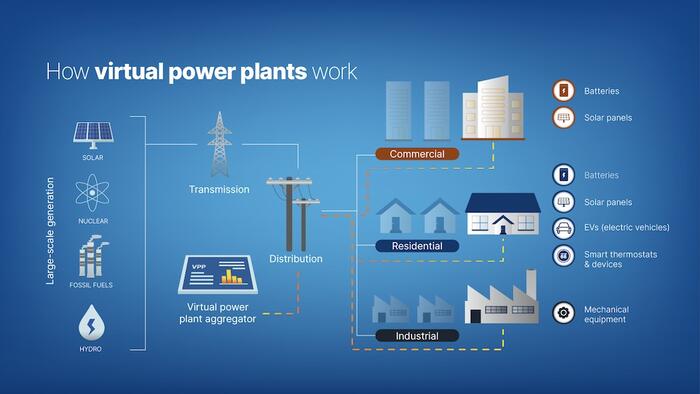
How a virtual power plant actually works
In this case, Google is funding the aggregation of assets across the PJM region. The resources include batteries, smart thermostats, and other controllable loads from local homes and businesses. When demand peaks, Voltus orchestrates those assets to free up capacity that Google’s data centers can effectively use, without requiring new transmission lines or generation plants.
Voltus currently manages over 7 gigawatts of capacity across its platform, a figure that has earned it repeated recognition from energy research firm Wood Mackenzie. The 100 MW annual commitment from Google represents a meaningful but measured addition to that portfolio.